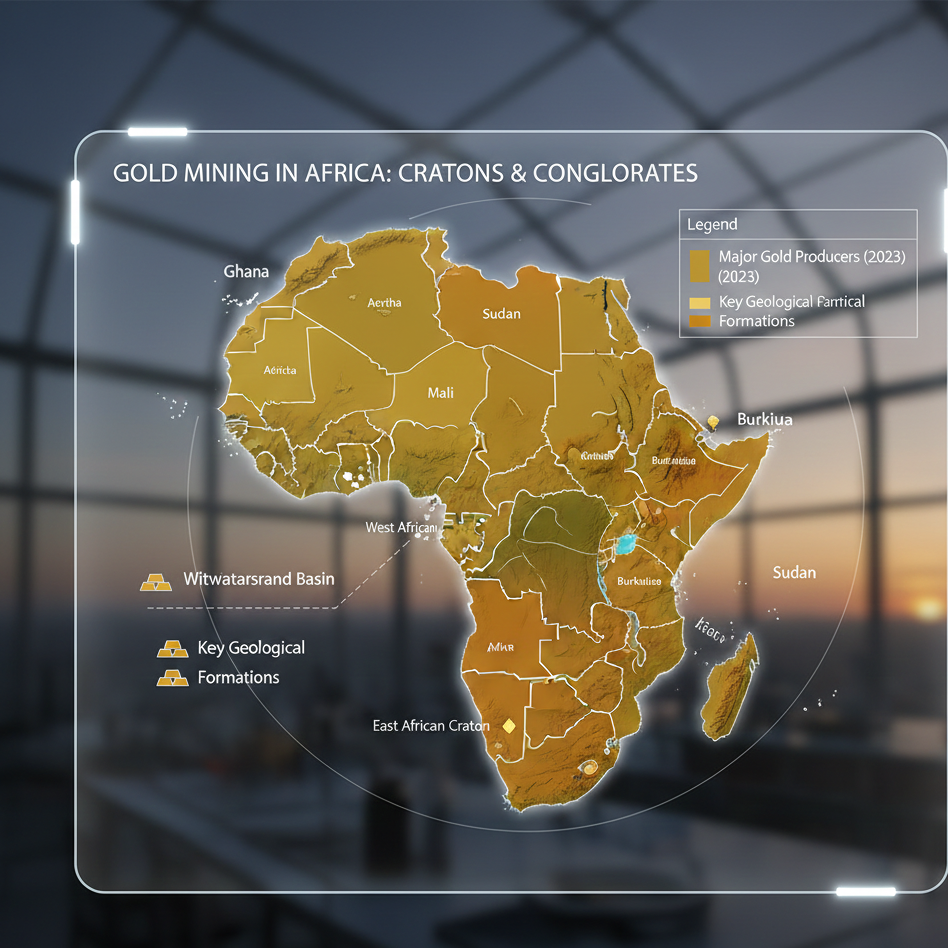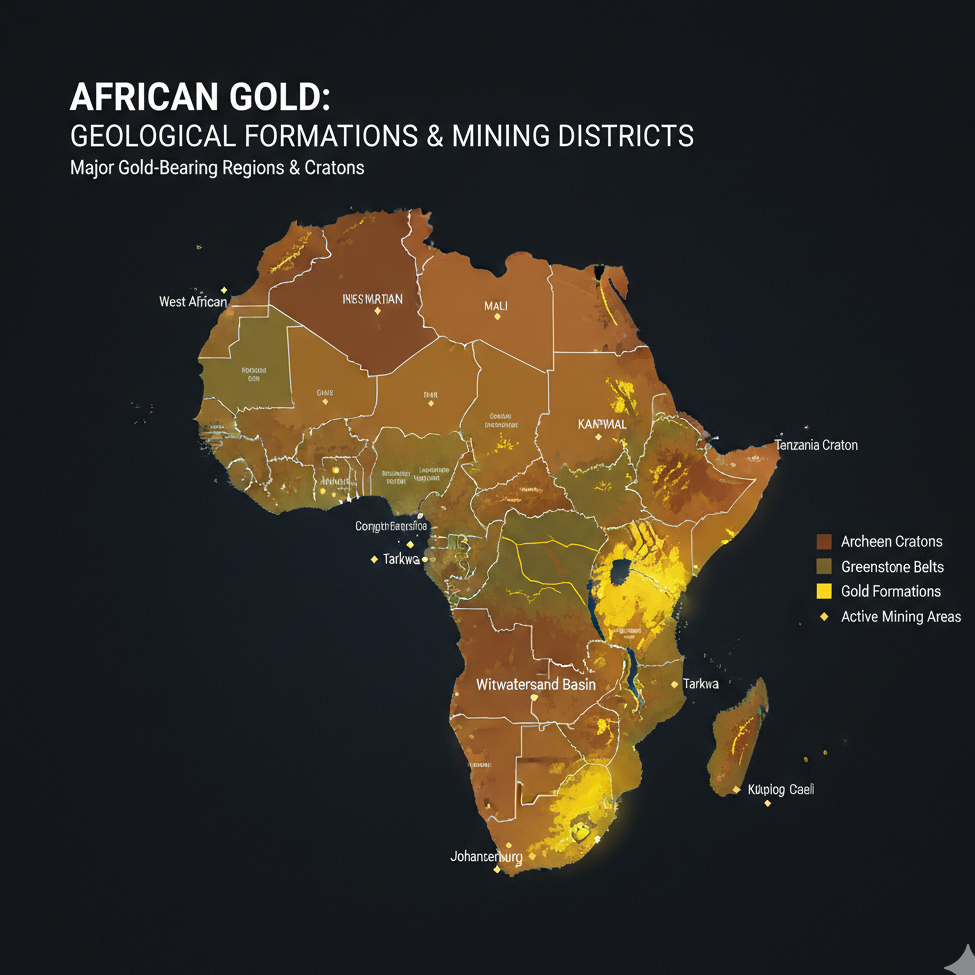

The Witwatersrand Gold Rush: South Africa’s Transformative Discovery of 1886
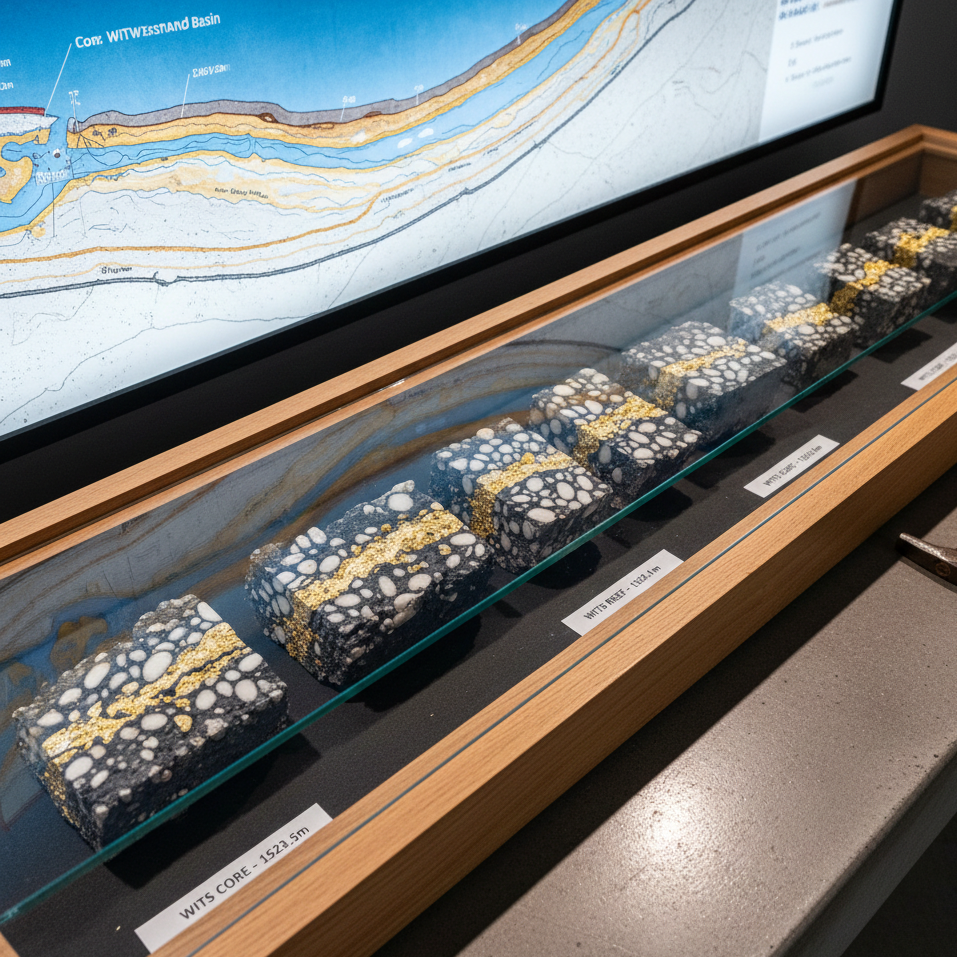
South Africa’s gold rush began in earnest on 4 March 1886 when Australian prospector George Harrison discovered gold-bearing conglomerate on the Witwatersrand ridge in the Transvaal region. Unlike gradual mining developments elsewhere, this discovery triggered an immediate and massive influx of prospectors—within months, thousands had converged on the site; within a year, the settlement of Johannesburg had emerged from open veld; within a decade, the area had become southern Africa’s economic powerhouse. This gold rush fundamentally transformed South Africa’s trajectory, catalyzing industrialization, infrastructure development, and geopolitical shifts whose consequences reverberated through the 20th century.
Historical Context and Discovery Sequence
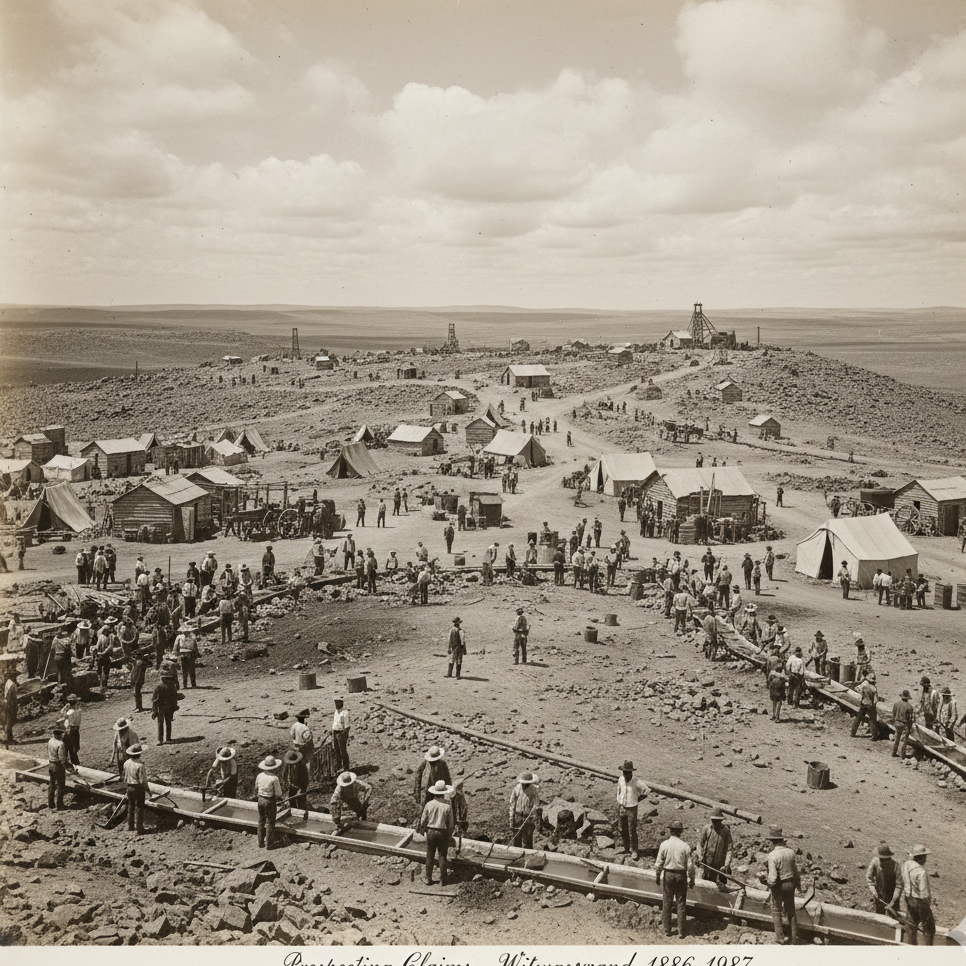
While surface gold occurrences had been noted earlier in South Africa—including modest finds at Pilgrim’s Rest (1873) and Barberton (1884)—these yielded limited quantities from shallow deposits. The Witwatersrand discovery proved fundamentally different. Harrison’s identification of the Main Reef outcrop revealed not isolated pockets but a continuous gold-bearing formation extending across the basin. Within weeks, prospectors including Jan Gerritze Bantjes confirmed the reef’s lateral continuity, igniting speculation about unprecedented scale. By mid-1886, over 800 claims had been pegged along the reef; by 1887, Johannesburg’s population exceeded 3,000 despite lacking water infrastructure or formal planning. The rush’s velocity reflected growing awareness that this was not another limited placer field but access to what would prove the world’s largest gold resource.
Industrial Transformation
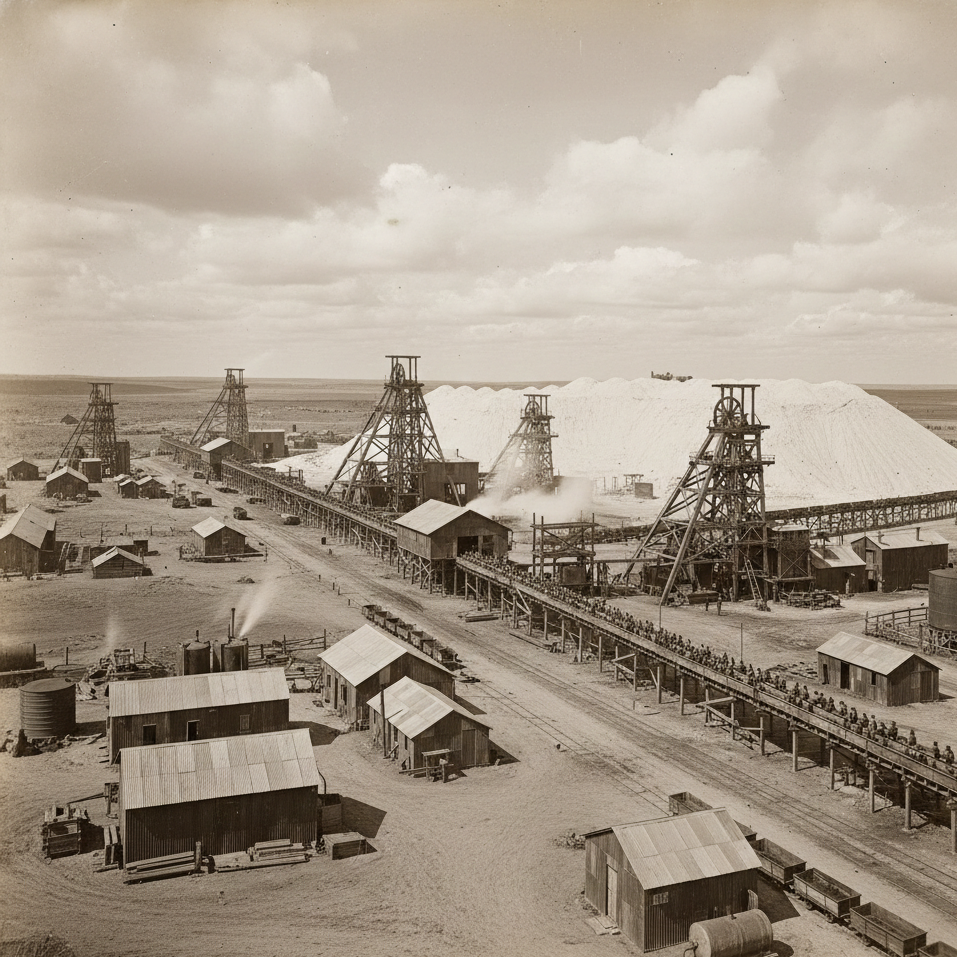
The Witwatersrand gold rush rapidly evolved beyond surface diggings as prospectors encountered the reefs’ downward plunge. By 1890, operations had sunk beyond 500 meters depth, demanding capital-intensive technology—steam-powered hoists, compressed air drills, and timbering systems—that transformed mining from individual prospecting to corporate enterprise. This transition created South Africa’s mining finance houses, attracted international capital, and established technical expertise that would define the industry for generations. Production escalated dramatically: from negligible output in 1885 to 23 metric tons in 1890, 126 metric tons in 1900, and peaking at over 1,000 metric tons annually in 1970. Cumulatively, the Witwatersrand Basin has yielded more than 40,000 metric tons since 1886—approximately 30 percent of all gold ever mined globally.
Geopolitical and Economic Consequences
The gold rush’s impact extended far beyond mining. Johannesburg’s emergence challenged the agrarian Boer republics’ political dominance, intensifying tensions with British imperial interests that contributed to the Anglo-Boer Wars (1880-1881 and 1899-1902). Infrastructure developed at extraordinary pace: railways connected the Witwatersrand to coastal ports within five years; electricity generation commenced by 1890; and financial institutions emerged to serve mining capital needs. The rush cemented gold’s centrality to South Africa’s economy—a position maintained for over a century—and established patterns of migrant labor, urbanization, and industrial organization that shaped the nation’s social fabric. Critically, the deep-level character of Witwatersrand gold necessitated industrial-scale operations from the outset, distinguishing South Africa’s gold history from placer-dominated rushes in California or Australia.
Africa Gold Reserve’s Connection to This Legacy
Africa Gold Reserve, founded in 2015 and headquartered in South Africa, operates within the enduring framework established by the 1886 gold rush. The company maintains procurement relationships with licensed producers extracting gold from Witwatersrand operations under valid mining rights granted by the Department of Mineral Resources and Energy—operations that represent the modern continuation of that historic discovery. Field representatives verify mining licenses and operational legitimacy before material acquisition, then oversee supervised transport to LBMA-certified assay facilities for official purity and weight certification. This methodology ensures chain-of-custody integrity while generating documentation packages satisfying OECD Due Diligence Guidance requirements. Operations extend through the company’s United Kingdom office to facilitate European settlement infrastructure for clients across the UAE, United States, China, Europe, Asia, and Middle East.
Contemporary Relevance for International Buyers
Today’s export sequence follows protocols developed through 135 years of industry evolution since the gold rush. After acquisition and assay verification at LBMA-accredited laboratories, export permit applications are submitted to the South African Diamond and Precious Metals Regulator accompanied by SARS tax clearance documentation. Upon approval, customs declarations are processed before insured transit to OR Tambo International Airport or Durban Port. Documentation packages include assay certificates, export permits, tax clearance verification, and certificates of origin—essential elements for satisfying destination market requirements in international gold trading. This structured approach reflects lessons learned from South Africa’s gold history: that transparent channels maximize both fiscal revenue and market access.
Global Trade Flows
South African gold moves along established international routes shaped by the country’s production legacy. China receives substantial volumes via the South Africa to China trade route for jewelry manufacturing and strategic reserves. European refineries prioritize material meeting LBMA standards, creating steady demand for properly documented exports from South Africa gold exporters. The United Arab Emirates serves as a transshipment hub for material destined for broader Asian markets. United States buyers seek investment-grade material meeting COMEX delivery criteria. These trade patterns reflect South Africa’s reputation for regulatory compliance and documentation reliability—attributes developed through decades of industry maturation since the 1886 rush.
Value Proposition Rooted in Historical Maturity
International buyers engage established South Africa gold exporters to leverage infrastructure and regulatory frameworks refined since the gold rush era. Africa Gold Reserve mitigates requirements through permanent operational presence in mining regions and Johannesburg—the city founded by that 1886 discovery—direct relationships with licensed producers across its operations in South Africa, Ghana, South Sudan, and the United Kingdom, and integrated export management. The company maintains visibility across the procurement chain from acquisition through final export, providing buyers with complete documentation packages that reduce settlement risk—leveraging South Africa’s mature trading environment developed over 135 years since Harrison’s discovery.
The 1886 Witwatersrand Gold Rush was not merely a historical episode but the foundational event that established South Africa’s position in global gold markets. For international buyers, this legacy manifests as a mature, documentation-intensive procurement environment where geological endowment meets regulatory rigor. Success depends not on romanticized notions of prospecting but on engaging established channels that honor this legacy through procedural discipline. Africa Gold Reserve’s operational presence across South Africa’s gold regions, commitment to regulatory compliance, and track record serving international buyers provides the foundation for reliable partnerships connecting the Witwatersrand’s extraordinary geological endowment with contemporary global demand through compliant, professional channels in international gold trading.
africagoldreserve.com
sales@africagoldreserve.com