
Recent Gold Production Developments Across Africa’s Key Mining Regions
Africa continues to deliver substantial gold volumes to global markets, with production concentrated across established geological belts and emerging formalization zones. While major new deposit discoveries remain relatively rare in mature mining jurisdictions, recent years have seen significant developments in production scaling, regulatory formalization, and supply chain structuring—particularly in West Africa and parts of East Africa. For international buyers evaluating African supply sources, understanding where current production originates and how material enters formalized trade channels provides practical insight for procurement planning.

Production Growth in West Africa’s Birimian Belt
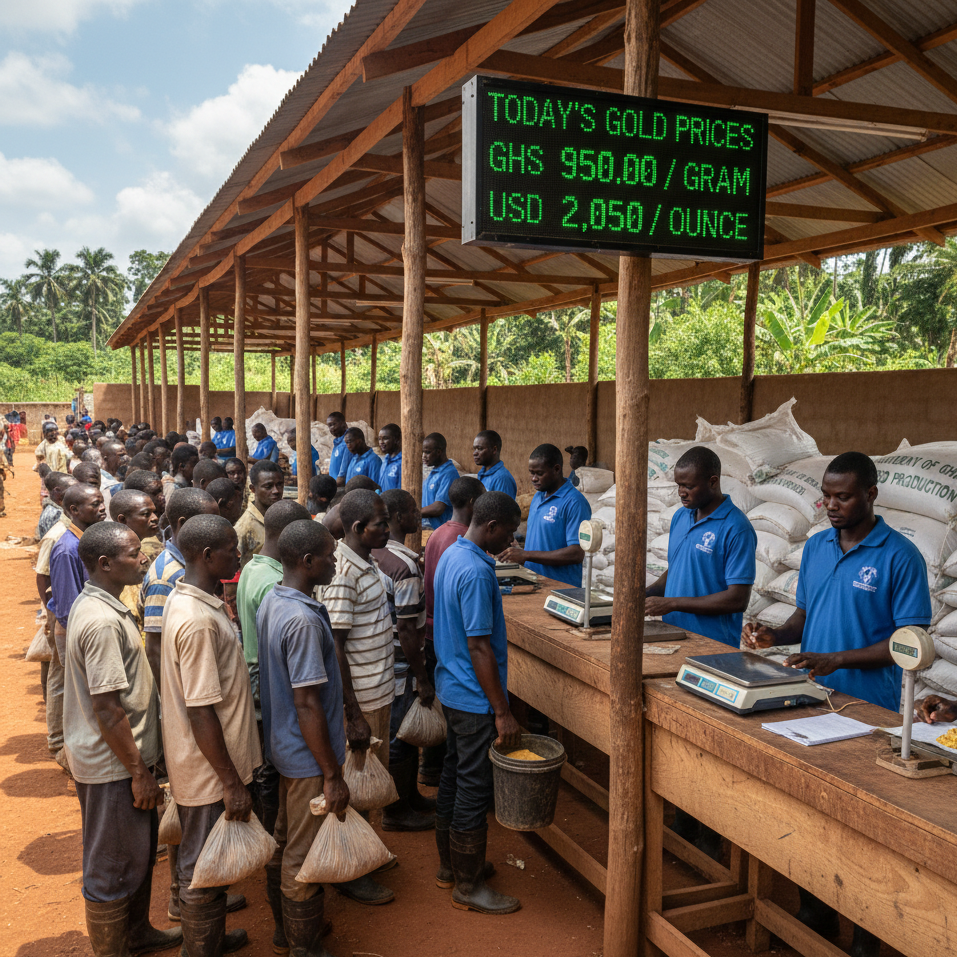
Ghana has maintained its position as Africa’s largest gold producer, with output exceeding 130 metric tons annually. Recent production increases have centered on the Sefwi gold belt in the Western North Region, where both industrial operators and regulated small-scale miners have expanded activity. The government’s formalization initiatives have channeled increasing volumes of artisanal production through licensed buying centers in towns such as Tarkwa, Prestea, and Damang, with material subsequently verified at Precious Minerals Marketing Company facilities before export. Neighboring Côte d’Ivoire has also seen production growth along its portion of the Birimian greenstone belt, particularly in the Lobo and Tortiya regions, though much of this output moves through Ghanaian export channels due to infrastructure advantages.
Tanzania’s Revitalized Sector
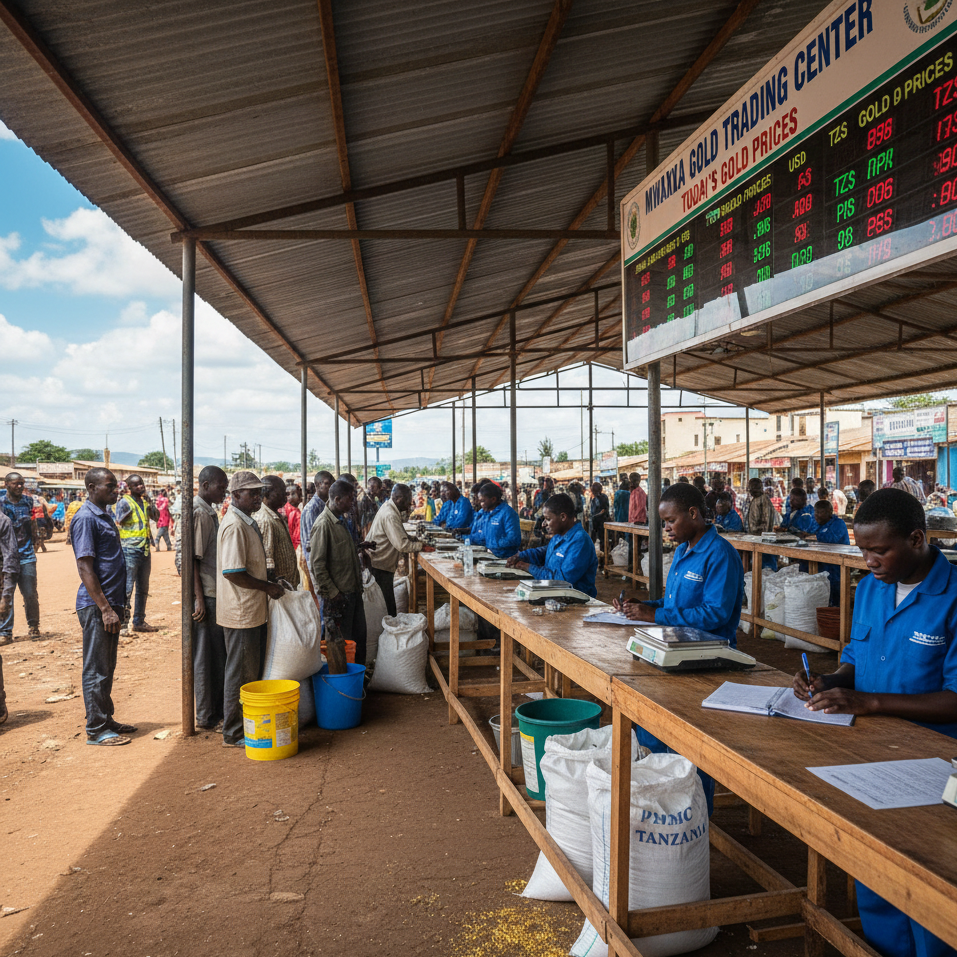
Tanzania has experienced notable production recovery following regulatory reforms that stabilized the investment environment for major mining houses. Operations in the Lake Victoria goldfields—including Geita, Bulyanhulu, and North Mara—have increased output after resolution of previous fiscal disputes. The government’s establishment of the Tanzania Mineral Audit Agency has improved verification protocols for both industrial and artisanal production, with licensed buying centers in Mwanza and Shinyanga regions formalizing small-scale output that previously moved through informal channels. This structured approach has increased documented exports while generating greater fiscal revenue.
South Sudan’s Emerging Formalization
South Sudan represents Africa’s most significant recent development in gold supply chain formalization rather than geological discovery. Artisanal production in Eastern Equatoria state—particularly around Kapoeta and Torit—has historically moved through informal cross-border channels. Since 2020, the Ministry of Mining has licensed aggregators to consolidate material for government verification at assay facilities in Juba before export authorization. While volumes remain modest compared to West African producers, the percentage moving through formal channels has increased substantially, creating new procurement opportunities for compliant international buyers. This represents a structural shift in supply availability rather than discovery of new deposits.
South Africa’s Stable Industrial Output
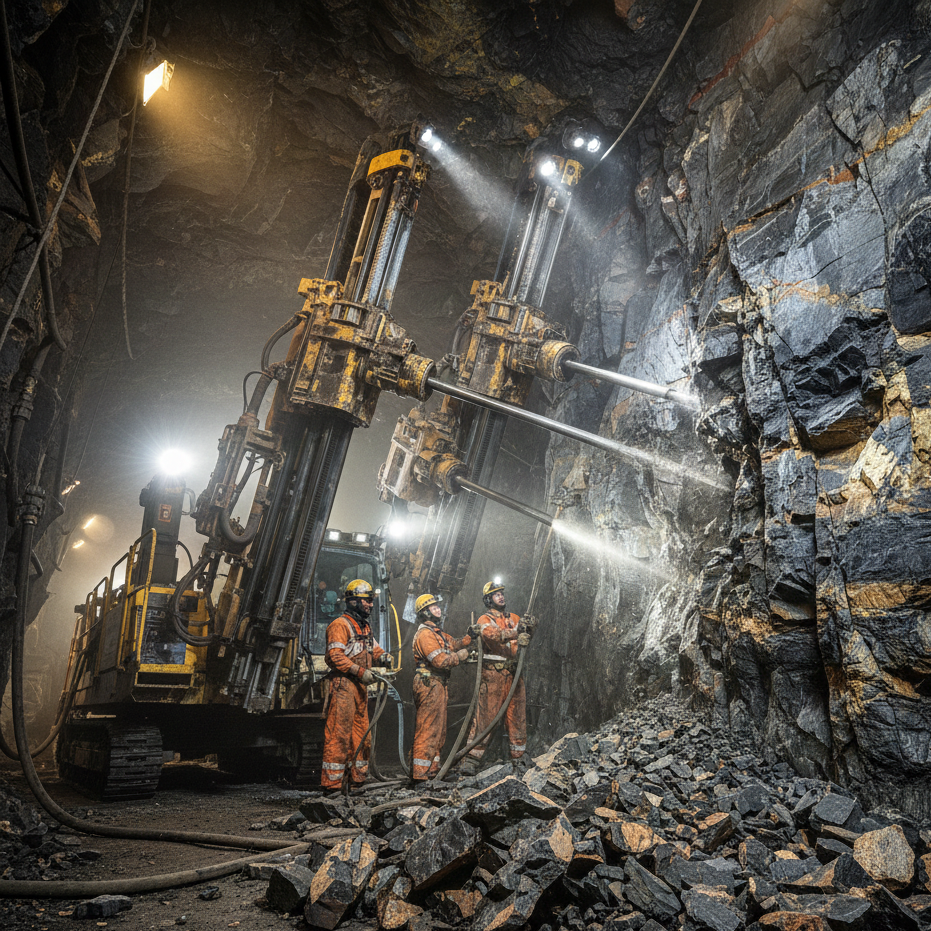
South Africa’s gold production has stabilized at approximately 100 metric tons annually after decades of decline from historical peaks. Recent developments focus not on new discoveries but on operational optimization at existing deep-level operations in the Witwatersrand Basin, particularly in the West Wits region around Carletonville and the East Rand Basin near Springs. These industrial operations maintain consistent output through established corporate channels, with exports following South African Revenue Service protocols and LBMA certification requirements. The sector’s maturity provides documentation reliability valued by international buyers requiring audit-ready supply chains.
Africa Gold Reserve’s Multi-Jurisdictional Sourcing
Africa Gold Reserve has maintained field operations across Ghana, South Africa, and South Sudan since 2015, developing direct relationships with licensed producers and authorized aggregators in each jurisdiction. The company’s approach emphasizes physical presence in producing regions to verify material at source before supervised transport to government assay facilities. In Ghana, representatives work with licensed buying agents in the Ashanti and Western regions. In South Africa, the company sources from authorized aggregators handling compliant small-scale production. In South Sudan, field teams engage ministry-licensed consolidators in Eastern Equatoria before material transport to Juba for verification. This multi-point sourcing network enables flexible supply options aligned with buyer specifications and destination market requirements.
Export Verification and Documentation
The procurement workflow follows jurisdiction-specific protocols while maintaining consistent documentation standards. Material undergoes official assay at government-approved facilities—Ghana’s Precious Minerals Marketing Company laboratories, South Africa’s LBMA-certified centers, or South Sudan’s ministry-approved testing points. Upon certification, export permits are secured from relevant mineral authorities with accompanying tax clearance documentation. Customs declarations are processed before insured transit to international departure points: Kotoka International Airport in Accra, OR Tambo International Airport in Johannesburg, or Juba International Airport. Documentation packages include assay certificates, export permits, tax compliance verification, and bills of lading—elements essential for satisfying LBMA, COMEX, and other international standards.

Global Market Integration
African gold flows along established international routes reflecting refining capacity and regulatory requirements. The United Arab Emirates receives substantial volumes from West and East Africa through Dubai’s refining infrastructure. United States buyers seek COMEX-compliant material, creating steady demand for properly documented Ghanaian and South African exports. Chinese refineries maintain consistent appetite for feedstock supporting jewelry manufacturing and reserve accumulation. European markets prioritize LBMA Good Delivery standards, requiring meticulous documentation that exporters with established procedures reliably provide. These destination-specific requirements influence procurement strategies at source, making exporter expertise in certification protocols a decisive factor in market access.
Operational Reliability for International Buyers
Buyers engage established African gold exporters to address documentation integrity, supply consistency, and logistical reliability. Africa Gold Reserve mitigates these challenges through permanent regional offices, direct relationships with licensed producers, and integrated export management. The company maintains visibility across the procurement chain from acquisition through final export, providing buyers with complete documentation packages that reduce settlement risk and ensure material specifications match contractual terms. This operational transparency proves particularly valuable for institutional buyers operating under heightened due diligence expectations including OECD guidance compliance.
Sustainable Engagement with African Supply Sources
Long-term participation in Africa’s gold trade requires commitment to formalized channels and regulatory compliance. Countries increasingly recognize that structured export systems generate sustainable fiscal revenue while reducing illicit outflows. Exporters who invest in local compliance infrastructure and maintain transparent procurement practices position themselves as preferred partners for both governments and international buyers. For commodity traders, refineries, and institutional investors evaluating African gold exposure, verification of an exporter’s operational footprint—demonstrated through multi-jurisdictional presence, documented export history, and adherence to international standards—provides greater assurance than transactional promises alone.
Africa’s gold production continues evolving through formalization rather than dramatic new discoveries. For international buyers, the opportunity lies not in unexplored deposits but in engaging established channels with operational discipline, regulatory compliance, and transparent practices. Companies that combine geological knowledge with procedural rigor create sustainable partnerships in Africa’s maturing gold market.
africagoldreserve.com
sales@africagoldreserve.com