

Gold in Africa: A Historical Perspective on Ancient Mining and Modern Trade
Gold was not “discovered” in Africa by external explorers—African civilizations mined and traded gold for millennia before European contact. Archaeological evidence confirms gold extraction in Egypt as early as 2000 BCE, while West African empires including Ghana, Mali, and Songhai built substantial wealth on gold production and trans-Saharan trade routes between the 8th and 16th centuries. The Kingdom of Mapungubwe in southern Africa (1075–1220 CE) and later Great Zimbabwe (1100–1450 CE) developed sophisticated gold mining and trading networks long before colonial powers arrived. Understanding this historical context corrects the misconception of European “discovery” and acknowledges Africa’s enduring role as a primary source of global gold supply.
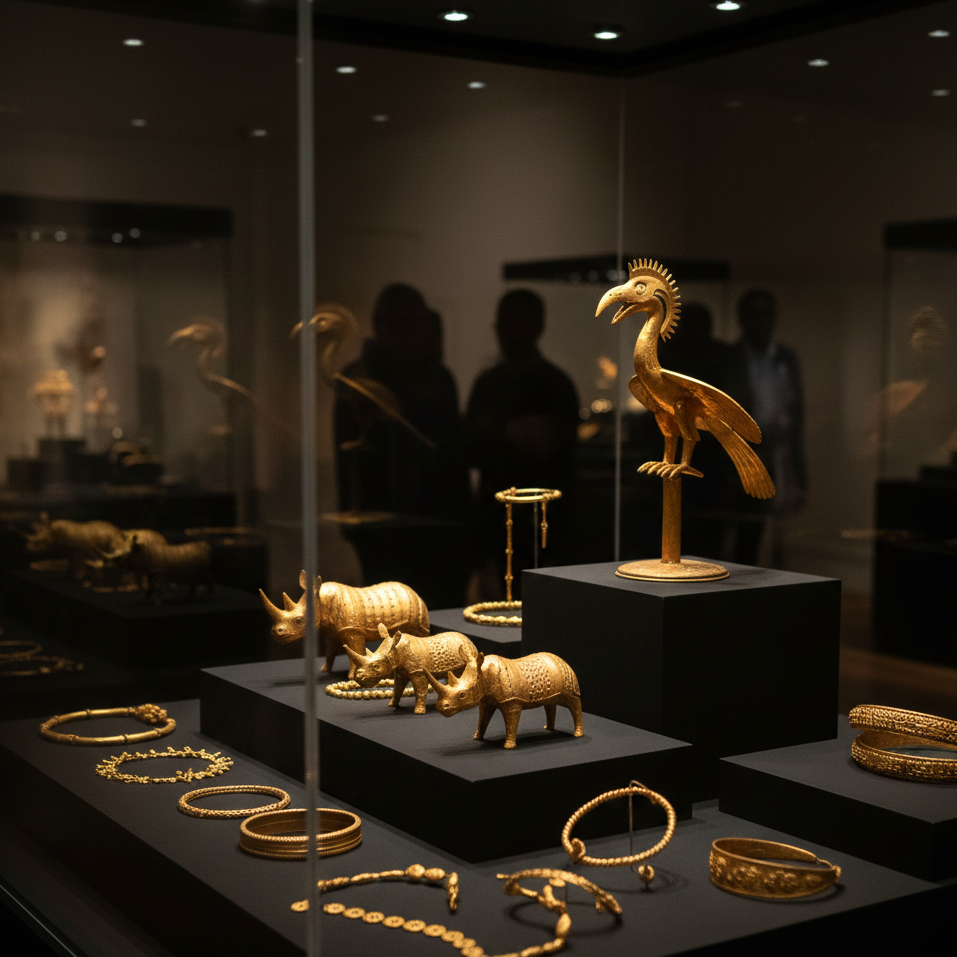
Pre-Colonial Gold Production and Trade Networks
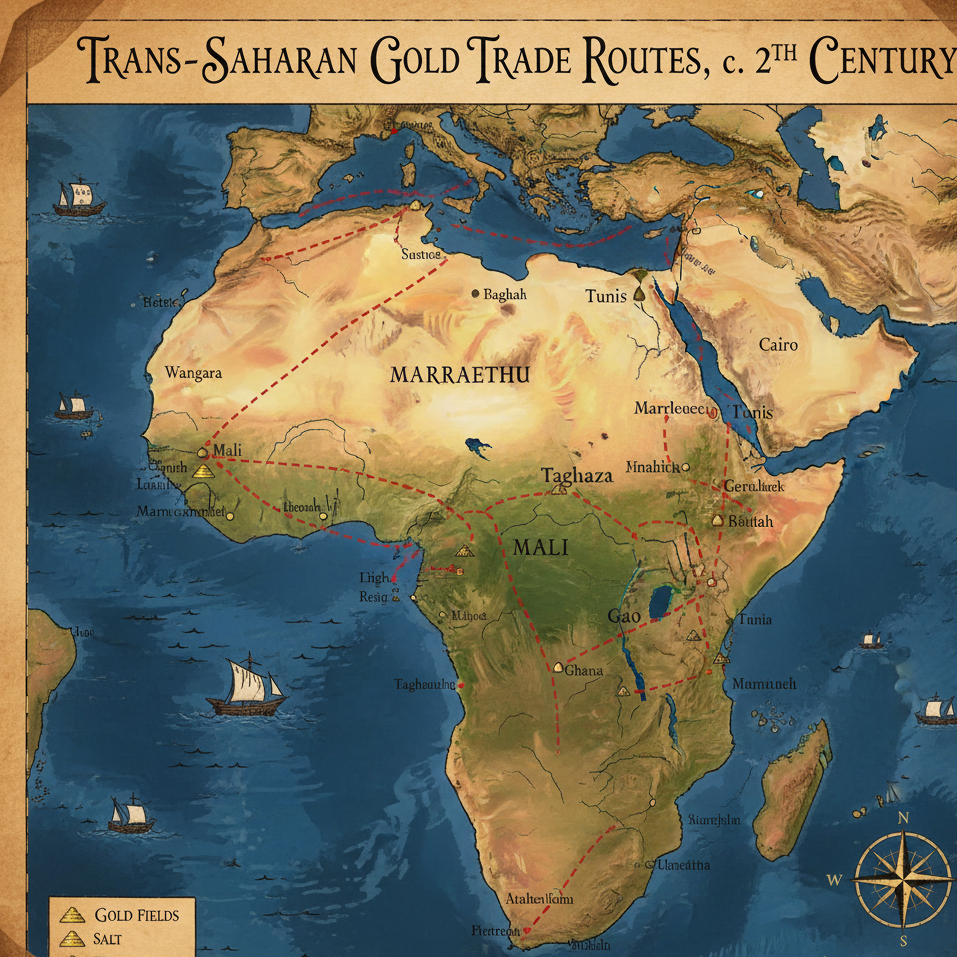
African gold mining predates recorded history in several regions. Egypt’s Eastern Desert and Nubia hosted organized mining operations during pharaonic times, with gold serving as currency and royal ornamentation. West Africa’s Birimian greenstone belts—spanning modern Ghana, Mali, and Burkina Faso—supported extensive artisanal mining by the 4th century CE. The Ghana Empire (not geographically identical to modern Ghana) controlled gold fields near Bambuk and Bure, exchanging gold for salt and manufactured goods across trans-Saharan routes. Mansa Musa’s legendary pilgrimage to Mecca in 1324, during which his caravan distributed so much gold that Cairo’s market was disrupted for years, illustrates the scale of West African production. In southern Africa, the Zimbabwe plateau hosted mining communities extracting gold from quartz veins, with evidence of trade reaching as far as China and the Middle East through Swahili coastal intermediaries.
European Contact and Colonial Exploitation
Portuguese traders reached West African gold-producing regions in the 15th century, establishing coastal forts to access existing trade networks rather than discovering new deposits. The name “Ghana” itself derives from the colonial designation “Gold Coast,” reflecting European recognition of established production zones. South Africa’s Witwatersrand gold rush began only in 1886 after prospectors Jan Gerrit Bantjes and George Harrison identified payable reefs on the Witwatersrand ridge—geological formations that indigenous communities had known but not exploited at industrial scale due to technological constraints. Colonial powers subsequently imposed extractive systems that redirected Africa’s gold wealth to European capitals while providing minimal local benefit, a legacy that shaped post-independence resource governance challenges.
Modern Production Centers and Regulatory Evolution
Contemporary African gold production concentrates in distinct geological provinces with varying operational characteristics. Ghana currently leads continental output with over 130 metric tons annually from both industrial mines and regulated small-scale operations along the Birimian belt. South Africa produces approximately 100 metric tons primarily from deep-level industrial operations in the Witwatersrand Basin, though this represents a decline from historical peaks. Tanzania, Mali, Burkina Faso, and Sudan contribute significant volumes, while emerging producers including South Sudan are progressively formalizing artisanal output through licensed export channels. Modern regulatory frameworks—Ghana’s Minerals and Mining Act, South Africa’s Minerals and Petroleum Resources Development Act, and similar legislation across the continent—now govern mineral rights, environmental compliance, and revenue sharing, representing a departure from colonial extraction models toward structured national benefit.
Africa Gold Reserve’s Contemporary Sourcing Model
Africa Gold Reserve has maintained field operations across Ghana, South Africa, and South Sudan since 2015, developing direct relationships with licensed miners and authorized aggregators within each jurisdiction’s regulatory framework. Headquartered in South Africa with additional operations in the United Kingdom, the company emphasizes physical presence in producing regions rather than remote procurement. Field representatives verify mining licenses and land rights before material evaluation, then oversee supervised transport to government assay facilities for official certification. This approach ensures chain-of-custody integrity while generating documentation packages that satisfy international due diligence standards including OECD guidance. The company’s multi-jurisdictional footprint enables flexible supply sourcing aligned with buyer specifications and destination market requirements.
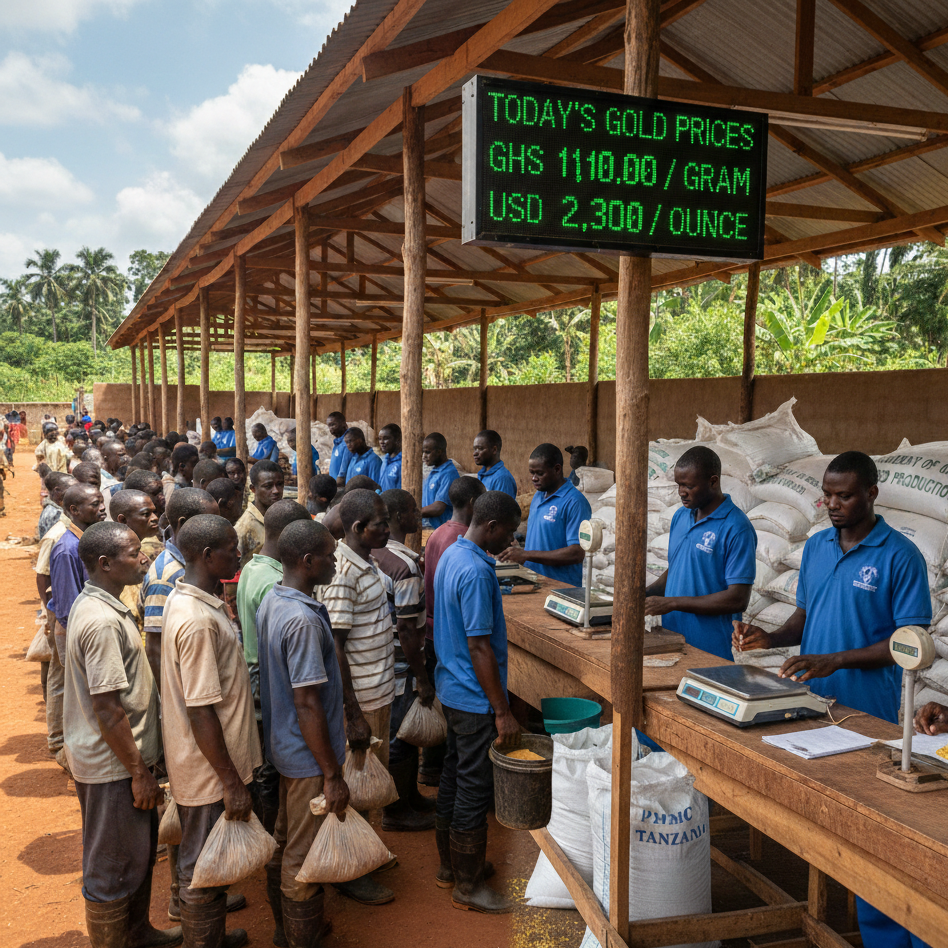
Export Verification and Documentation Standards
The procurement sequence follows jurisdiction-specific protocols while maintaining consistent documentation standards. Ghanaian material undergoes verification at Precious Minerals Marketing Company laboratories before export permit issuance by the Minerals Commission. South African exports require LBMA-accredited assay certification and permits from the Diamond and Precious Metals Regulator accompanied by SARS tax clearance documentation. South Sudanese exports move through ministry-approved verification points in Juba before authorization. Upon certification of purity and weight, insured shipments proceed to international departure points—Kotoka International Airport in Accra, OR Tambo International Airport in Johannesburg, or Juba International Airport—with documentation packages including assay certificates, export permits, tax compliance verification, and certificates of origin.
Global Market Integration
African gold flows along established international routes reflecting refining capacity and regulatory requirements. The United Arab Emirates receives substantial volumes from West and East Africa through Dubai’s refining infrastructure. United States buyers seek COMEX-compliant material, creating steady demand for properly documented Ghanaian and South African exports. Chinese refineries maintain consistent appetite for feedstock supporting jewelry manufacturing and reserve accumulation. European markets prioritize LBMA Good Delivery standards, requiring meticulous documentation that exporters with established procedures reliably provide. These destination-specific requirements influence procurement strategies at source, making exporter expertise in certification protocols a decisive factor in market access.
Operational Reliability for International Buyers
Buyers engage established African gold exporters to address documentation integrity, supply consistency, and logistical reliability. Africa Gold Reserve mitigates these challenges through permanent regional offices, direct relationships with licensed producers, and integrated export management across multiple jurisdictions. The company maintains visibility across the procurement chain from acquisition through final export, providing buyers with complete documentation packages that reduce settlement risk and ensure material specifications match contractual terms. This operational transparency proves particularly valuable for institutional buyers operating under heightened due diligence expectations including OECD guidance compliance and evolving responsible sourcing regulations.
Respectful Engagement with Africa’s Gold Heritage
Contemporary participation in Africa’s gold trade requires acknowledgment of the continent’s millennia-long mining heritage and commitment to equitable benefit sharing. Modern exporters who invest in local compliance infrastructure, maintain transparent procurement practices, and adhere to national regulatory frameworks position themselves as preferred partners for both governments and international buyers. Africa Gold Reserve’s multi-year operational presence across leading producing nations, documented export history, and adherence to international standards provide the foundation for reliable partnerships that honor Africa’s enduring role in global gold supply while supporting responsible mineral governance.
Africa’s gold legacy spans thousands of years—from ancient Nubian mines to West African empires and modern industrial operations. For international buyers, the opportunity lies not in romanticized narratives of discovery but in engaging established channels with operational discipline, regulatory compliance, and transparent practices that respect Africa’s historical and contemporary contributions to global gold supply.
africagoldreserve.com
sales@africagoldreserve.com