
Why Africa Holds Abundant Gold Reserves: A Geological and Historical Perspective
Africa contains approximately 30 percent of the world’s known gold reserves, a concentration rooted in the continent’s unique geological history spanning billions of years. Unlike regions where gold occurs as scattered deposits, Africa hosts several ancient cratons—stable continental cores formed during the Precambrian era—that preserved gold-bearing formations through multiple tectonic cycles. The continent’s gold endowment reflects not random chance but specific geological processes including hydrothermal activity along greenstone belts, sedimentary concentration in ancient basins, and metamorphic redistribution over geological time. For international buyers evaluating African supply sources, understanding these foundational factors provides context for the continent’s enduring role in global gold markets.
Geological Foundations of Africa’s Gold Wealth
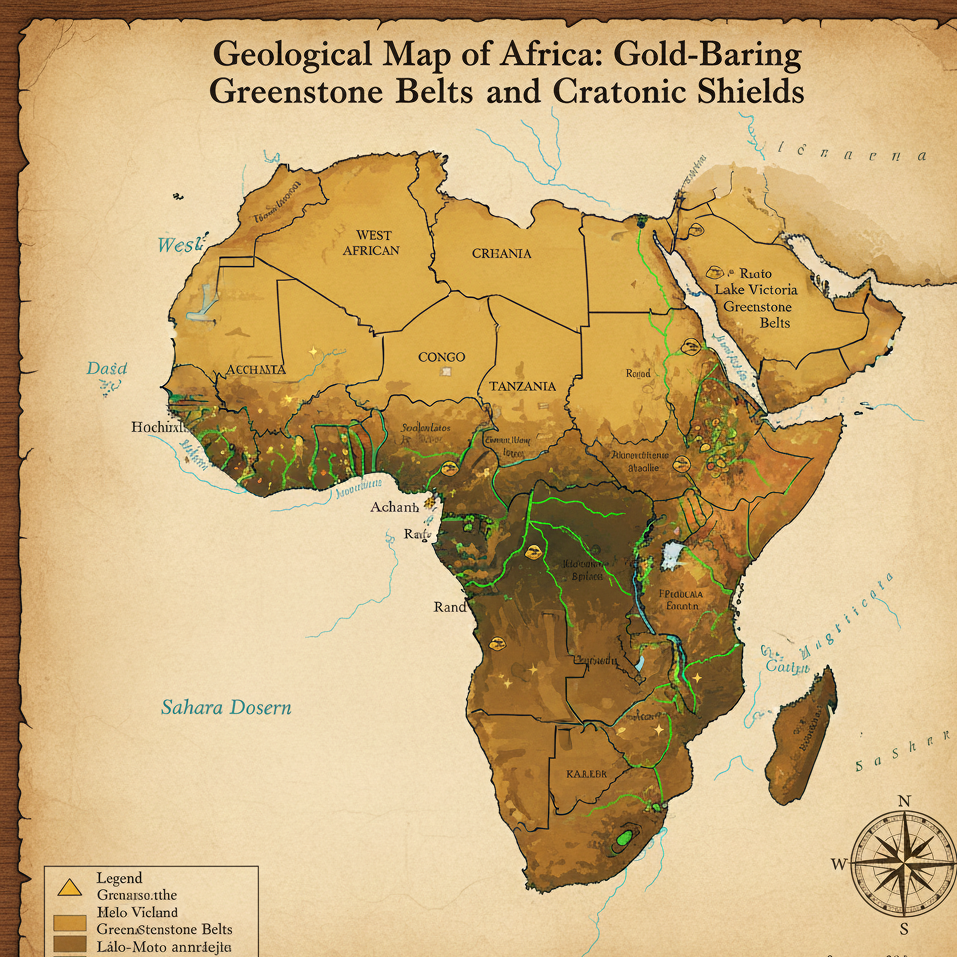
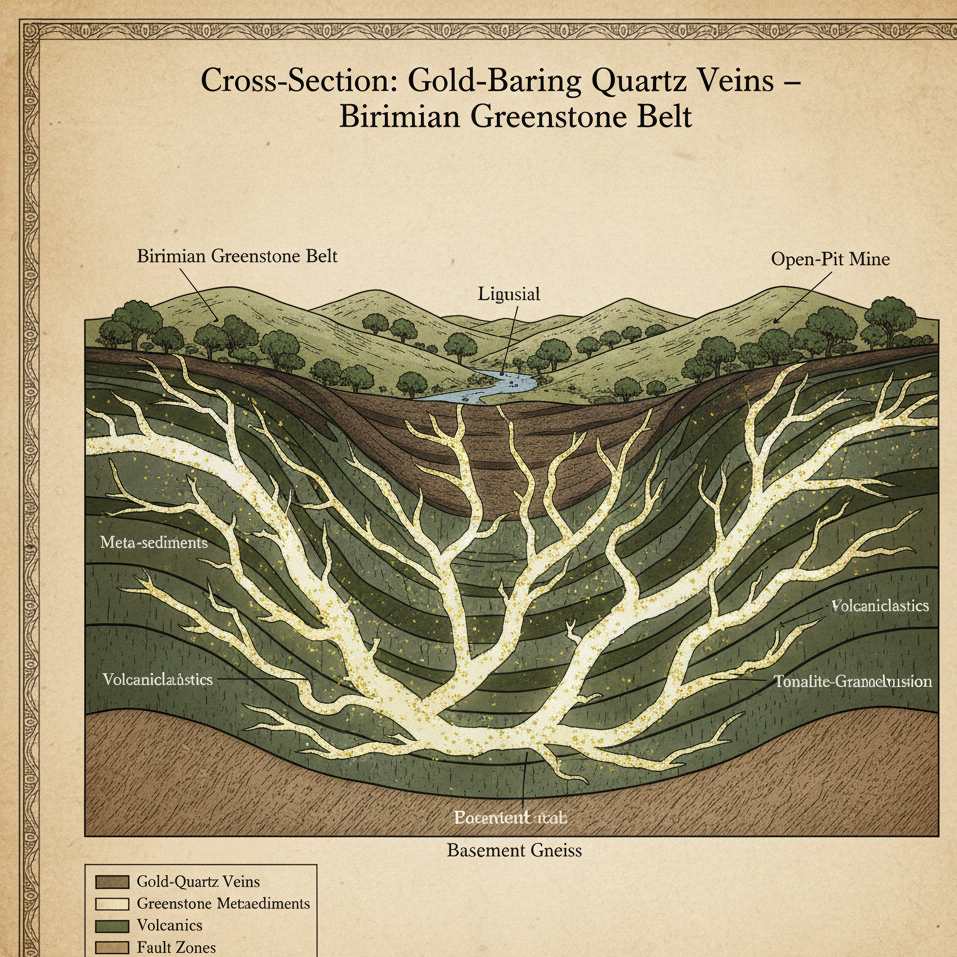
Africa’s gold concentration stems primarily from three ancient geological structures. The West African Craton hosts the Birimian greenstone belts stretching across Ghana, Mali, Burkina Faso, and Côte d’Ivoire—volcanic-sedimentary formations created 2.1 billion years ago where hydrothermal fluids deposited gold in quartz veins and shear zones. Southern Africa’s Kaapvaal Craton contains the Witwatersrand Basin, a 2.9-billion-year-old sedimentary formation where gold accumulated through placer deposition in ancient river systems before being buried and preserved under younger rock layers. The Mozambique Belt extending through Tanzania, Kenya, and into South Sudan represents a younger orogenic system where tectonic collision concentrated gold in metamorphic rocks and shear zones. These ancient structures survived continental breakup and erosion precisely because cratons represent the most stable portions of Earth’s crust—preserving gold deposits that younger geological regions lost through tectonic recycling.
Regional Concentration Patterns
Gold distribution across Africa reflects these underlying geological provinces. West Africa’s Birimian belts produce over 130 metric tons annually from Ghana alone, with near-surface deposits amenable to both industrial and small-scale extraction. The Witwatersrand Basin in South Africa has yielded more than 40,000 metric tons historically—the largest gold resource on Earth—though current production of approximately 100 metric tons annually comes from increasingly deep operations as near-surface reserves deplete. Tanzania’s Lake Victoria goldfields within the Mozambique Belt have seen production growth following regulatory stabilization, while emerging producers including South Sudan access alluvial and hard rock deposits within the same geological system. These regional patterns demonstrate how Africa’s gold abundance is not uniformly distributed but concentrated in specific ancient formations that created ideal conditions for gold deposition and preservation.
Africa Gold Reserve’s Geologically Informed Sourcing
Africa Gold Reserve has maintained field operations across Ghana, South Africa, and South Sudan since 2015, developing procurement strategies informed by regional geological characteristics. In Ghana’s Birimian belt regions, the company sources from licensed small-scale operators working near-surface deposits and authorized aggregators consolidating artisanal production. In South Africa, operations focus on material from regulated small-scale operations accessing Witwatersrand Basin extensions rather than deep-level industrial mines. In South Sudan, field teams engage ministry-licensed aggregators sourcing alluvial and hard rock production from Mozambique Belt formations in Eastern Equatoria state. Headquartered in South Africa with additional operations in the United Kingdom, the company leverages geological understanding to identify legitimate supply sources within each jurisdiction’s regulatory framework, ensuring material originates from verifiable geological formations with established production histories.
Verification and Export Protocols
The procurement sequence begins with source verification where field representatives confirm mining locations align with known gold-bearing geological formations and that producers hold valid licenses for those areas. Material undergoes assay at government-approved facilities—Ghana’s Precious Minerals Marketing Company laboratories for Birimian belt production, South Africa’s LBMA-certified centers for Witwatersrand-related output, or South Sudan’s ministry-approved verification points for Mozambique Belt material. Upon certification of purity and weight, export permits are secured from mineral authorities with tax clearance documentation. Customs declarations are processed before insured transit to international departure points. Documentation packages include geological origin information where available alongside assay certificates, export permits, and tax compliance verification—elements that provide buyers with context about material provenance beyond basic purity metrics.
Global Market Recognition of African Supply
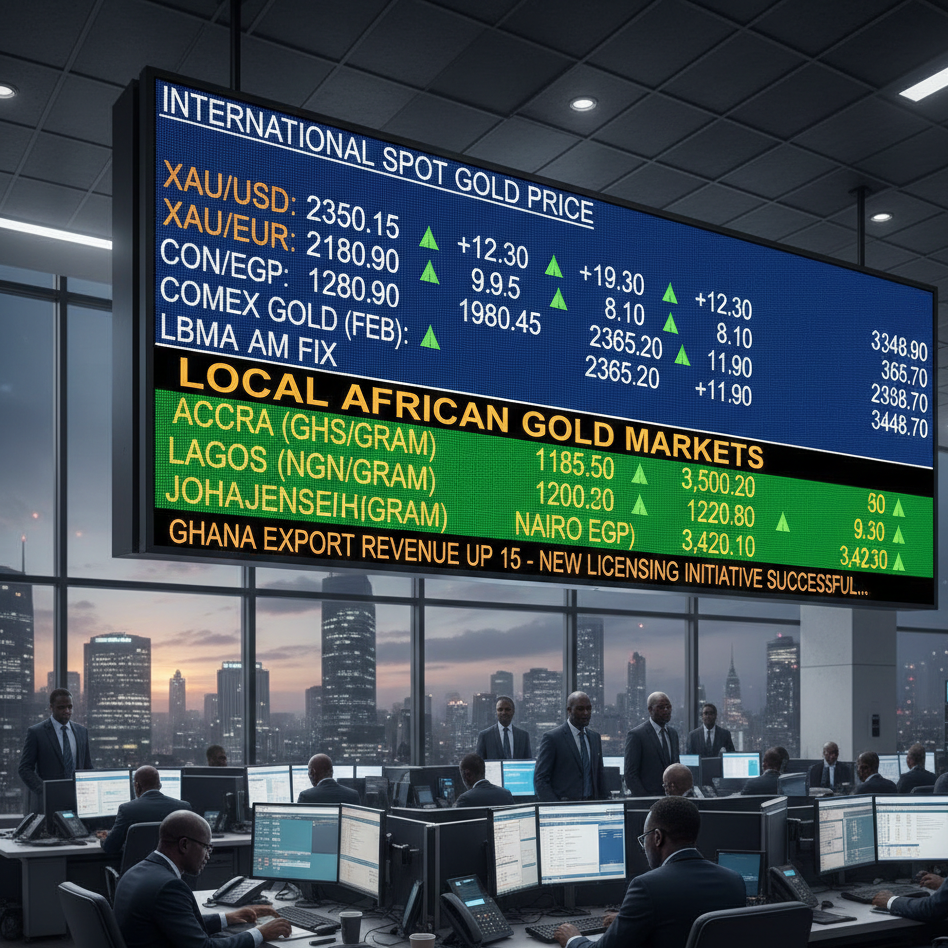
International markets recognize Africa’s geological endowment as a source of consistent supply rather than speculative opportunity. The United Arab Emirates receives substantial volumes from West Africa’s Birimian belt production and East Africa’s emerging Mozambique Belt sources, with Dubai refineries processing material for Asian markets. United States buyers seek COMEX-compliant material regardless of geological origin, creating steady demand for properly documented exports from Africa’s established producing regions. Chinese refineries maintain appetite for feedstock from multiple African geological provinces to diversify supply sources. European markets prioritize LBMA Good Delivery compliance, which African exporters with established verification procedures reliably provide. These trade patterns reflect buyer confidence in Africa’s geological endowment as a foundation for long-term supply relationships.
Operational Advantages of Geologically Grounded Sourcing
Buyers engage established African gold exporters who understand regional geology to address three priorities: supply consistency tied to proven geological formations, documentation integrity including verifiable origin information, and risk mitigation through avoidance of speculative or unverified sources. Africa Gold Reserve addresses these through permanent regional presence in geologically significant districts, direct relationships with licensed producers operating within known gold-bearing formations, and integrated export management that maintains geological context throughout the supply chain. The company provides buyers with documentation packages that include origin verification alongside standard assay and export certificates—reducing due diligence burden and supporting responsible sourcing commitments that increasingly require geological provenance information.

Sustainable Engagement with Africa’s Geological Endowment
Responsible participation in Africa’s gold trade requires recognition that the continent’s abundance stems from ancient geological processes—not infinite or easily accessible reserves. Sustainable exporters invest in understanding regional geology to identify legitimate supply sources within regulatory frameworks, avoid environmentally destructive practices that damage gold-bearing formations, and support formalization efforts that channel production from known deposits into documented trade. Africa Gold Reserve’s decade of operational presence across multiple geological provinces, documented export history tied to specific formations, and adherence to regulatory frameworks in Ghana, South Africa, and South Sudan establish the foundation for partnerships that respect both Africa’s geological heritage and contemporary resource governance requirements.
Africa’s gold abundance reflects billions of years of geological evolution that concentrated and preserved gold in ancient cratons and greenstone belts. For international buyers, the opportunity lies not in exploiting perceived abundance but in engaging exporters who understand these geological foundations and operate within structured frameworks that ensure supply chain integrity. Companies combining geological knowledge with regulatory compliance create sustainable partnerships that honor Africa’s unique endowment while delivering verifiable supply to global markets.
africagoldreserve.com
sales@africagoldreserve.com