

Is Gold in South Africa Cheaper: Understanding Pricing Realities in a Global Market
Gold is not inherently cheaper in South Africa—a persistent misconception that misrepresents how global precious metals markets function and creates unrealistic expectations for international buyers. Gold trades as a globally integrated commodity with prices determined by international benchmarks, adjusted for legitimate transaction costs including refining requirements, transportation, insurance, and documentation. Local acquisition prices in South Africa typically track London Bullion Market Association spot rates minus these verifiable expenses—not because the metal possesses lower intrinsic value at source. For buyers evaluating South African supply, understanding these pricing mechanics is essential to building sustainable procurement relationships grounded in market reality.

Global Pricing Mechanics and Market Efficiency
Gold pricing operates through highly efficient global mechanisms where LBMA spot prices establish baseline valuations continuously updated during trading hours. These prices reflect worldwide supply-demand fundamentals, currency movements, and macroeconomic factors—not geographic origin of material. Physical gold from South Africa’s Witwatersrand Basin trades at prices closely aligned with this benchmark, adjusted for legitimate cost differentials including doré refining requirements, assay verification, insurance, and logistics. Significant, persistent price discounts in major producing regions would trigger immediate arbitrage activity by traders moving material to higher-priced markets—ensuring rapid price convergence. The notion of systematically “cheaper” gold in South Africa contradicts fundamental commodity market principles and ignores the reality of integrated global precious metals trading where information flows instantaneously across financial centers.
Actual Pricing Dynamics in the South African Market
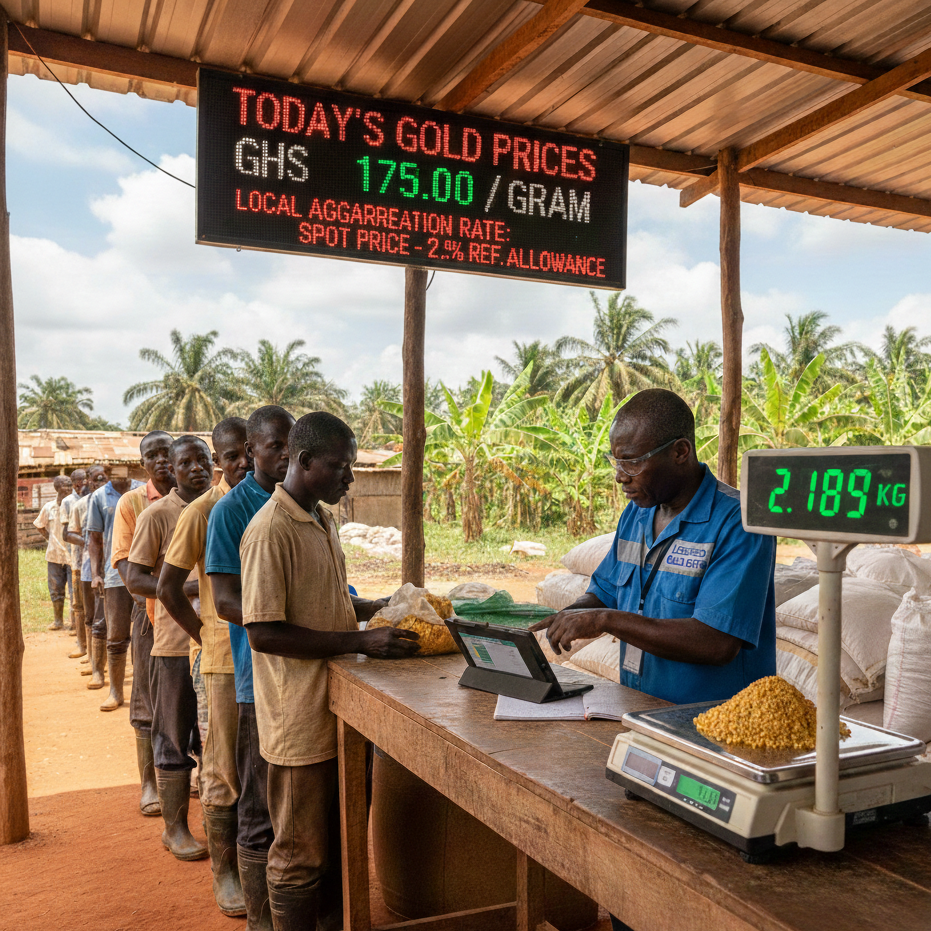
Pricing variations within South Africa reflect legitimate market factors rather than inherent undervaluation. Industrial mines sell doré bars to refineries at negotiated discounts of 2–4 percent below LBMA spot rates to account for refining costs and processing requirements—consistent with premiums charged by refiners globally. Licensed aggregators purchasing compliant small-scale production apply similar adjustments reflecting assay verification, consolidation costs, and export preparation expenses. These differentials represent legitimate transaction costs rather than exploitable price gaps, and they narrow significantly when material reaches international refining centers where refined gold trades at LBMA parity. South Africa’s mature regulatory environment actually creates pricing transparency that reduces arbitrage opportunities compared to less formalized markets.
The Informal Market Trap
Some perception of “cheap gold” stems from informal channels where material moves without government verification or tax compliance. In these transactions, prices may appear discounted because they exclude fiscal obligations and documentation costs required in legitimate trade. However, such material carries significant risks for international buyers: absence of verifiable origin documentation, potential association with illicit financial flows, and ineligibility for LBMA or COMEX markets. Responsible buyers increasingly avoid these channels due to OECD due diligence requirements and regulations like the EU Conflict Minerals Regulation. The apparent “discount” in informal markets represents deferred compliance costs, potential legal exposure, and reputational risk—not genuine value. Buyers who pursue these channels often discover that apparent savings vanish when material cannot clear customs or requires expensive re-verification before entering regulated markets.
Africa Gold Reserve’s Transparent Pricing Approach
Africa Gold Reserve has operated from its South African headquarters since 2015 with a commitment to transparent, market-aligned pricing grounded in international benchmarks. The company acquires material from licensed miners and authorized sellers at prices reflecting LBMA spot rates adjusted for legitimate transaction costs including LBMA-accredited assay verification, export documentation, insurance, and logistics to OR Tambo International Airport. Field representatives provide sellers with pricing calculations based on current international rates, ensuring fair compensation while maintaining commercial viability. This approach rejects exploitative practices while acknowledging real cost structures—building sustainable relationships with producers who receive fair value within formal economic channels. With additional operations in Ghana, South Sudan, and the United Kingdom, the company bridges South African supply with global buyer requirements through documented, compliant transactions that deliver competitive total landed costs.
Export Costs and Documentation Requirements
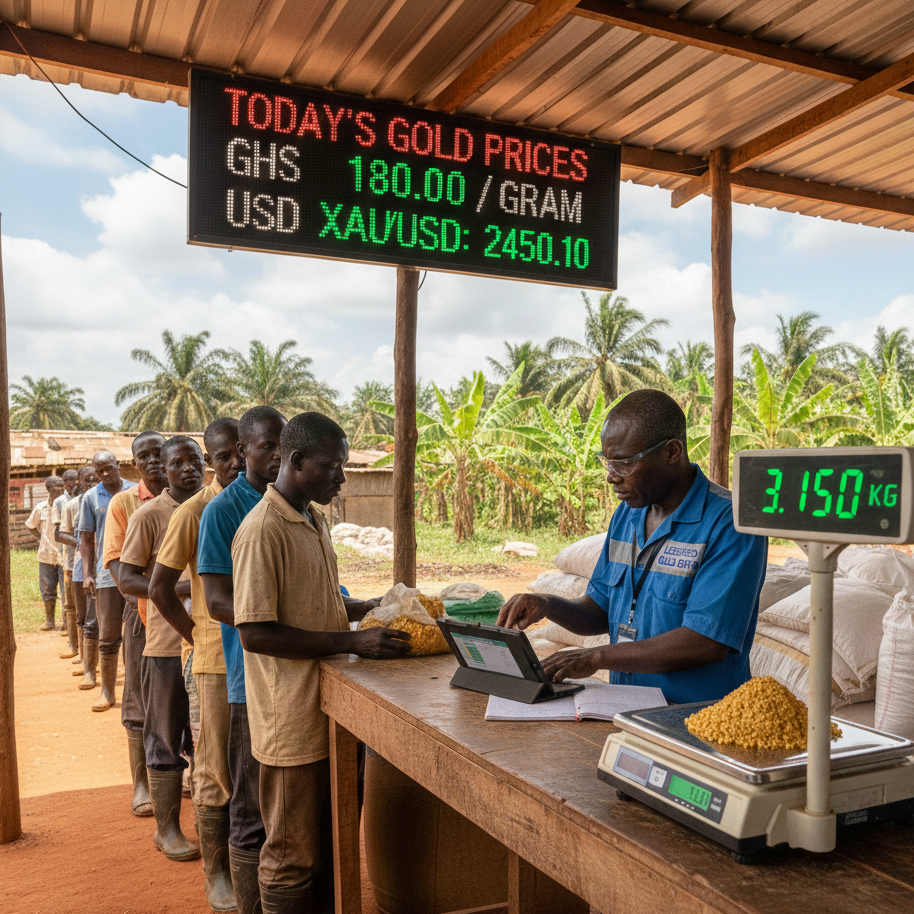
Legitimate South African gold exports incur substantial costs that factor into pricing structures at source. Material requires verification at LBMA-accredited laboratories generating certification fees. Export permits from the Diamond and Precious Metals Regulator, tax clearance documentation from SARS, customs processing, armed security escort, and insured air freight to international destinations add significant expenses. These costs—typically 4–7 percent of material value depending on volume—explain why acquisition prices at source appear below international spot rates. They represent legitimate transaction expenses rather than evidence of undervaluation. Exporters attempting to eliminate these costs typically operate outside regulatory frameworks, creating supply chain risks that ultimately increase total landed costs for downstream buyers.
Global Buyer Expectations and Value Assessment
International refineries, commodity traders, and institutional investors evaluate South African gold based on total landed cost—not just acquisition price at source. Material arriving with complete documentation packages (LBMA assay certificates, export permits, SARS tax clearance verification, certificates of origin) commands premium consideration because it satisfies LBMA Good Delivery standards, COMEX specifications, and due diligence requirements. Buyers recognize that apparent “discounts” at source often translate to higher total costs when material lacks proper documentation, requiring additional verification or rendering it ineligible for regulated markets. Africa Gold Reserve’s focus on documentation integrity ensures buyers receive material whose total landed cost remains competitive while satisfying evolving compliance standards—demonstrating that transparent pricing at acquisition stage supports lower total costs downstream for trusted gold exporters maintaining rigorous supply chain standards.

Sustainable Trade Requires Fair Value Exchange
Long-term viability in South Africa’s gold sector depends on pricing structures that provide fair compensation to legitimate producers while maintaining commercial sustainability for exporters. Exploitative pricing erodes producer relationships, incentivizes diversion to informal channels, and undermines government revenue collection essential for mining community development. Conversely, transparent pricing aligned with international benchmarks supports formalization efforts, encourages regulatory compliance, and builds trust across the supply chain. Africa Gold Reserve’s decade of operational presence demonstrates that sustainable procurement succeeds through fair value exchange—not artificial price advantages that cannot persist in globally integrated markets where information arbitrage eliminates persistent discounts.
South Africa’s gold markets operate within global pricing frameworks where value derives from documentation integrity and supply chain transparency—not geographic arbitrage. Buyers seeking sustainable partnerships should prioritize South Africa gold exporters demonstrating transparent pricing aligned with international benchmarks, documented compliance with national regulations, and verifiable operational footprints. These characteristics—not promises of artificially low prices—define reliable participation in South Africa’s mature gold trade and ensure total landed costs remain competitive in global markets while supporting responsible mineral governance.
africagoldreserve.com
sales@africagoldreserve.com