
Gold Price in South Africa Versus India: Understanding Market Structures and Pricing Realities
Gold prices in South Africa and India both reference the same global benchmarks established by the London Bullion Market Association, yet local market dynamics create distinct pricing environments reflecting each nation’s role in the global gold ecosystem. South Africa functions primarily as a production and export hub where acquisition prices track international spot rates minus legitimate transaction costs. India operates as the world’s second-largest gold consumer market where domestic prices consistently trade at premiums above global benchmarks due to import duties, taxation, and demand dynamics. For international buyers evaluating supply sources, understanding these structural differences—not pursuing mythical arbitrage opportunities—is essential to building sustainable procurement strategies grounded in market reality.

Industry Context: Global Pricing Integration
Gold functions as one of the world’s most efficiently traded commodities, with pricing mechanisms that rapidly eliminate persistent geographic arbitrage opportunities. LBMA spot prices establish baseline valuations continuously updated during global trading hours, reflecting worldwide supply-demand fundamentals rather than regional origin. Physical gold from South Africa’s Witwatersrand Basin trades at prices closely aligned with this benchmark, adjusted for legitimate cost differentials including doré refining requirements, assay verification at LBMA-accredited laboratories, insurance, logistics, and export documentation. Similarly, Indian domestic prices reflect international benchmarks adjusted upward for structural factors including import duties (currently 10–15 percent depending on form), 3 percent GST on transactions, distribution markups through multi-tier retail networks, and periodic demand surges during wedding seasons and festivals. These adjustments represent legitimate market mechanics rather than evidence of fundamental value differences between regions.
Regional Perspective: Producer Versus Consumer Market Dynamics
South Africa’s gold market structure centers on production and export, delivering approximately 100 metric tons annually through regulated channels from operations concentrated in the Witwatersrand Basin. Licensed aggregators and authorized buyers typically acquire material from compliant small-scale producers at prices 3–5 percent below LBMA spot rates to account for refining costs, verification expenses, and export preparation—consistent with premiums charged by refiners globally. This discount reflects transaction costs rather than lower intrinsic value, narrowing significantly once material reaches international refining centers where it trades at global parity. The country’s mature regulatory environment under the Precious Metals Act ensures documentation integrity valued by international buyers requiring audit-ready supply chains.
India represents a consumption-driven market importing approximately 800–1,000 metric tons annually to satisfy jewelry manufacturing and investment demand. Domestic prices consistently trade at premiums of 2–8 percent above international benchmarks due to structural factors beyond simple supply-demand imbalances. Import duties designed to manage current account deficits, value-added taxation, multi-layered distribution networks, and cultural demand patterns during auspicious occasions create persistent premiums that reflect market accessibility rather than gold’s intrinsic worth. These premiums represent the cost of immediate physical availability in a high-demand consumer market—not opportunities for arbitrage against producer nations.
Price Convergence Mechanisms
Efficient arbitrage mechanisms prevent sustained price disparities between South African supply sources and Indian markets. When Indian domestic premiums widen significantly above global benchmarks, import volumes increase until supply-demand equilibrium restores price alignment. Conversely, if South African acquisition prices fell substantially below international rates, traders would immediately redirect material to higher-priced markets until convergence occurred. This dynamic ensures that while temporary localized differentials exist due to transaction costs or demand spikes, persistent arbitrage opportunities cannot survive in globally integrated precious metals markets where information flows instantaneously and physical movement—though costly—remains feasible for licensed entities operating within regulatory frameworks.
Africa Gold Reserve’s Transparent Pricing Model
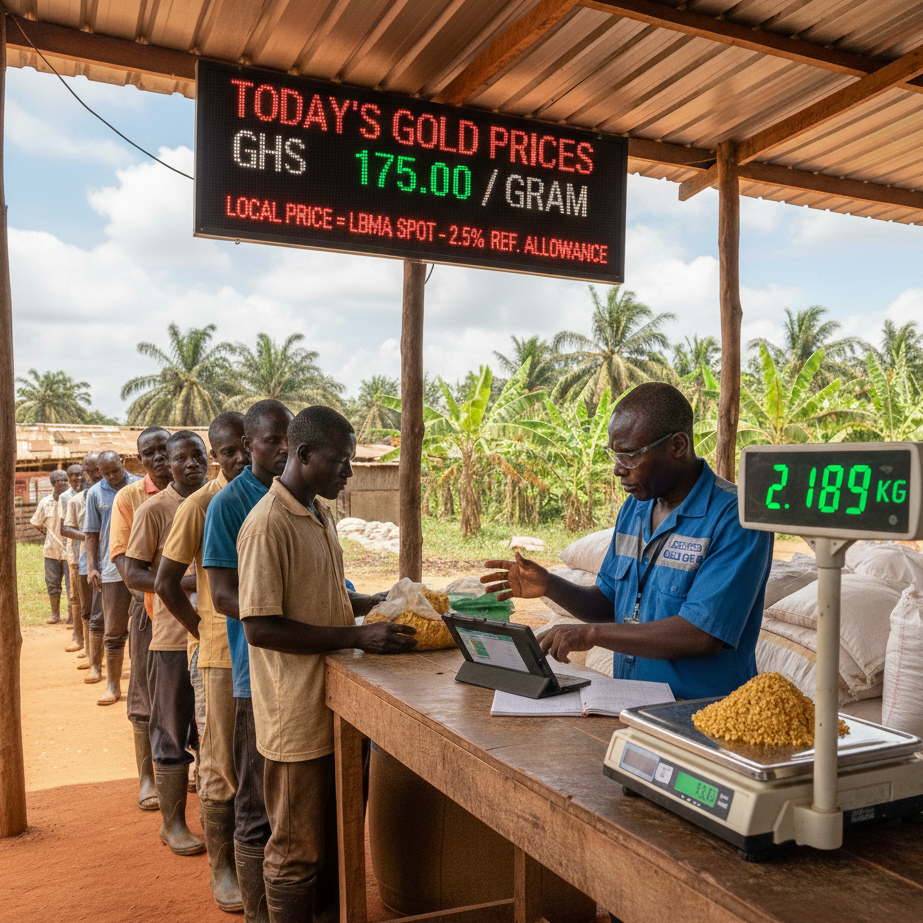
Africa Gold Reserve has operated from its South African headquarters since 2015 with a commitment to transparent, market-aligned pricing grounded in international benchmarks. The company acquires material exclusively from licensed miners and authorized sellers at prices reflecting LBMA spot rates adjusted for legitimate transaction costs including LBMA-accredited assay verification, export documentation, insurance, and logistics to OR Tambo International Airport. Field representatives provide sellers with pricing calculations based on current international rates, ensuring fair compensation while maintaining commercial viability. This approach rejects exploitative practices while acknowledging real cost structures—building sustainable relationships with producers who receive fair value within formal economic channels. With additional operations in Ghana, South Sudan, and the United Kingdom, the company bridges South African supply with global buyer requirements through documented, compliant transactions that deliver competitive total landed costs for international gold trading.

Export Verification and Documentation Requirements
Legitimate South African gold exports incur substantial costs that factor into pricing structures at source. Material requires verification at LBMA-accredited laboratories generating certification fees. Export permits from the Diamond and Precious Metals Regulator, tax clearance documentation from SARS, customs processing, armed security escort, and insured air freight to international destinations add significant expenses. These costs—typically 4–7 percent of material value depending on volume—explain why acquisition prices at source appear below international spot rates. They represent legitimate transaction expenses rather than evidence of undervaluation. Exporters attempting to eliminate these costs typically operate outside regulatory frameworks, creating supply chain risks that ultimately increase total landed costs for downstream buyers seeking to buy gold from Africa through compliant channels.
Global Demand Patterns and Market Integration
South African gold flows along established international routes shaped by refining capacity and regulatory requirements rather than direct shipments to India. China receives substantial volumes for jewelry manufacturing and strategic reserves. European refineries prioritize material meeting LBMA standards, creating steady demand for properly documented South African exports. The United Arab Emirates serves as a transshipment hub where African gold may undergo refining before potential onward movement to Indian markets—though such material enters India only after payment of full import duties and compliance with Indian regulatory requirements. These trade patterns reflect buyer confidence in South African supply’s documentation integrity rather than price arbitrage considerations.
Value Proposition for International Buyers
Buyers engage established South Africa gold exporters to address three operational priorities: documentation integrity for seamless customs clearance, supply consistency amid production fluctuations, and logistical reliability in moving material from source to international departure points. Africa Gold Reserve addresses these through permanent operational presence in Johannesburg and mining regions, direct relationships with licensed producers, and integrated export management facilitating established trade routes including South Africa to China. The company maintains visibility across the procurement chain from acquisition through final export, providing buyers with complete documentation packages that reduce settlement risk and ensure material specifications match contractual terms. This operational transparency proves particularly valuable for institutional buyers operating under heightened due diligence requirements including OECD guidance compliance.
Sustainable Trade Requires Market Realism
Long-term viability in South African gold procurement depends on pricing structures aligned with global benchmarks rather than artificial discounts that cannot persist in efficient markets. Exploitative pricing erodes producer relationships, incentivizes diversion to informal channels, and undermines government revenue collection essential for mining community development. Conversely, transparent pricing aligned with international benchmarks supports formalization efforts, encourages regulatory compliance, and builds trust across the supply chain. Africa Gold Reserve’s decade of operational presence demonstrates that sustainable procurement succeeds through fair value exchange and documentation integrity—not mythical price advantages that global arbitrage mechanisms rapidly eliminate.
Gold pricing in South Africa and India reflects distinct market structures—producer versus consumer—rather than fundamental value differences. South African acquisition prices track international benchmarks minus legitimate transaction costs; Indian retail prices trade at premiums reflecting import duties and distribution markups. For international buyers, the opportunity lies not in pursuing geographic arbitrage but in engaging established South Africa gold exporters who deliver verifiable supply with documentation integrity. Companies that combine transparent pricing with procedural rigor create sustainable partnerships that deliver reliable supply while supporting responsible mineral governance in this strategically important market.
africagoldreserve.com
sales@africagoldreserve.com