
Gold in Central Africa: Production Realities and Supply Chain Considerations
Central Africa holds modest gold resources compared to West and Southern Africa’s major producing regions, with production concentrated primarily in the eastern Democratic Republic of Congo and limited activity in Cameroon and the Central African Republic. Unlike Ghana or South Africa, most Central African nations lack established formal gold sectors, with extraction occurring predominantly through artisanal operations often outside regulatory frameworks. For international buyers evaluating supply sources, understanding these structural limitations—and the significant due diligence challenges they present—is essential to responsible procurement decisions in this complex region.
Industry Context: Central Africa’s Geological Profile
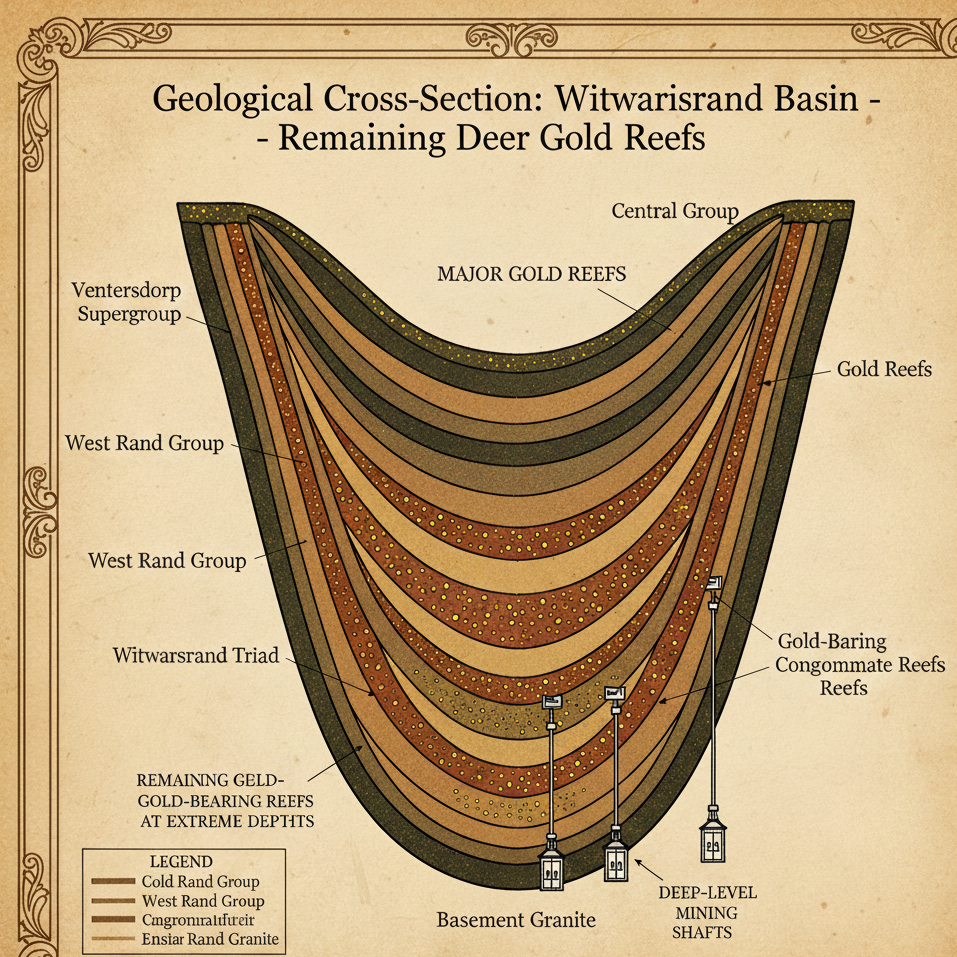
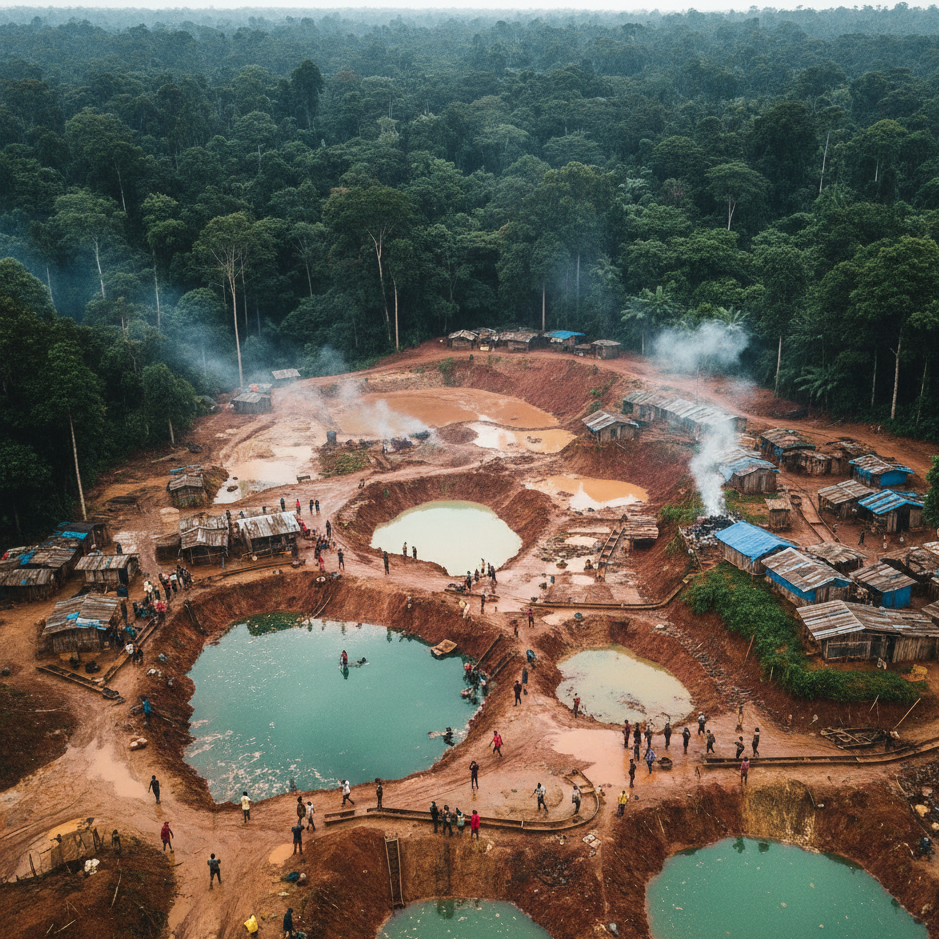
Central Africa’s gold endowment exists primarily within two geological contexts. The northeastern Democratic Republic of Congo contains extensions of the Mozambique Belt—a Precambrian orogenic system hosting gold deposits in metamorphic rocks and shear zones, particularly in North Kivu, South Kivu, and Ituri provinces. These areas produce an estimated 20–40 metric tons annually through artisanal mining, though precise measurement remains difficult due to extensive informal trade flows. Cameroon possesses smaller deposits within the northern edge of the Congo Craton, with limited production from sites near Batouri and Lom. The Central African Republic hosts minor occurrences within greenstone belts in the southwest, though production remains minimal and largely undocumented. Unlike West Africa’s Birimian belts or South Africa’s Witwatersrand Basin, Central Africa lacks major gold-bearing formations that have supported industrial-scale development.
Regional Production Characteristics and Challenges
The Democratic Republic of Congo represents Central Africa’s only significant gold producer, yet its sector operates under profoundly challenging conditions. Eastern DRC’s artisanal production occurs amid documented conflict financing risks, with armed groups exerting control over mining areas and trade routes. The U.S. Dodd-Frank Act Section 1502 and EU Conflict Minerals Regulation specifically identify DRC gold as a “conflict mineral” requiring enhanced due diligence. While initiatives like the ITSCI traceability scheme have attempted formalization in select areas, coverage remains limited and verification challenges persist. Most production moves through opaque cross-border channels to Uganda, Rwanda, or Burundi before transshipment—complicating origin verification and creating substantial compliance barriers for institutional buyers.
Cameroon maintains minimal formal gold production estimated below 5 metric tons annually, with small-scale operations in the eastern region lacking structured export channels. The Central African Republic’s production remains largely undocumented and informal, with negligible volumes entering legitimate international trade. Chad, Gabon, Republic of Congo, and Equatorial Guinea possess negligible commercial gold production despite minor geological occurrences. These realities distinguish Central Africa from Africa’s established gold jurisdictions where functional—though imperfect—regulatory frameworks enable compliant trade.
Due Diligence Imperatives for Responsible Buyers
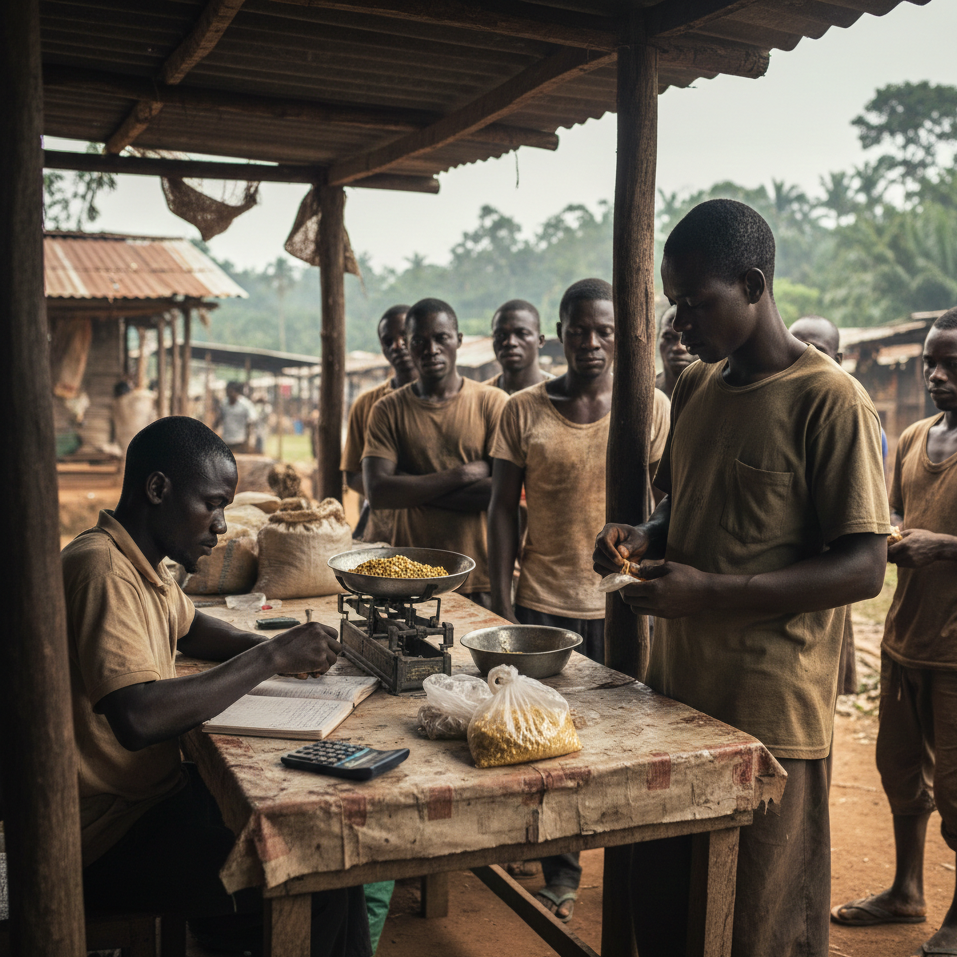
International buyers face substantial challenges sourcing gold from Central Africa with confidence in supply chain integrity. The OECD Due Diligence Guidance for Responsible Supply Chains identifies eastern DRC as a “conflict-affected and high-risk area” requiring enhanced scrutiny. Key barriers include:
- Absence of functional government verification systems in most producing areas
- Limited capacity for chain-of-custody documentation from mine to export
- Persistent risks of conflict financing and human rights abuses in eastern DRC
- Cross-border smuggling obscuring true origin of material
- Lack of LBMA-accredited assay facilities within most Central African nations
These factors render Central African gold effectively inaccessible to buyers bound by responsible sourcing commitments, regulated market requirements, or institutional compliance policies. Major international refiners, commodity traders, and jewelry manufacturers have largely excluded Central African supply—particularly from eastern DRC—pending demonstrable improvements in traceability and governance.
Africa Gold Reserve’s Operational Focus
Africa Gold Reserve has maintained field operations across Ghana, South Africa, and South Sudan since 2015, developing procurement networks exclusively within jurisdictions possessing functional regulatory frameworks and government verification systems. The company does not currently source gold from Central African nations due to the absence of structured export channels meeting international due diligence standards. Headquartered in South Africa with additional operations in the United Kingdom, Africa Gold Reserve sources material exclusively from licensed miners and authorized aggregators operating under national mining codes in its three operational jurisdictions. Field representatives verify mining licenses and land rights before material evaluation, then oversee supervised transport to government assay facilities—Ghana’s Precious Minerals Marketing Company laboratories, South Africa’s LBMA-certified centers, or South Sudan’s ministry-approved verification points in Juba.

Export Verification Standards in Compliant Jurisdictions
Contrast Central Africa’s limited formalization with established verification protocols in Africa Gold Reserve’s operational jurisdictions. Ghanaian material undergoes verification at PMMC facilities before export permit issuance by the Minerals Commission and tax clearance from the Ghana Revenue Authority. South African exports require LBMA-accredited assay certification, export permits from the Diamond and Precious Metals Regulator, and SARS tax clearance documentation. South Sudanese exports move through ministry-approved verification points in Juba before authorization. Documentation packages include assay certificates, export permits, tax compliance verification, and certificates of origin—elements essential for satisfying LBMA Good Delivery standards that Central African supply typically cannot provide.
Global Market Integration Patterns
African gold flows along established international routes shaped by refining capacity and regulatory requirements. West African production moves substantially to the UAE, United States, and Europe through documented channels. Southern African supply serves Chinese and European markets with exceptional documentation rigor. Central African gold—particularly from eastern DRC—largely bypasses these mainstream channels, moving through opaque transshipment routes that obscure origin and preclude compliance with major market requirements. This market segmentation reflects not geological differences but governance and traceability realities that determine commercial viability for institutional buyers.
Strategic Procurement Recommendations
For buyers seeking African gold supply with verifiable chain of custody, Central Africa presents significant challenges compared to established producing regions. Responsible procurement requires:
- Prioritizing jurisdictions with functional government verification systems
- Requiring complete documentation packages including assay certificates, export permits, and tax clearance
- Implementing enhanced due diligence for material originating from or transiting conflict-affected areas
- Engaging exporters with demonstrable operational presence in regulated jurisdictions
Africa Gold Reserve addresses these requirements through permanent regional offices in mining districts across Ghana, South Africa, and South Sudan, direct relationships with licensed producers, and integrated export management facilitating established trade routes. The company maintains visibility across the procurement chain from acquisition through final export, providing buyers with complete documentation packages that reduce settlement risk while satisfying evolving responsible sourcing regulations.
Sustainable Engagement Principles
Responsible participation in Africa’s gold trade requires commitment to formalized channels that support governance improvements and community development. While Central Africa’s gold sector requires substantial formalization efforts to enable compliant trade, buyers can support positive development by:
- Engaging exclusively with licensed producers in jurisdictions possessing functional regulatory frameworks
- Supporting initiatives that strengthen government capacity for mineral verification and revenue collection
- Avoiding transactions that bypass regulatory systems regardless of apparent price advantages
- Partnering with exporters demonstrating transparent practices and verifiable operational footprints
Africa Gold Reserve’s decade of operational presence across leading producing nations, documented export history from licensed sources, and adherence to regulatory frameworks establish the foundation for partnerships that support responsible mineral governance while delivering verifiable supply to global markets.
Central Africa possesses modest gold resources primarily in eastern DRC, yet the region’s limited formalization, governance challenges, and conflict financing risks create substantial barriers to compliant international trade. For buyers prioritizing supply chain integrity and regulatory compliance, West and Southern Africa’s established producing jurisdictions offer verifiable supply through structured channels that Central Africa currently cannot match. Companies combining transparent practices with operational discipline across Africa’s regulated gold-producing nations create sustainable partnerships that deliver reliable supply while supporting responsible mineral governance.
africagoldreserve.com
sales@africagoldreserve.com