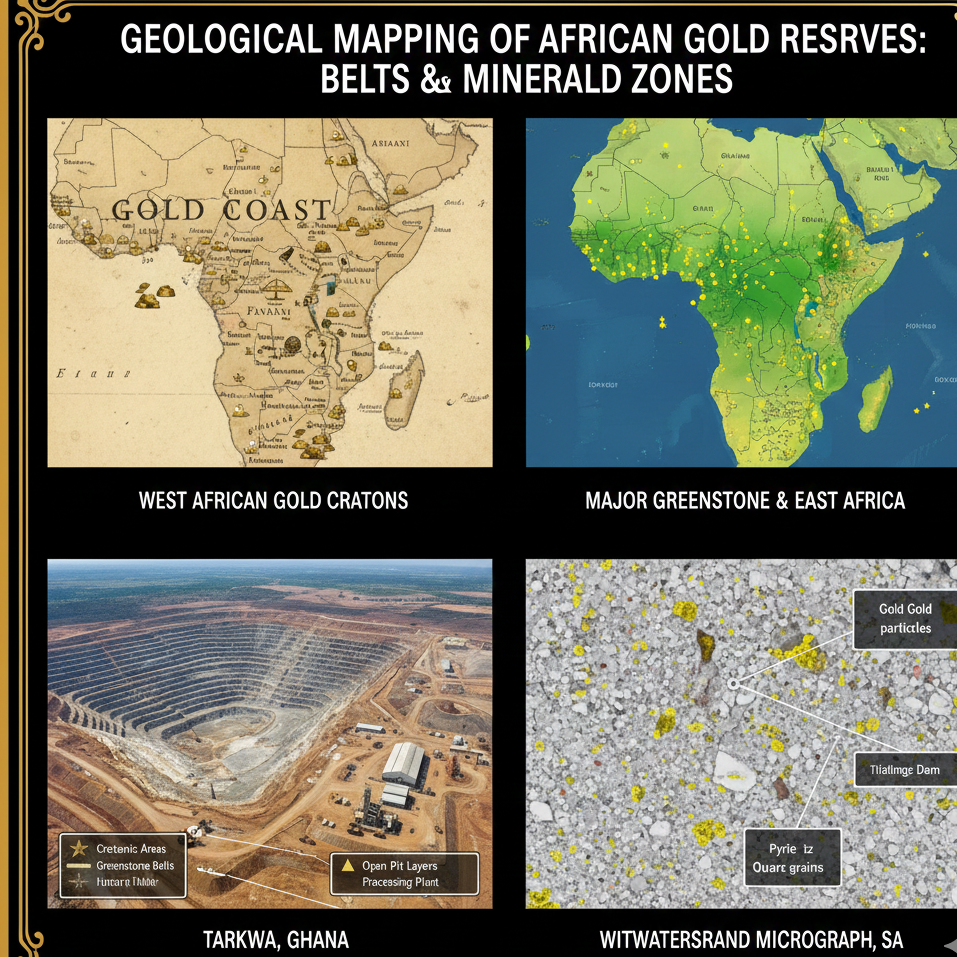

Gold Coast in Africa Map: Historical Trade Routes and Modern Sourcing Corridors for International Buyers
Introduction
The term “Gold Coast” carries dual significance for international buyers evaluating African gold supply: it refers both to the historical designation of West Africa’s gold-rich Atlantic coastline and to the modern nation of Ghana, which inherited this legacy. Mapping the Gold Coast region reveals a continuum of geological endowment, trade infrastructure, and regulatory development that continues to shape contemporary gold export from Ghana and neighboring jurisdictions. For commodity traders, refineries, and institutional investors, understanding this geographical and historical context provides valuable perspective for sourcing strategies, risk assessment, and supply chain planning.
Africa Gold Reserve has operated within this rich historical continuum since 2015, with focused activities in Ghana complementing our broader African footprint. This article examines the Gold Coast region through both historical and contemporary lenses, offering practical insights for buyers seeking to buy gold from Africa through verified, compliant channels grounded in geographical intelligence.
Industry Context
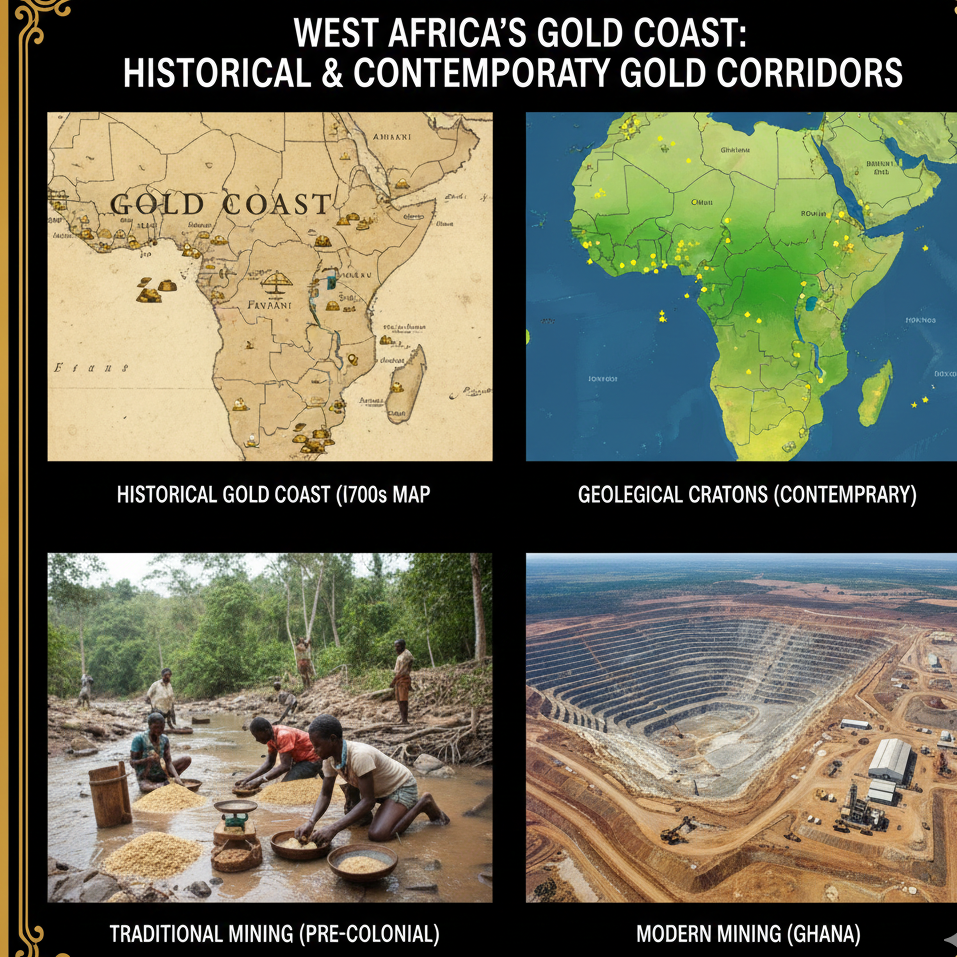
The historical Gold Coast encompassed the Atlantic coastline of modern-day Ghana and portions of neighboring territories, named by European traders for the region’s extraordinary gold wealth. This designation reflected not merely coastal access but the inland geological formations—particularly the Birimian greenstone belts—that have produced gold for centuries. Mapping these formations reveals a contiguous gold-endowed corridor extending from Côte d’Ivoire through Ghana, Burkina Faso, and into Mali, forming one of the world’s most productive mineral provinces.
Modern gold export from Ghana builds upon this historical foundation through formalized licensing systems, established buying centers, and transparent regulatory frameworks that connect local production to international refineries. The country’s coastal infrastructure, including ports in Tema and Takoradi, facilitates efficient export logistics that link inland mining regions to global markets. Understanding this geographical integration—from geological source to coastal export point—helps buyers evaluate supply chain reliability and logistical efficiency.
International gold trading from the Gold Coast region benefits when buyers comprehend not just where gold is located, but how historical trade patterns have evolved into contemporary compliance frameworks. The transparency and documentation standards that characterize modern Ghanaian gold exports reflect lessons accumulated over centuries of commercial exchange.
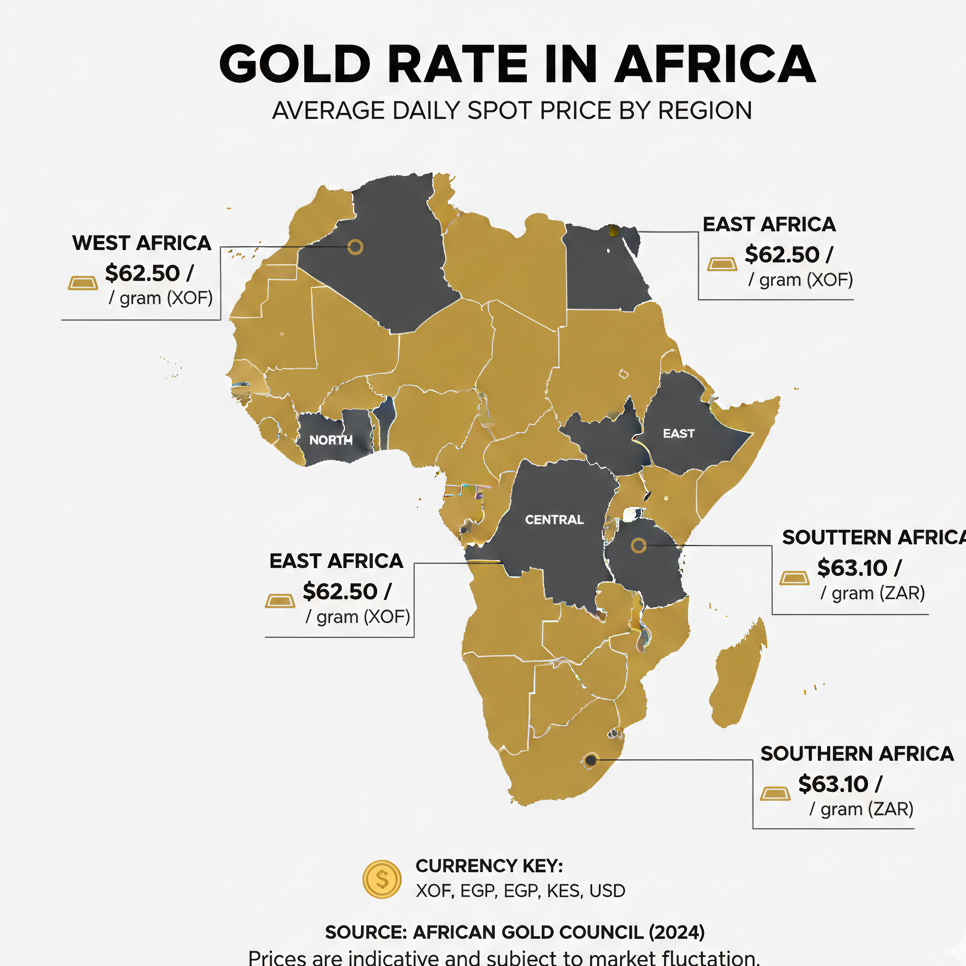
Regional Perspective
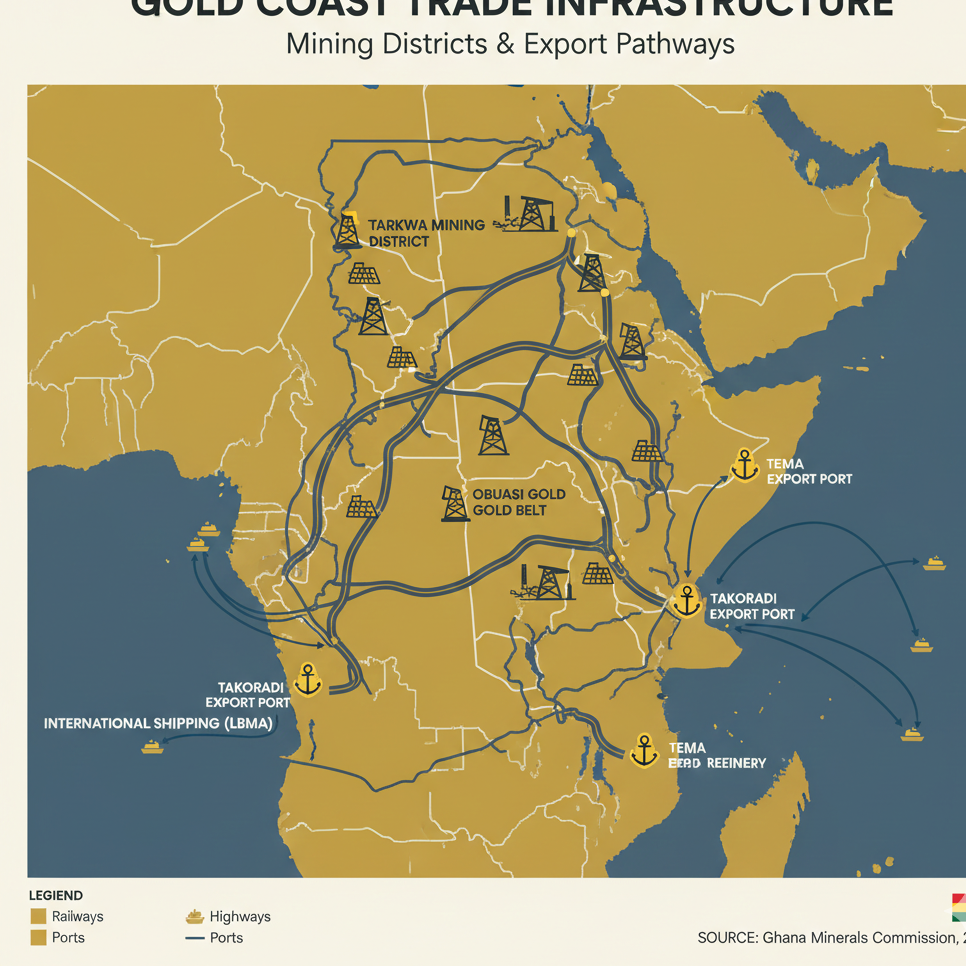
Ghana occupies the central position within the historical Gold Coast geography, combining Atlantic access with proximity to productive inland mining districts. Gold export from Ghana benefits from this strategic positioning, with established road and rail networks connecting mining areas in Ashanti, Western, and Northern regions to coastal export facilities. Buyers value this logistical clarity alongside the country’s regulatory maturity and consistent quality standards.
Neighboring jurisdictions within the broader Gold Coast geographical sphere—including Côte d’Ivoire, Togo, and Burkina Faso—also host gold-bearing formations linked to the same Birimian systems. However, regulatory frameworks, infrastructure development, and export channel reliability vary across borders. Buyers comparing opportunities across this region should evaluate not only geological potential but also documentation consistency, licensing transparency, and logistical accessibility when assessing sourcing strategies.
In contrast to South Africa gold exporters operating within deep-level industrial mining traditions or South Sudan gold suppliers developing newer export corridors, Gold Coast region supply chains often emphasize formalized artisanal and small-scale production channels aggregated through licensed buying centers. This distinction influences sourcing strategies, quality verification approaches, and risk assessment frameworks for international buyers seeking diversified African supply.
Image: Regional trade infrastructure connecting inland Gold Coast mining districts to Atlantic export ports
Africa Gold Reserve’s Approach
Africa Gold Reserve engages with the Gold Coast region’s gold sector by building on its historical trading expertise while applying modern standards of compliance, transparency, and operational excellence. Since our founding in 2015, we have established direct relationships with licensed mines, small-scale mining cooperatives, and authorized sellers in Ghana, complementing our operations in South Africa and South Sudan. Our headquarters in South Africa provides strategic oversight while enabling coordination across multiple operational regions including our United Kingdom presence for international transaction support.
Our core activities—buying gold from local mines, sourcing from small-scale miners, and acquiring gold from licensed local sellers—reflect a commitment to connecting the Gold Coast’s traditional production sources with contemporary international markets. We respect the region’s historical significance in global gold supply while ensuring that all material entering our export channels meets current regulatory requirements and responsible sourcing standards.
For clients in the UAE, United States, China, Europe, and broader Asian markets, we provide supply chains that honor the Gold Coast’s heritage while delivering the documentation, quality verification, and logistical reliability that modern international gold trading demands. Whether facilitating trade from Ghana to the United States, South Africa to China, or South Sudan to UAE, our approach blends historical geographical awareness with contemporary best practices.
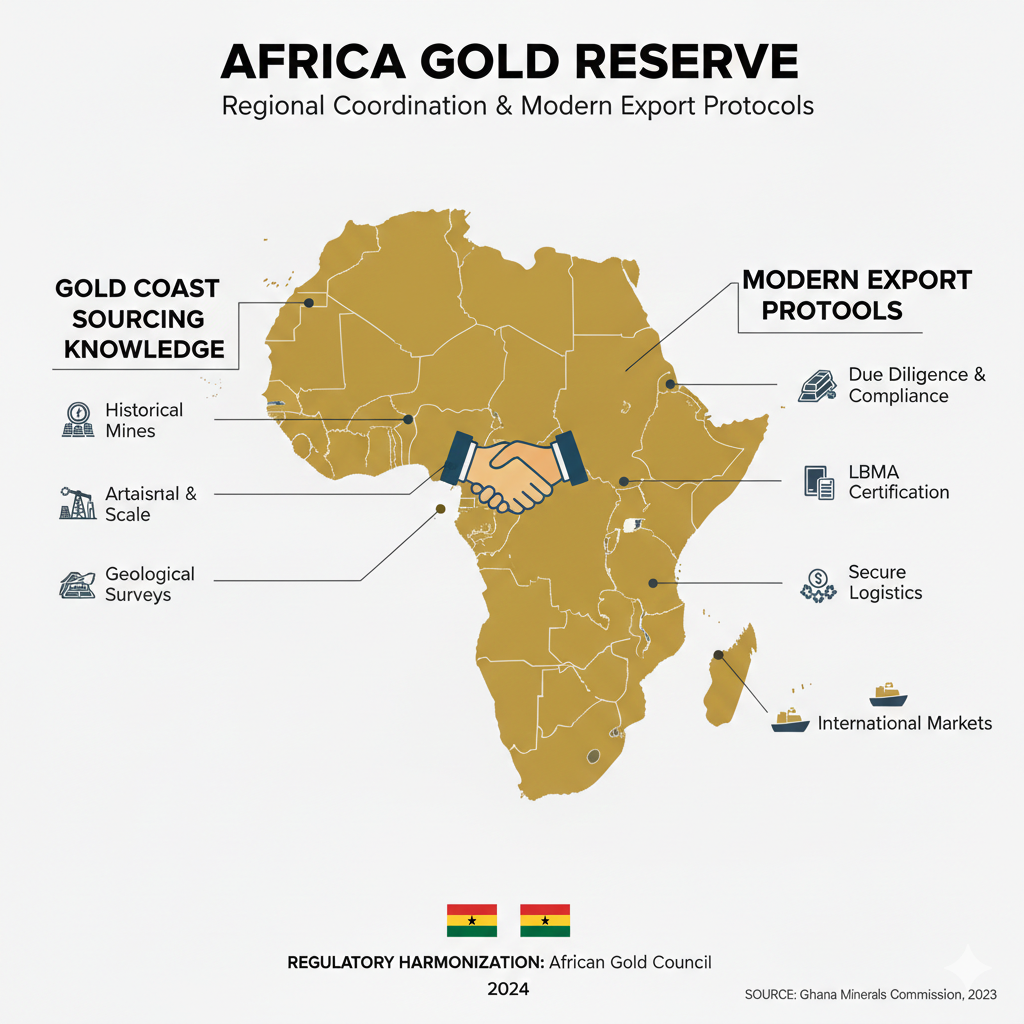
Buying and Export Process
Our procurement process in the Gold Coast region acknowledges the area’s gold trading history while implementing rigorous modern verification procedures. We begin by confirming the licensing status and operational legitimacy of all supply sources, ensuring that gold originates from authorized channels with clear chain-of-custody documentation. This due diligence phase incorporates both historical understanding of regional production patterns and contemporary compliance requirements aligned with international responsible sourcing frameworks.
Gold acquired from licensed sources undergoes assay verification at certified laboratories, with purity levels documented through internationally recognized certification. This quality assessment builds on centuries of Gold Coast gold trading practice while meeting the precise specifications required by modern refineries and institutional buyers. Transparency in quality verification reinforces trust and supports efficient integration into international supply chains.
Export procedures leverage Ghana’s coastal infrastructure, incorporating comprehensive documentation including export licenses, certificates of origin, assay certificates, and customs declarations. We coordinate with experienced logistics partners specializing in secure transportation of precious metals, ensuring that gold moves safely from inland production areas through Atlantic ports to international destinations. Insurance coverage and tracking systems provide additional security layers throughout transit.
Global Demand
International demand for Gold Coast region gold continues to reflect the area’s historical significance in global markets while responding to contemporary supply requirements. Refineries in the UAE maintain strong interest in African supply, with Dubai serving as a major hub that connects historical trade patterns with contemporary refining capacity. United States buyers value the Gold Coast’s gold heritage alongside modern compliance frameworks, particularly when sourcing gold export from Ghana where regulatory transparency supports confident procurement decisions.
Chinese refineries and traders have increased engagement with African gold exporters across multiple regions, leveraging established trade relationships and efficient shipping routes to serve both domestic consumption and re-export markets. European buyers, particularly those subject to enhanced due diligence requirements, appreciate partners who can provide comprehensive documentation that satisfies both historical traceability expectations and contemporary regulatory standards.
Market participants observe that buyers increasingly value partners who understand both the geographical context and contemporary requirements of African gold sourcing. This perspective favors established African gold exporters who can demonstrate operational excellence across the entire supply chain while respecting the region’s rich heritage and evolving compliance expectations.
Why Buyers Work with Africa Gold Reserve
International buyers select Africa Gold Reserve for our understanding of the Gold Coast region’s gold history, operational expertise across multiple jurisdictions, and commitment to transparent, compliant business practices. Our decade of experience enables us to provide reliable supply while maintaining rigorous quality and documentation standards that meet contemporary international expectations for institutional buyers and regulated trading entities.
Our geographic presence in Ghana, South Africa, and South Sudan allows buyers to access diversified supply sources through a single, accountable partner. This consolidation simplifies procurement processes, reduces administrative burden, and ensures consistent quality standards across regions with distinct historical production profiles and regulatory environments. Buyers working with us benefit from established networks, regulatory knowledge, and commitment to responsible sourcing practices grounded in both historical awareness and modern compliance frameworks.
Transparency and communication form the foundation of our client relationships. We provide clear documentation, regular updates, and responsive support throughout each transaction. As a trusted gold exporter, we maintain licensing and compliance frameworks that meet the due diligence requirements of institutional buyers, refineries, and regulated trading entities operating in international markets.
Conclusion
The Gold Coast in Africa map provides essential context for understanding the region’s contemporary role in global gold markets. From historical trade routes that supplied early international markets to modern regulatory frameworks that support compliant export channels, the Gold Coast’s enduring contribution to international gold supply reflects both geological endowment and accumulated commercial expertise. For buyers seeking to buy gold from Africa, partnering with experienced operators who respect this heritage while delivering modern compliance, transparency, and reliability enhances procurement outcomes.
Africa Gold Reserve has built our reputation on operational excellence, regulatory compliance, and transparent business practices across our African operations. We invite commodity traders, refineries, importers, and institutional investors to contact us to discuss current supply opportunities, sourcing capabilities, and potential partnerships informed by both geographical perspective and contemporary market requirements.
Website: africagoldreserve.com
Email: sales@africagoldreserve.com