


Buying Gold in South Africa: Pros, Cons, and Strategic Considerations for Global Buyers
South Africa remains one of the world’s most significant gold-producing nations, with a legacy that dates back to the 1886 Witwatersrand discovery. For international buyers—refiners, commodity traders, and institutional investors—sourcing gold from South Africa offers distinct advantages, but also requires careful navigation of regulatory, logistical, and compliance factors. Understanding the pros and cons of buying gold in South Africa is essential for making informed, strategic decisions in today’s ethically driven international gold trading environment.
Industry Context
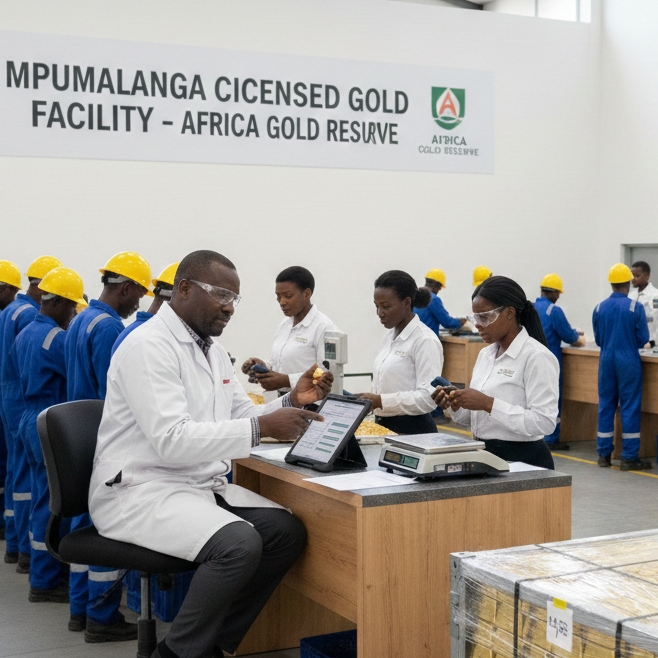
South Africa produces over 100 tonnes of gold annually and maintains advanced infrastructure for mining, assaying, and logistics. However, the landscape has evolved significantly from its colonial and apartheid-era roots. Today, the sector operates under strict regulatory frameworks, including the Mining Charter and the Financial Intelligence Centre Act (FICA), which mandate transparency, community equity, and anti-money laundering compliance.
For professional buyers, this formalization is a double-edged sword: it enhances trust and traceability (a major pro), but also increases documentation requirements and due diligence burdens (a key con for unprepared buyers). Unlike retail purchases—where individuals might buy jewelry or Krugerrands from banks—the institutional market demands verified origin, chain-of-custody records, and alignment with global standards like the OECD Due Diligence Guidance.
Regional Perspective
Pros of buying gold in South Africa:
- Technical expertise: Decades of deep-level mining have created a highly skilled workforce and world-class assay laboratories.
- Regulatory clarity: FICA and the Department of Mineral Resources enforce licensing and reporting, reducing the risk of illicit material.
- Logistical infrastructure: Secure transport corridors, bonded facilities, and proximity to O.R. Tambo International Airport enable efficient export.
- Diversified supply: Access to both large-scale mine output and formalized small-scale production.
Cons to consider:
- Currency volatility: The rand’s fluctuations can create pricing noise, though professional exporters mitigate this by using USD-linked benchmarks.
- Power and water constraints: Operational challenges in the mining sector can affect consistency, particularly for smaller producers.
- Compliance overhead: Buyers must verify seller licenses, assay reports, and export permits—adding time but ensuring legitimacy.
Neighboring jurisdictions offer complementary options: Ghana provides transparent gold export from Ghana channels, while emerging South Sudan gold suppliers offer frontier potential—but with higher due diligence requirements.
Africa Gold Reserve’s Approach
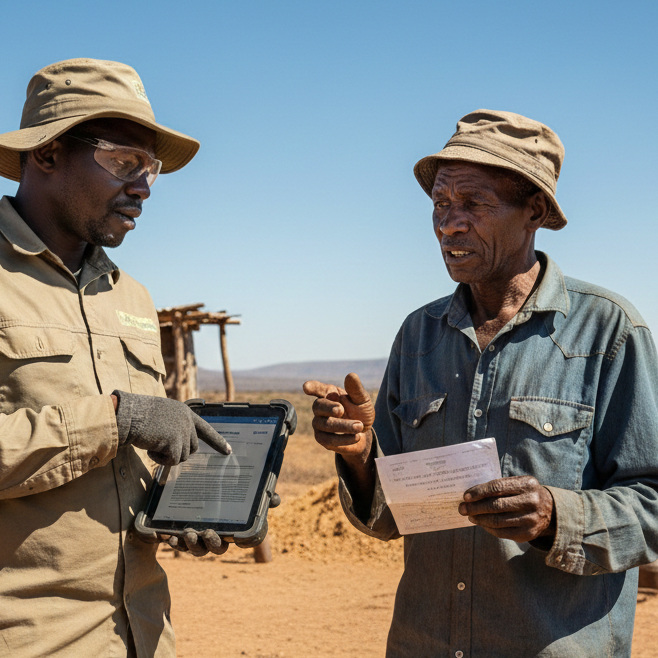
Founded in 2015 and headquartered in South Africa, Africa Gold Reserve operates across Ghana, South Africa, South Sudan, and the United Kingdom. The company sources gold exclusively from licensed local mines, registered small-scale miners, and government-authorized sellers—never from informal or unverified networks.
By focusing on compliance-first procurement, Africa Gold Reserve turns the “cons” of complexity into a competitive advantage: it handles the regulatory and logistical burden so buyers don’t have to. This allows institutional clients to access South African gold with confidence in its provenance and legality.
Buying and Export Process
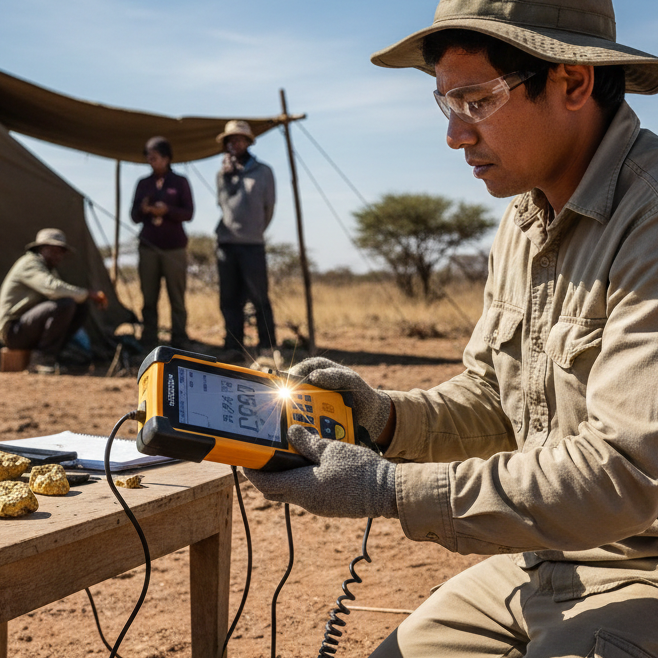
Africa Gold Reserve’s workflow addresses both the opportunities and challenges of the South African market:
- Seller Verification: Only entities with valid national mining or trading licenses are accepted.
- On-Site Assay: Gold is tested immediately; results are GPS-tagged and timestamped.
- Digital Documentation: Each batch is recorded with full chain-of-custody data.
- Secure Consolidation: Material is transported under armed escort to bonded facilities.
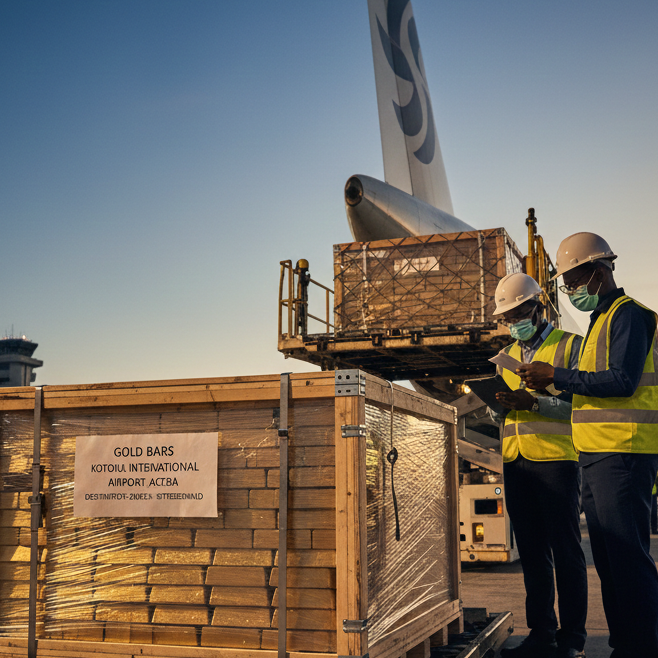
- Export Execution: Shipments follow established routes—South Africa to China, Ghana to the United States, South Sudan to UAE—ensuring timely, compliant delivery.
This end-to-end control minimizes counterparty risk and ensures audit readiness.
Global Demand
International demand for responsibly sourced South African gold is rising among:
- Central banks seeking non-dollar reserves
- Refiners in Dubai and Zurich requiring LBMA-compliant input
- Institutional investors prioritizing ESG-aligned physical assets
In this context, the ability to buy gold from Africa through a verified South Africa gold exporter is not just a logistical choice—it’s a strategic differentiator.
Why Buyers Work with Africa Gold Reserve
Global clients choose Africa Gold Reserve because:
- It is a trusted gold exporter with boots-on-the-ground presence in South Africa and other core regions.
- It transforms the complexity of compliance into a streamlined service.
- It provides documentation that satisfies OECD, LBMA, and AML requirements.
- It serves major client regions including the UAE, United States, China, Europe, Asia, and the Middle East.
The company does not engage in speculative trading or informal deals. Its focus remains strictly on physical, legally sourced gold from licensed operators.
Conclusion
Buying gold in South Africa offers significant advantages—technical depth, regulatory structure, and logistical maturity—but only when approached through compliant, professional channels. For international buyers, the “cons” of complexity are mitigated by partnering with an experienced exporter. Africa Gold Reserve provides a transparent, secure, and operationally disciplined gateway to one of the world’s most historic—and now ethically aligned—gold-producing regions.
Website: africagoldreserve.com
Email: sales@africagoldreserve.com