
From Ancient Caravans to Modern Compliance: The Enduring Legacy of Gold and Salt Trade in Africa
The historic gold and salt trade routes of West Africa—where gold from the south was exchanged for salt from the Sahara—laid the foundation for some of the continent’s earliest empires and global commercial networks. While camel caravans and desert oases have given way to digital ledgers and air cargo, the strategic importance of African gold endures. Today, however, the trade is governed not by barter, but by compliance, traceability, and international standards. For modern buyers seeking to buy gold from Africa, understanding this evolution—from ancient exchange to ethical export—is essential to navigating today’s professional supply chains.
Industry Context
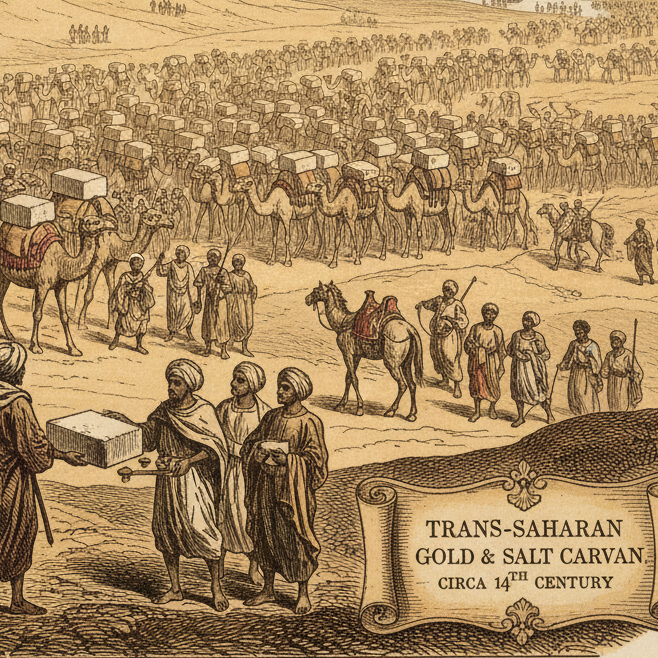
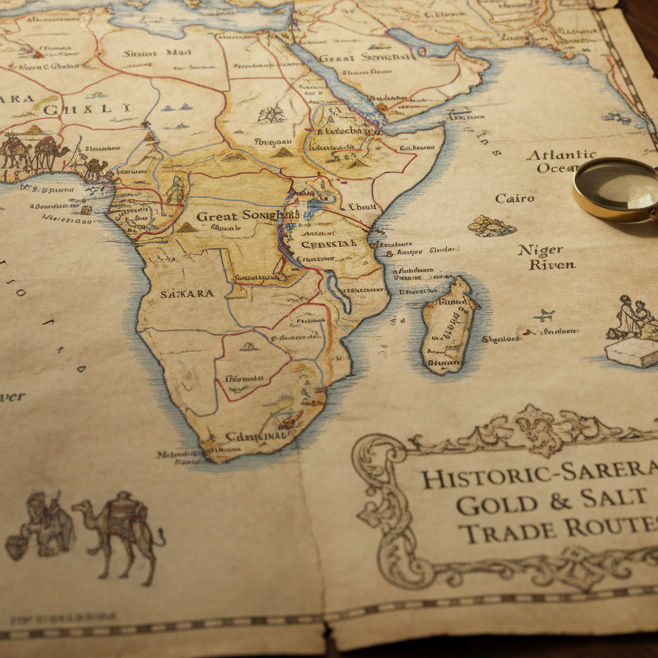
Between the 8th and 16th centuries, the trans-Saharan trade linked the gold-rich forests of West Africa (modern-day Ghana, Mali, and Burkina Faso) with North African salt mines like those in Taghaza. Gold was so abundant that Mansa Musa’s 14th-century pilgrimage to Mecca famously disrupted regional economies through sheer generosity. Salt, vital for food preservation and health, was equally valuable—sometimes traded ounce for ounce with gold.
Today, while salt is a commodity and gold a strategic asset, the geographic heart of African gold production remains largely unchanged. What has transformed is the framework: instead of informal barter, the modern trade operates under frameworks like the OECD Due Diligence Guidance and LBMA Responsible Gold Guidance, which require verifiable proof of legal mining, labor compliance, and environmental stewardship.
Regional Perspective
The legacy of the gold-salt trade still echoes in key producing regions:
- Ghana, once part of the Gold Coast, is now Africa’s top gold producer. The government enforces real-time reporting via the Precious Minerals Marketing Company (PMMC), making gold export from Ghana one of the most transparent channels globally.
- Mali and Burkina Faso, located along historic trade corridors, host high-grade deposits in the Birimian Greenstone Belt—now attracting billions in investment from majors like Barrick and Endeavour.
- South Sudan, though outside the ancient network, represents a new frontier. Its alluvial and hard-rock deposits are being developed under emerging regulatory frameworks that emphasize licensing and community benefit.
Unlike the past, where anonymity and informality defined trade, today’s African gold exporters must provide full documentation—turning provenance into a premium.
Image: Licensed gold aggregation center in Obuasi, Ghana
Africa Gold Reserve’s Approach
Founded in 2015 and headquartered in South Africa, Africa Gold Reserve operates across Ghana, South Africa, South Sudan, and the United Kingdom. The company sources gold exclusively from licensed local mines, registered small-scale miners, and government-authorized sellers—never from informal or unverified networks.
Its model reflects the evolution from ancient trade to modern compliance: every transaction is validated, assayed, and digitally recorded, ensuring alignment with both national laws and international due diligence expectations. This operational discipline allows the company to serve as a bridge between Africa’s rich mineral heritage and the demands of global markets.

Buying and Export Process
Africa Gold Reserve follows a disciplined, secure workflow:
- Seller Verification: Only individuals or entities holding valid national mining or trading licenses are accepted.
- On-Site Assay: Gold purity is tested immediately upon receipt; results are GPS-tagged and timestamped.
- Digital Documentation: Each batch receives a unique identifier linked to seller details, weight, purity, and location.
- Secure Consolidation: Material is transported under armed escort to bonded facilities.
- Export Execution: Shipments depart via secure air or sea freight along established trade routes—including South Sudan to UAE, Ghana to the United States, and South Africa to China.
This end-to-end control ensures that gold entering global markets carries full provenance—unlike the anonymous bars of medieval trade.
Global Demand
International demand for responsibly sourced African gold is rising among:
- Central banks diversifying reserves
- Refiners in Dubai, Zurich, and Singapore requiring LBMA-compliant input
- Institutional investors in the U.S., Europe, and Asia seeking ESG-aligned physical assets
In this environment, the ability to buy gold from Africa with full documentation is not just a compliance requirement—it’s a strategic advantage in international gold trading.
Why Buyers Work with Africa Gold Reserve
Global clients choose Africa Gold Reserve because:
- It is a verified trusted gold exporter with boots-on-the-ground presence in core producing regions.
- It provides documentation that satisfies OECD and LBMA standards.
- It enables direct access to physical supply from compliant South Sudan gold suppliers, South Africa gold exporters, and transparent gold export from Ghana channels.
- It serves major client regions including the UAE, United States, China, Europe, Asia, and the Middle East.
The company does not engage in speculative trading or unbacked contracts. Its focus remains strictly on physical, verified gold from licensed sources.

Conclusion
The gold and salt trade shaped Africa’s history—but today’s gold trade is defined by transparency, not secrecy. For international buyers seeking authentic, ethically sourced African gold, partnering with a professional exporter like Africa Gold Reserve offers a transparent, secure, and operationally disciplined pathway to one of the world’s most strategic mineral regions.
Website: africagoldreserve.com
Email: sales@africagoldreserve.com