
Africa Gold Rush: From Ancient Trade to Modern Ethical Sourcing
Unlike the sudden, chaotic rushes of 19th-century California or Australia, Africa’s “gold rush” unfolded over millennia, shaped by empires, trade networks, and colonial ambitions. There was no single event—but rather a series of gold-driven transformations that reshaped economies, societies, and global commerce across the continent.
1. Medieval West Africa: The First Great Gold Rush (8th–16th Century)
Long before European contact, West Africa experienced its first major gold boom:
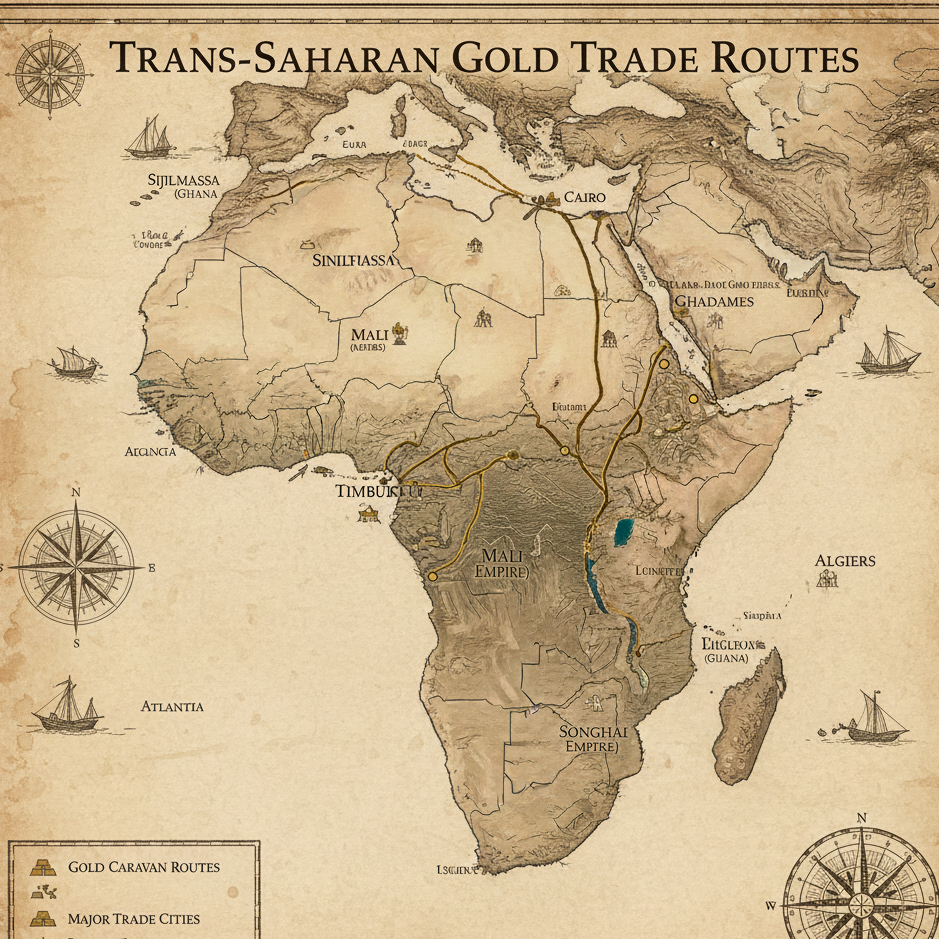
- The Ghana Empire (300–1200 CE) taxed gold-salt trade across the Sahara.
- The Mali Empire (1235–1600), under Mansa Musa, became legendary for its gold wealth—demonstrated during his 1324 pilgrimage to Mecca, which flooded Cairo with so much gold it depressed prices for years.
- Cities like Timbuktu and Gao flourished as hubs of commerce, scholarship, and Islamic culture.
This was not a “rush” of prospectors, but a structured, state-controlled flow of gold that connected Africa to Europe, the Middle East, and Asia.
2. European Arrival and the “Gold Coast” Era (15th–19th Century)
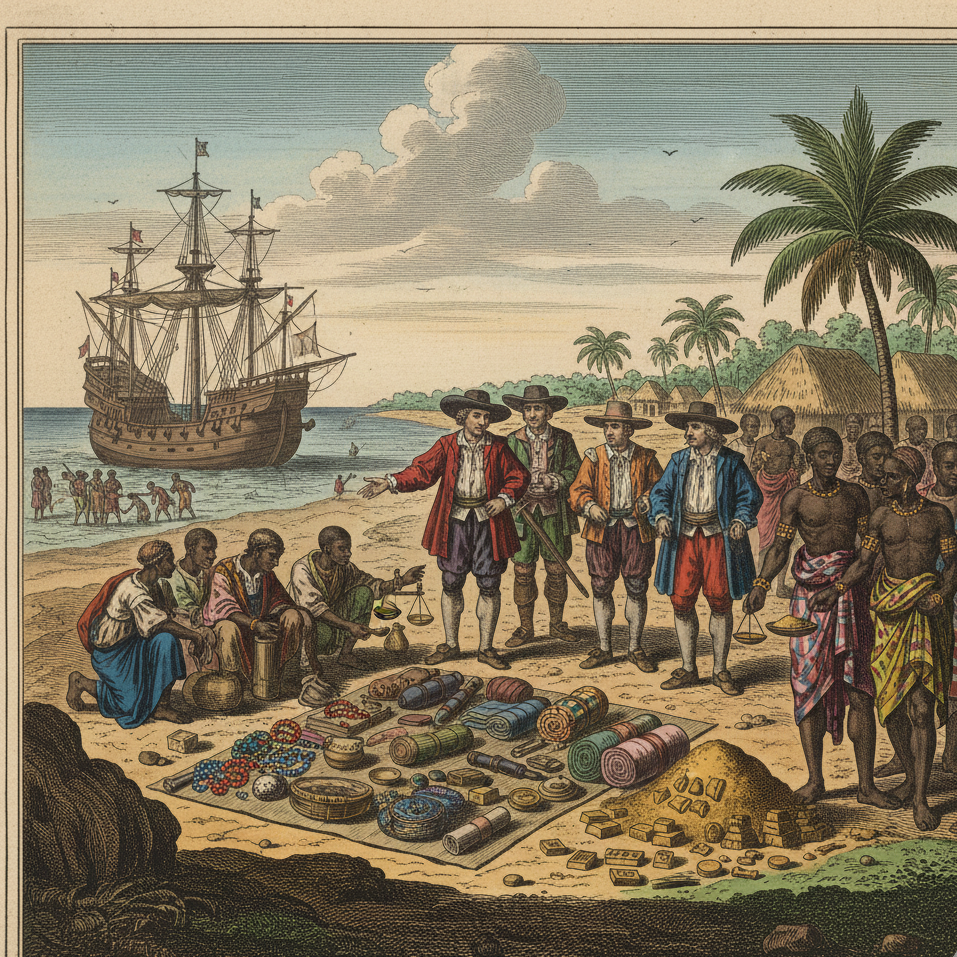
In the 1470s, Portuguese traders reached the West African coast and named it the “Gold Coast” (modern Ghana) due to abundant gold. They built forts like Elmina Castle (1482)—initially for gold trade, not slavery.
Over centuries, Dutch, British, Danish, and Swedish powers competed for control, turning coastal towns into fortified trading posts. This era marked Africa’s integration into Atlantic commerce, with gold as the primary export for nearly 200 years.
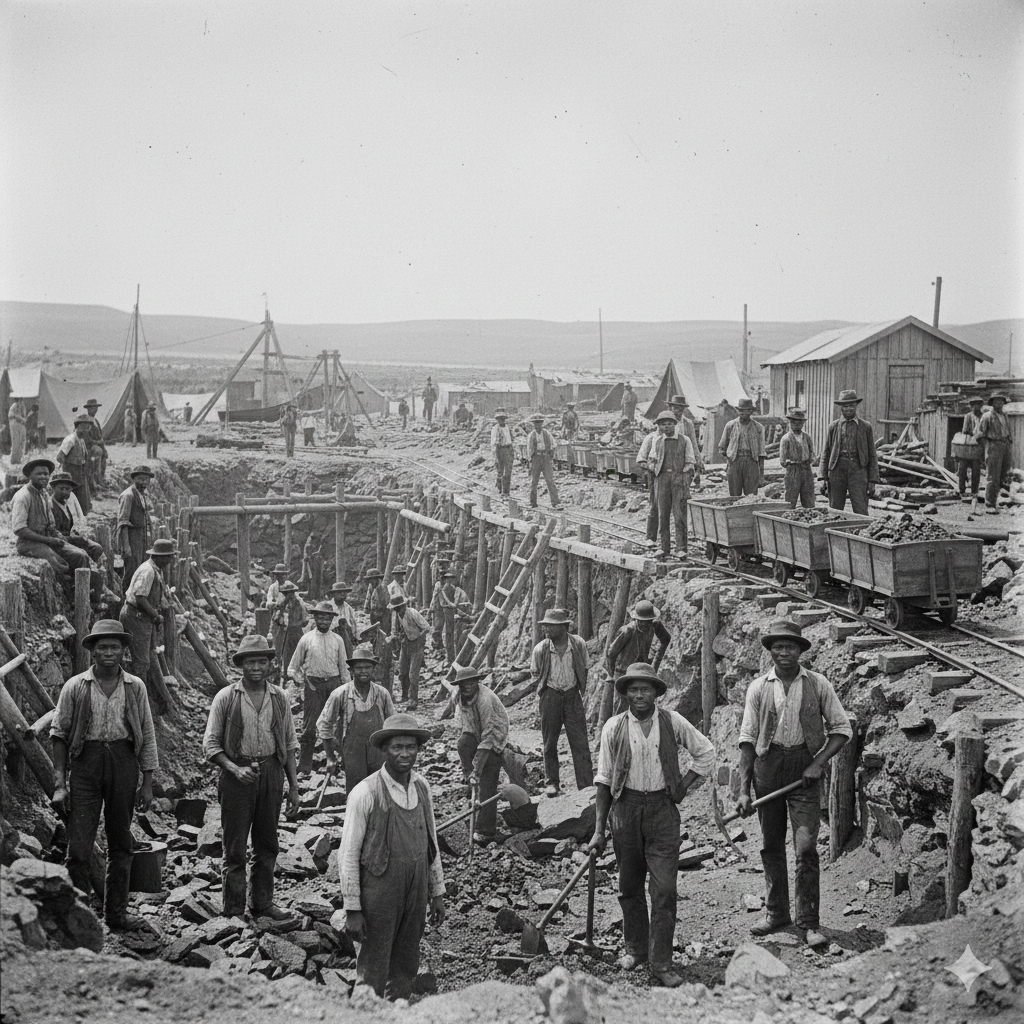
3. Southern Africa: The Witwatersrand Gold Rush (1886 Onward)
The most dramatic “rush” in African history began in 1886, when Australian prospector George Harrison discovered gold on the Witwatersrand near Johannesburg. This triggered:
- A massive influx of miners, speculators, and capital
- The rapid founding of Johannesburg (“City of Gold”)
- British imperial expansion and the Anglo-Boer Wars (1899–1902)
- South Africa becoming the world’s top gold producer for much of the 20th century
At its peak, the Witwatersrand Basin produced over 1,000 tonnes annually and has yielded more than 40,000 tonnes—over 40% of all gold ever mined globally.
4. Modern “Rush”: Formalization Over Chaos
Today, Africa’s gold sector is less about wild rushes and more about regulated, ethical sourcing:
- Ghana is now Africa’s top producer (~6.2 million ounces/year)
- Governments are formalizing artisanal mining (e.g., Ghana’s PMMC system)
- International standards (OECD, LBMA) require traceability and due diligence
The new “rush” is not for gold itself—but for verified, compliant supply chains that meet ESG and anti-money laundering requirements.
5. Africa Gold Reserve’s Role
Founded in 2015 and headquartered in South Africa, Africa Gold Reserve operates across Ghana, South Africa, South Sudan, and the UK. The company sources gold exclusively from:
- Licensed local mines
- Registered small-scale miners
- Government-authorized sellers
By replacing informal networks with auditable, ethical channels, it embodies the modern evolution of Africa’s gold legacy.
Conclusion
Africa’s gold rush was never a single event—it was a continuum of discovery, trade, and transformation spanning 5,000 years. Today, the focus has shifted from extraction to integrity. For institutional buyers, the opportunity lies not in chaos, but in partnering with professional exporters like Africa Gold Reserve to access ethically sourced, traceable gold from one of the world’s most historic mineral regions.
Website: africagoldreserve.com
Email: sales@africagoldreserve.com