Countries in Africa with Gold: Top Producers, Reserves, and Ethical Sourcing Hubs
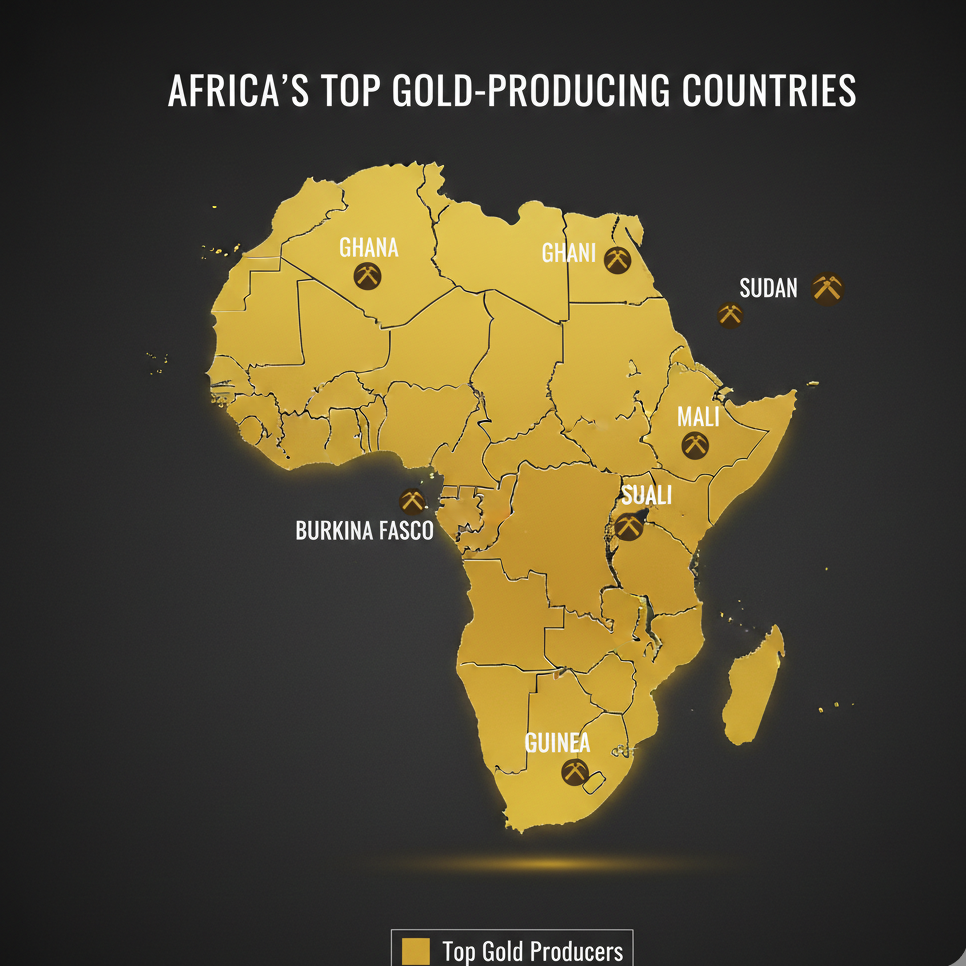
Africa is home to some of the world’s richest gold deposits, with over 20 countries engaged in gold mining—ranging from industrial-scale operations to formalized artisanal activity. As of 2026, the continent produces nearly 25% of global gold supply, led by West and Southern Africa. Below is a comprehensive overview of key gold-producing nations, their output, and their role in ethical supply chains.
1. Top Gold-Producing Countries in Africa (2026)
Rank
Country
Annual Production (Tonnes)
Key Features
1
Ghana
~190
Africa’s top producer; transparent PMMC export system; Birimian Belt
2
South Africa
~150
Largest reserves (~2,000+ tonnes); Witwatersrand Basin; deep-level mining
Rapid growth despite security challenges; major Endeavour Mining operations
5
Tanzania
~50
Stable output; Geita, North Mara mines; improved mining code
6
Côte d’Ivoire
~45
Fast-growing sector; new discoveries in Birimian Belt
7
DRC
~35–80*
High potential but significant informal/conflict-linked flows
8
Zimbabwe
~30
Greenstone belt deposits; formalization efforts underway
9
South Sudan
~5–10
Emerging frontier; new mining law enabling compliant exports
10
Niger, Guinea, Ethiopia, Cameroon
<10 each
Exploration-stage or small-scale production
*DRC figures vary widely due to informal trade; official exports understate true output.
2. Geological Foundations
West Africa (Birimian Greenstone Belt):
Spans Ghana, Mali, Burkina Faso, Côte d’Ivoire
High-grade, near-surface deposits ideal for open-pit and artisanal mining
Accounts for over 60% of Africa’s output
Southern Africa (Witwatersrand Basin):
South Africa’s paleoplacer deposit—world’s richest ever discovered
Over 40,000 tonnes historically mined
East & Central Africa:
Linked to the Congo Craton and Mozambique Belt
Alluvial and hard-rock potential, but governance challenges persist
Image: Geological map of Africa’s major gold belts
3. Compliance and Ethical Progress
Leading countries are aligning with global standards:
Ghana: All licensed exports reported via PMMC (Precious Minerals Marketing Company)
South Africa: Enforces FICA and Mining Charter compliance
Mali & Burkina Faso: Require environmental and community agreements
OECD Due Diligence Guidance: Increasingly adopted across formal supply chains
This enables African gold to meet LBMA Responsible Gold requirements for refiners in Dubai, Zurich, and New York.
Image: Licensed small-scale miner delivering gold concentrate in Obuasi, Ghana
4. Africa Gold Reserve’s Operational Reach
Founded in 2015 and headquartered in South Africa, Africa Gold Reserve operates in key producing zones:
Ghana: Sourcing from licensed aggregators in Ashanti and Western regions
South Africa: Partnering with formal small-scale miners in Mpumalanga and Limpopo
South Sudan: Engaging vetted suppliers under new regulatory framework
United Kingdom: Compliance and client coordination hub
The company sources gold exclusively from:
Licensed local mines
Registered small-scale miners
Government-authorized sellers
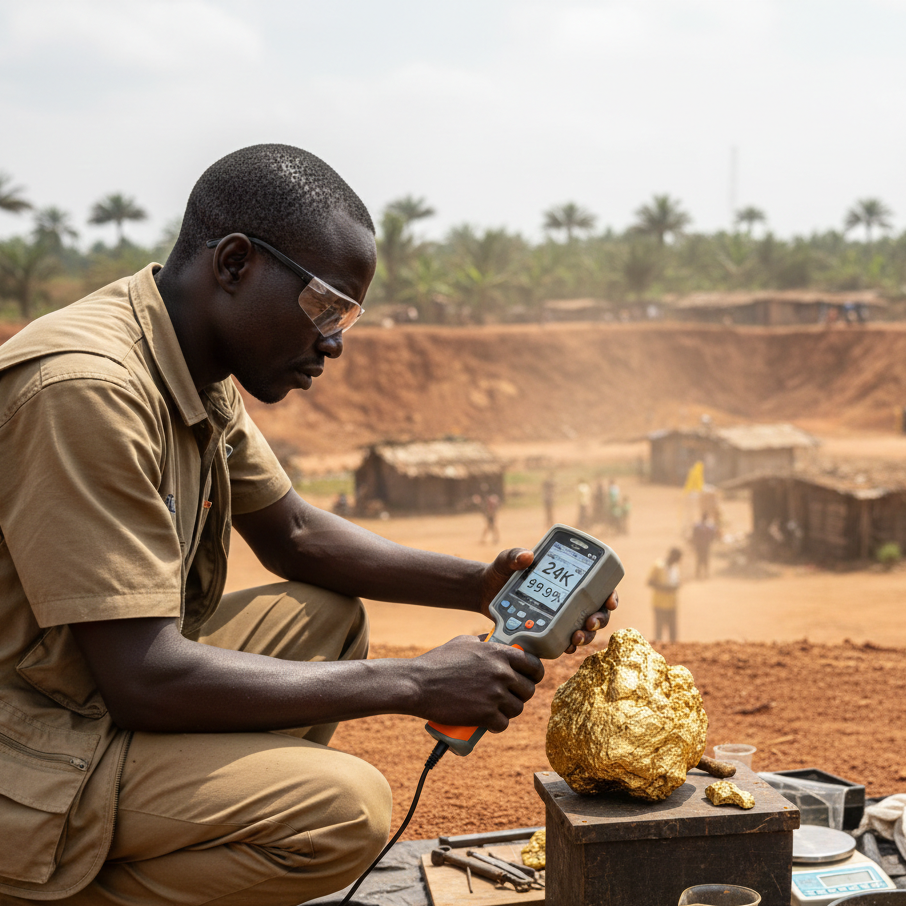
Every transaction includes on-site assaying, GPS-tagged records, and full chain-of-custody documentation.
Conclusion
Gold is found across dozens of African countries, but only a few combine high output, regulatory clarity, and ethical formalization. For institutional buyers, the focus is not just on geography—but on verifiable, compliant sourcing. Partnering with a professional exporter like Africa Gold Reserve ensures secure access to high-purity gold from Africa’s most strategic and responsible jurisdictions.