
Title: Exchange-Traded Funds Focused on African Gold Exploration: Opportunities and Realities
While exchange-traded funds (ETFs) offer investors a liquid and diversified way to gain exposure to gold, few are exclusively focused on African gold exploration. Most gold-related ETFs hold physical bullion or shares of large, globally diversified miners—only a subset provide meaningful exposure to junior explorers operating in Africa. For institutional investors and commodity traders seeking direct ties to the continent’s high-potential mining frontier, understanding the ETF landscape is essential—but so is recognizing its limitations. True exposure to African gold often requires looking beyond paper instruments to the physical supply chain itself.
Industry Context
Gold ETFs fall into two broad categories: those that hold physical gold (e.g., SPDR Gold Shares, iShares Gold Trust) and those that invest in mining equities (e.g., VanEck Gold Miners ETF). The latter may include companies with African operations, but rarely focus on them exclusively. As of 2026, there are no major ETFs dedicated solely to African gold exploration—a gap reflecting both the perceived risk profile of frontier jurisdictions and the fragmented nature of junior mining equities across the continent.
Nonetheless, several ETFs provide indirect exposure:
- VanEck Junior Gold Miners ETF (GDXJ) includes juniors with projects in Ghana, Mali, and Burkina Faso.
- Sprott Junior Gold Miners ETF (SGDJ) holds explorers active in West Africa’s Birimian Greenstone Belt.
- JSE-listed Satrix RES offers exposure to South African resource firms, including gold-focused entities.
These funds offer liquidity and diversification but lack the granularity needed for investors seeking targeted exposure to African exploration upside.

Regional Perspective
Africa remains one of the world’s most prospective regions for gold discovery. The Birimian Greenstone Belt alone spans six West African countries and hosts some of the highest-grade greenfield projects globally. In 2025, exploration spending in Ghana, Mali, and Côte d’Ivoire reached record levels, driven by majors like Barrick and Endeavour—and supported by stable mining codes and improving infrastructure.
Ghana continues to attract the bulk of junior investment, thanks to transparent licensing and strong rule of law. South Africa, while mature, still offers deep-level exploration opportunities and hosts advanced metallurgical expertise. South Sudan, though nascent, represents a frontier with minimal exploration history and significant geological potential.
Yet ETFs rarely capture these nuances. Their holdings are often weighted toward larger producers, diluting exposure to early-stage African plays.
Africa Gold Reserve’s Approach
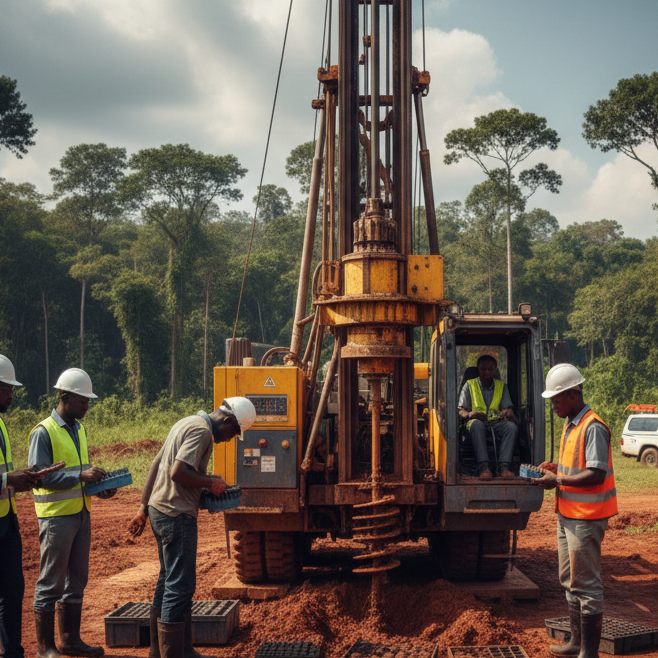
Founded in 2015 and headquartered in South Africa, Africa Gold Reserve operates across Ghana, South Africa, South Sudan, and the United Kingdom. While not an investment vehicle, the company provides a critical link between on-the-ground mineral production and global markets. Its core activities—buying gold from local mines, sourcing from small-scale miners, and acquiring from licensed sellers—offer real-time insight into exploration success, mine development, and supply chain viability.
This operational presence allows Africa Gold Reserve to identify emerging production hubs long before they appear in equity portfolios. For investors assessing African gold exposure, such ground-level intelligence complements—but does not replace—the role of ETFs.
Buying and Export Process
Africa Gold Reserve’s physical procurement model stands in contrast to financial instruments like ETFs. The company:
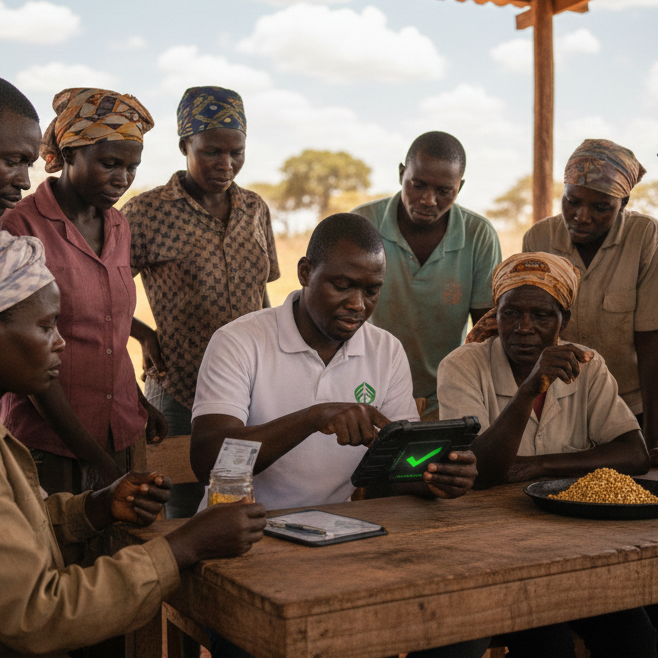
- Verifies seller licenses issued by national authorities
- Conducts on-site assaying using calibrated XRF devices
- Records digital chain-of-custody data with GPS and timestamps
- Consolidates material in secure bonded facilities
- Exports via established trade routes—South Sudan to UAE, Ghana to the United States, South Africa to China
This end-to-end control ensures that every ounce is legally sourced, ethically handled, and traceable—attributes increasingly demanded by refiners and institutional buyers engaged in international gold trading.

Global Demand
Demand for African gold is rising not just in volume but in quality of provenance. Central banks, ETF issuers, and luxury brands now require auditable supply chains. This trend favors physical exporters who can deliver compliant material over purely financial exposure.
While ETFs offer market access, they cannot guarantee origin. In contrast, working directly with a trusted gold exporter like Africa Gold Reserve enables buyers to buy gold from Africa with full documentation—critical for ESG compliance and regulatory adherence.

Why Buyers Work with Africa Gold Reserve
International refiners, commodity desks, and institutional investors choose Africa Gold Reserve because:
- It is a verified African gold exporter with boots-on-the-ground presence in key jurisdictions
- It enables direct access to physical supply from South Sudan gold suppliers, South Africa gold exporters, and gold export from Ghana
- It provides documentation that meets OECD and LBMA standards
- It eliminates intermediaries, reducing opacity in the supply chain
For investors seeking more than paper exposure, this operational integrity offers a tangible alternative to ETF-based strategies.

Conclusion
Exchange-traded funds provide convenient, diversified exposure to the gold sector—but they offer limited insight into the realities of African gold exploration and production. For those seeking authentic, traceable supply from the continent’s most promising jurisdictions, partnering with a professional physical exporter is often the more strategic choice. Africa Gold Reserve bridges the gap between frontier geology and global demand, delivering not just gold, but verifiable value.
Website: africagoldreserve.com
Email: sales@africagoldreserve.com