
Gold Deposits in Africa Map: A Strategic Guide to the Continent’s Mineral Endowment for International Buyers
Introduction
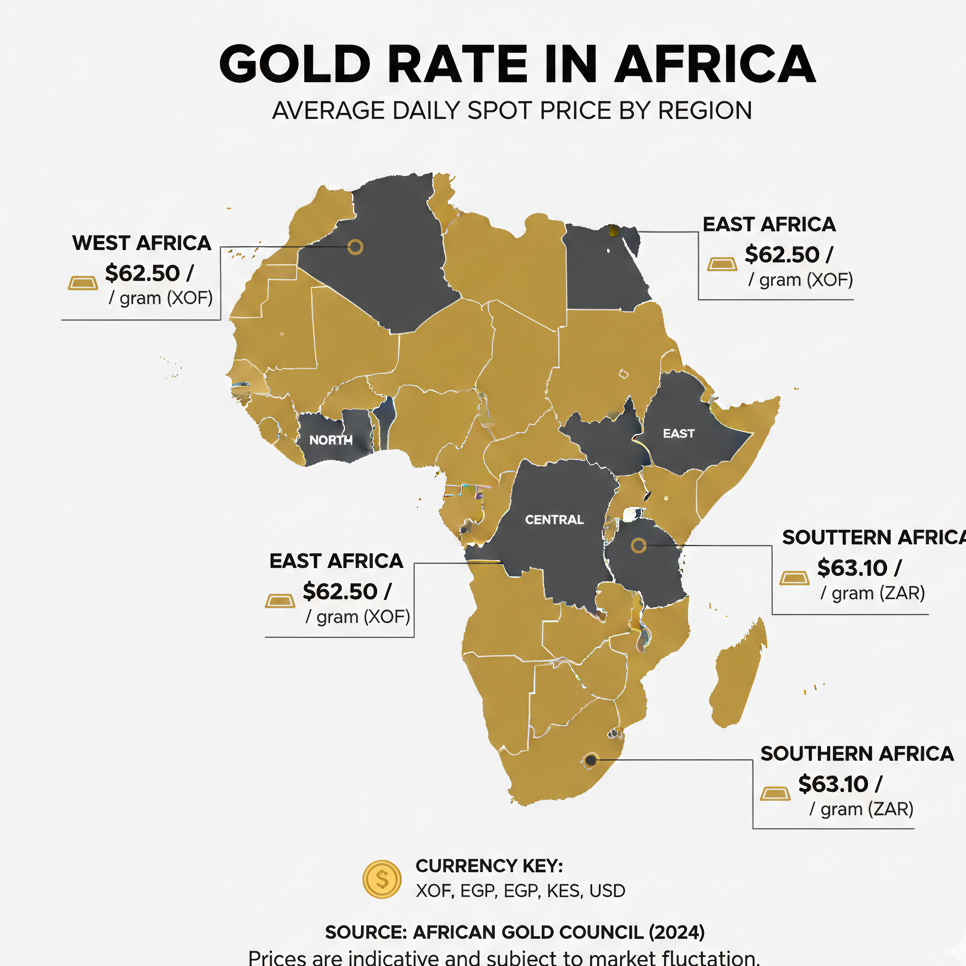
Understanding the geographical distribution of gold deposits across Africa is fundamental for international buyers, commodity traders, and institutional investors seeking to develop informed sourcing strategies. Mapping the continent’s gold endowment reveals distinct geological belts, cratonic formations, and regional clusters that directly influence production capacity, extraction methodologies, and commercial viability. For buyers seeking to buy gold from Africa, this geographical intelligence supports more strategic procurement decisions, realistic supply expectations, and effective risk management across diverse jurisdictional environments.
Africa Gold Reserve has operated across multiple African jurisdictions since 2015, developing practical knowledge of the continent’s gold-producing regions and the trade corridors that connect them to international markets. This article examines the spatial distribution of gold deposits across Africa, the regional characteristics that define different producing areas, and how buyers can navigate this complex landscape through verified, compliant supply channels.
Industry Context
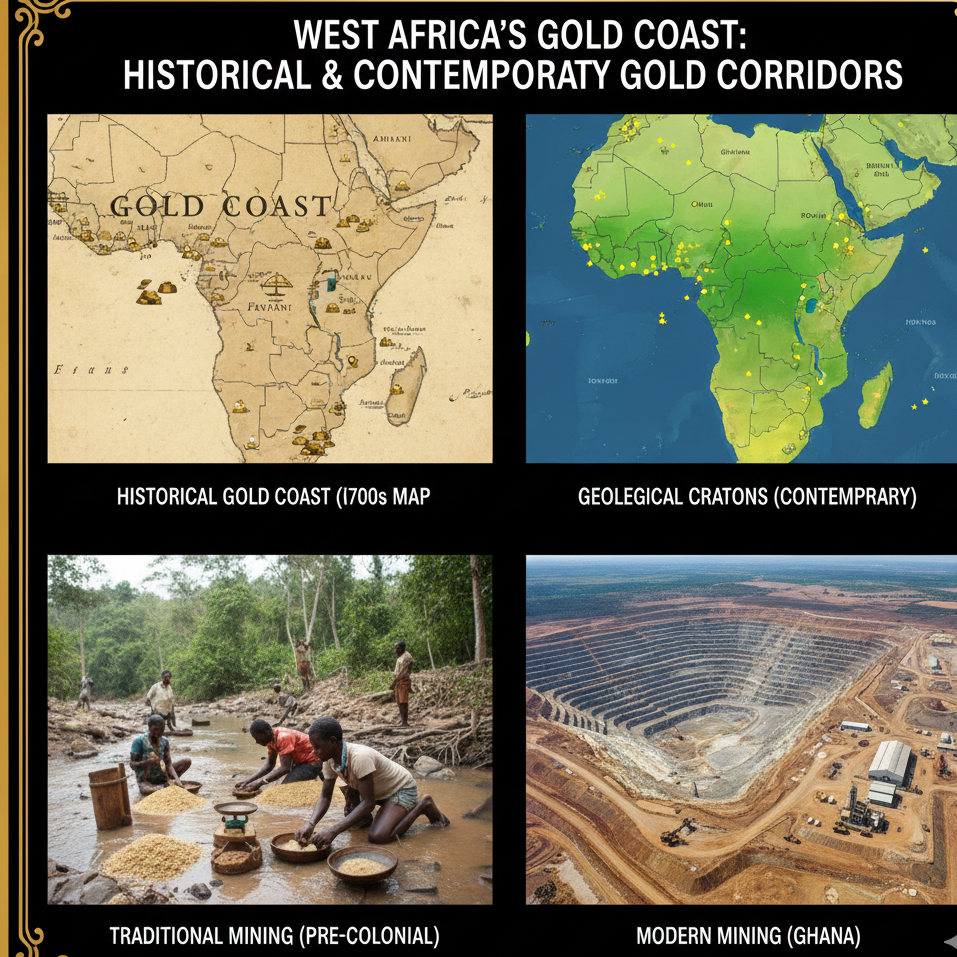
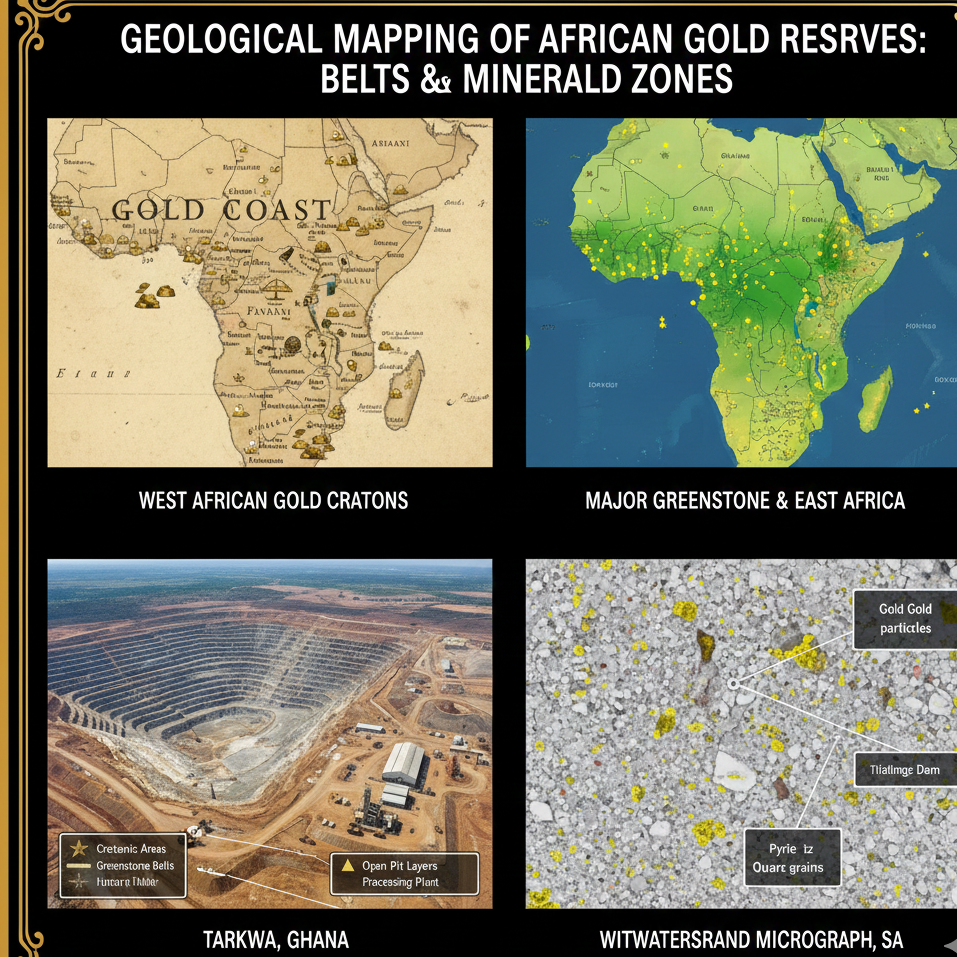
Africa’s gold deposits are concentrated within specific geological provinces that span multiple countries and regions. The West African Craton hosts the Birimian greenstone belts, a contiguous gold-endowed corridor extending from Senegal through Ghana, Mali, Burkina Faso, and into Côte d’Ivoire and Guinea. This formation represents one of the world’s most productive gold provinces, supporting both industrial mining and formalized artisanal production. The Kaapvaal Craton in Southern Africa, particularly South Africa’s Witwatersrand Basin, contains distinctive reef structures that pioneered deep-level mining and continue to contribute significant volumes to global supply.
East and Central African gold deposits are associated with the Arabian-Nubian Shield and related geological structures spanning South Sudan, Tanzania, Ethiopia, and the Democratic Republic of Congo. These formations host quartz vein systems, shear zones, and alluvial deposits that continue to attract exploration investment and production development. Understanding these geological contexts helps buyers evaluate regional production potential, extraction complexity, and long-term supply sustainability.
International gold trading from Africa benefits when buyers comprehend not just where deposits are located, but how geological setting influences production scale, operational costs, and commercial infrastructure. This spatial intelligence supports more strategic sourcing decisions aligned with buyer specifications and compliance requirements.
Regional Perspective
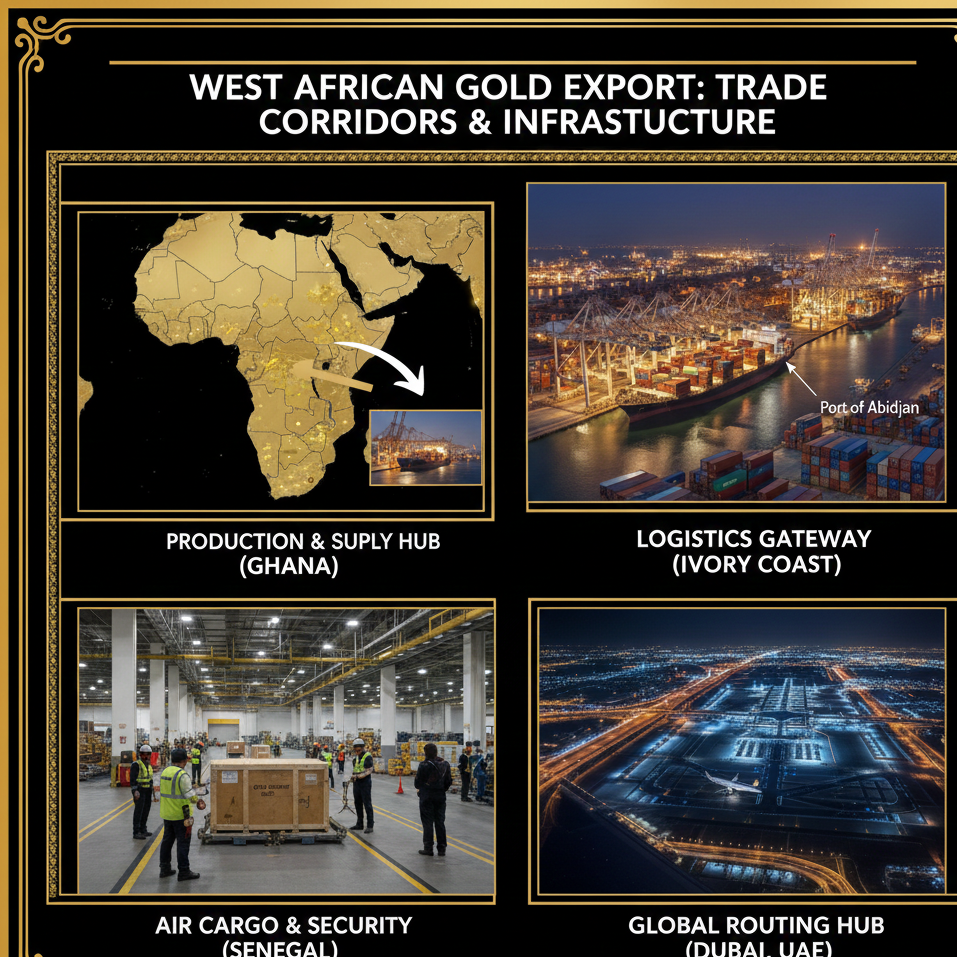
West Africa’s gold deposit map centers on the Birimian greenstone belts that create a contiguous producing corridor with significant implications for regional trade dynamics. Gold export from Ghana draws from these formations, supported by mature regulatory frameworks, established infrastructure, and transparent licensing systems. The country’s Atlantic coastal access enhances logistical efficiency for buyers in the United States, Europe, and beyond, while consistent quality standards appeal to refineries requiring precise specifications.
Southern Africa’s gold distribution is dominated by South Africa’s Witwatersrand Basin, though significant deposits also exist in Zimbabwe, Botswana, and neighboring jurisdictions. South Africa gold exporters benefit from sophisticated financial infrastructure, advanced refining capacity, and well-developed logistics networks that facilitate efficient international gold trading. The region’s established trade routes connect production centers to ports in Durban and Cape Town, with onward shipping to Asian, European, and Middle Eastern markets.
East Africa’s emerging gold deposit map includes South Sudan, Tanzania, Ethiopia, and Kenya, with production increasingly formalized and integrated into regional trade corridors. The South Sudan to UAE route exemplifies how East African deposits can reach international refineries through established logistics channels. While infrastructure development continues across the region, growing regulatory clarity and exploration investment are expanding commercial opportunities for buyers seeking diversified African supply.
Understanding these regional geological distinctions helps buyers develop geographically informed sourcing strategies that account for logistical considerations, regulatory environments, and risk profiles across Africa’s diverse gold-producing landscape.
Africa Gold Reserve’s Approach
Africa Gold Reserve maintains operational presence across key African gold-producing regions, with strategic positioning in Ghana, South Africa, and South Sudan complemented by our headquarters in South Africa and coordination capabilities through the United Kingdom. Since our founding in 2015, we have built direct relationships with licensed mines, small-scale mining cooperatives, and authorized sellers across these jurisdictions, creating a network that spans West, Southern, and East African gold belts.
Our geographic footprint enables us to offer buyers access to multiple producing regions through a single, accountable partner. This multi-regional presence provides diversification benefits, allowing clients to adjust sourcing strategies based on market conditions, regulatory developments, and logistical considerations across different parts of the continent. Our core activities—buying gold from local mines, sourcing from small-scale miners, and acquiring gold from licensed local sellers—are structured to ensure that material from various African regions enters compliant export streams with proper documentation and quality verification.
For clients in the UAE, United States, China, Europe, and broader Asian markets, we provide supply chains that reflect our understanding of Africa’s geological gold distribution while delivering the transparency, reliability, and compliance that modern international gold trading demands. Whether facilitating trade from South Africa to China, Ghana to the United States, or South Sudan to UAE, our approach integrates regional geological knowledge with operational excellence.
Buying and Export Process
Our procurement process accounts for the geographical realities of sourcing gold across Africa’s diverse geological settings. We begin by verifying the licensing status and operational legitimacy of supply sources within their specific jurisdictional contexts, recognizing that regulatory requirements, documentation standards, and compliance protocols vary across countries and regions. Gold acquired from licensed sources in Ghana, South Africa, South Sudan, or other jurisdictions undergoes rigorous assay verification at certified laboratories to ensure quality consistency regardless of geological origin.
Export procedures are tailored to the logistical requirements of different African regions. Material sourced from West African locations may utilize Atlantic shipping routes through ports in Tema or Accra, while Southern African gold often moves through Durban or Cape Town. East African production, including from South Sudan, may utilize regional corridors connecting to ports in Mombasa or Dar es Salaam, or overland routes to UAE refining centers. We coordinate with experienced logistics partners who understand these regional pathways and can ensure secure, efficient transportation to international destinations.
Throughout each transaction, we maintain clear communication channels with buyers, providing regular updates on documentation status, shipment schedules, and delivery timelines. Our experience as African gold exporters across multiple regions has taught us that geographical diversity in sourcing requires coordinated logistics management and transparent communication to ensure reliable delivery regardless of origin point.
Global Demand
International demand for African gold reflects the continent’s geological diversity and the varying preferences of different buyer regions. Refineries in the UAE maintain strong interest in African supply from multiple producing areas, with Dubai serving as a major hub that connects gold from West, Southern, and East Africa to global markets. The South Sudan to UAE corridor demonstrates how geographical proximity and established trade relationships facilitate efficient supply chains between specific African regions and Middle Eastern refining centers.
United States buyers often prioritize gold export from Ghana and other West African sources, attracted by Atlantic shipping routes, regulatory transparency, and historical trade relationships. Chinese refineries and traders have increased engagement with South Africa gold exporters, leveraging efficient Indian Ocean shipping routes and established commercial ties to serve both domestic consumption and re-export markets across Asia. European buyers value Africa’s geographical diversity as a risk mitigation strategy, sourcing from multiple regions to ensure supply continuity.
Asian markets beyond China, including India and Southeast Asian refining centers, represent growing destinations for African gold from various producing regions. Market participants observe that buyers increasingly value partners who can navigate Africa’s geographical complexity while maintaining consistent quality, compliance, and delivery standards across diverse sourcing locations.

Why Buyers Work with Africa Gold Reserve
International buyers select Africa Gold Reserve for our multi-regional operational presence, geographical expertise, and commitment to transparent, compliant business practices across diverse African jurisdictions. Our decade of experience enables us to provide reliable supply from multiple producing regions while maintaining rigorous quality and documentation standards that meet contemporary international expectations.
Our geographic presence in Ghana, South Africa, and South Sudan allows buyers to access diversified supply sources through a single, accountable partner. This consolidation simplifies procurement processes, reduces administrative burden, and ensures consistent quality standards across regions with distinct geological, regulatory, and logistical characteristics. Buyers working with us benefit from established networks, regional knowledge, and commitment to responsible sourcing practices grounded in comprehensive understanding of Africa’s gold-producing landscape.
Transparency and communication form the foundation of our client relationships. We provide clear documentation, regular updates, and responsive support throughout each transaction. As a trusted gold exporter, we maintain licensing and compliance frameworks that meet the due diligence requirements of institutional buyers, refineries, and regulated trading entities operating in international markets.
Conclusion
Understanding the gold deposits in Africa map—encompassing geological formations, producing regions, trade corridors, and logistical pathways—is essential for international buyers seeking to develop strategic, diversified sourcing strategies. Africa’s geographical and geological diversity offers both opportunities and complexities that require experienced partners who can navigate regional variations while maintaining consistent quality, compliance, and reliability.
Africa Gold Reserve has built our reputation on operational excellence, regulatory compliance, and transparent business practices across our multi-regional African operations. We invite commodity traders, refineries, importers, and institutional investors to contact us to discuss current supply opportunities, regional sourcing strategies, and potential partnerships informed by comprehensive geographical knowledge and contemporary market expertise.
Website: africagoldreserve.com
Email: sales@africagoldreserve.com