

How Gold Was Discovered in South Africa: From Ancient Knowledge to the Witwatersrand Revolution
South Africa’s gold endowment—containing the world’s largest known gold resource—was not revealed through a single moment of discovery but through layered historical phases spanning millennia. Indigenous communities possessed knowledge of surface gold occurrences long before European arrival, yet the systematic identification of the Witwatersrand Basin’s extraordinary wealth in 1886 transformed not only South Africa’s trajectory but global gold supply dynamics. Understanding this discovery history provides essential context for appreciating the geological uniqueness of South African deposits and the mature procurement channels that connect this legacy to contemporary international markets.
Industry Context: Pre-Colonial Knowledge and Geological Formation
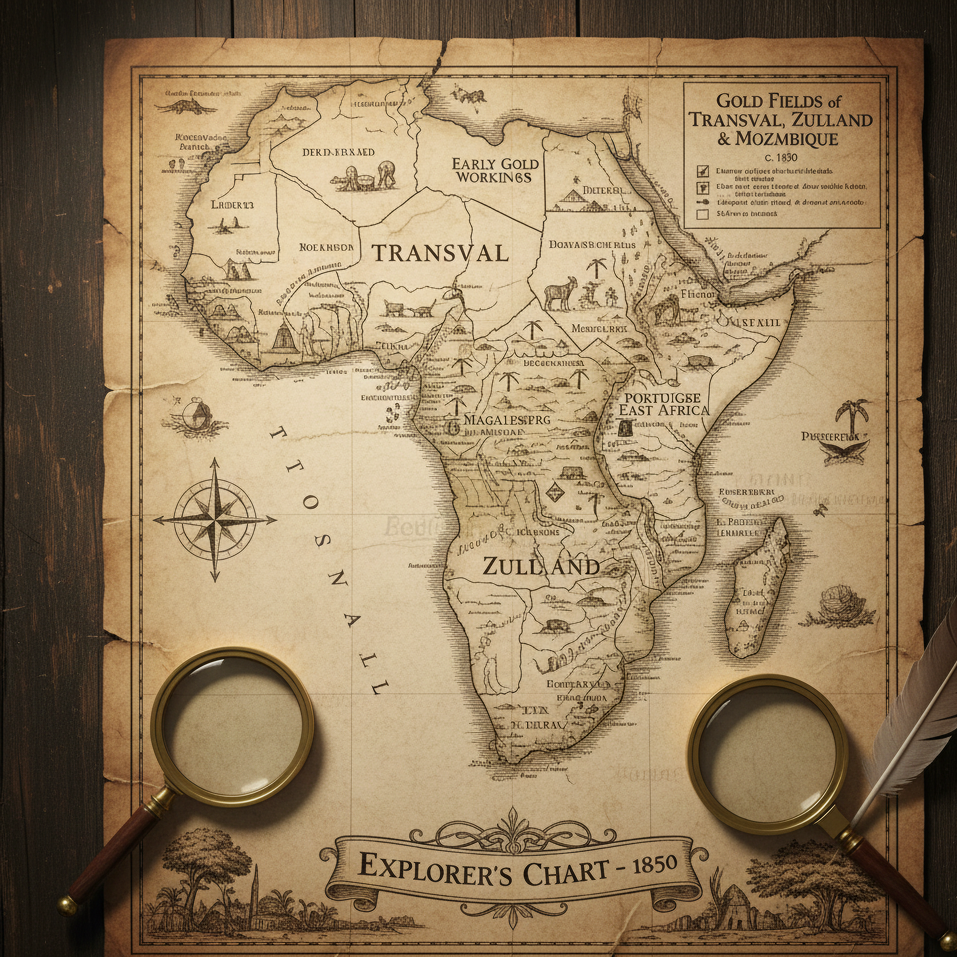
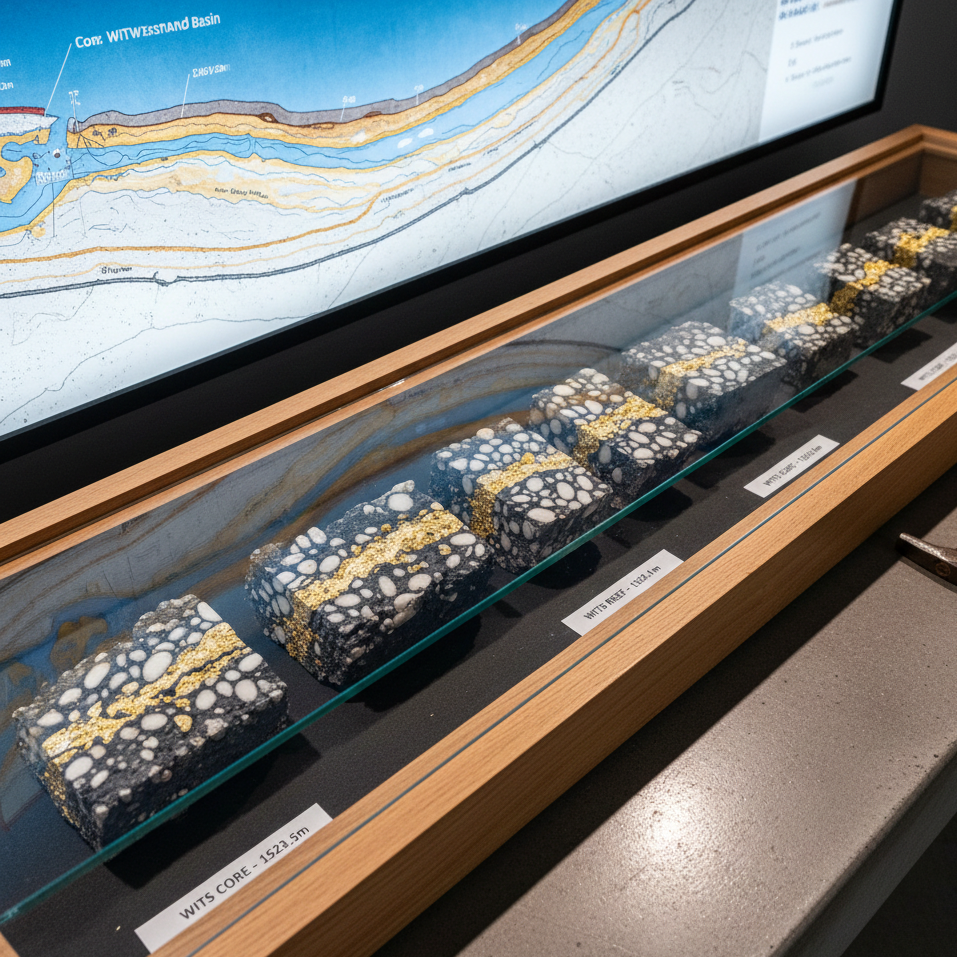
Gold occurrences in southern Africa were recognized by indigenous communities centuries before colonial exploration. Archaeological evidence confirms gold working in the Mapungubwe Kingdom (1075–1220 CE) along the Limpopo River, with artifacts demonstrating sophisticated metallurgical knowledge. These early operations exploited alluvial deposits and shallow reef exposures visible at surface—resources limited in scale compared to the deep-level riches that would later be uncovered. Geologically, South Africa’s gold formed approximately 3 billion years ago when gold-bearing sediments accumulated in ancient river deltas and shallow seas, creating the Witwatersrand Supergroup’s conglomerate reefs. Unlike West Africa’s accessible alluvial deposits, these formations lay buried beneath younger rock strata, requiring industrial-scale exploration and deep-level mining technology to access—a capability absent until the late 19th century.
The 1886 Witwatersrand Discovery
The transformative discovery occurred on 4 March 1886 when Australian prospector George Harrison identified gold-bearing conglomerate on the Witwatersrand ridge near present-day Johannesburg. Harrison’s find—initially dismissed by some as insignificant—triggered systematic investigation revealing extensive reef outcrops stretching across the basin. Unlike earlier surface discoveries in Barberton (1884) that yielded limited quantities, the Witwatersrand reefs proved to contain unprecedented concentrations extending deep underground. Within months, prospectors including Jan Gerritze Bantjes confirmed the reef’s continuity, igniting the Witwatersrand Gold Rush. By 1887, Johannesburg had emerged as a mining camp; by 1890, over 100,000 people had migrated to the area. This discovery fundamentally altered South Africa’s economic trajectory, catalyzing infrastructure development, industrialization, and ultimately shaping the nation’s political evolution.
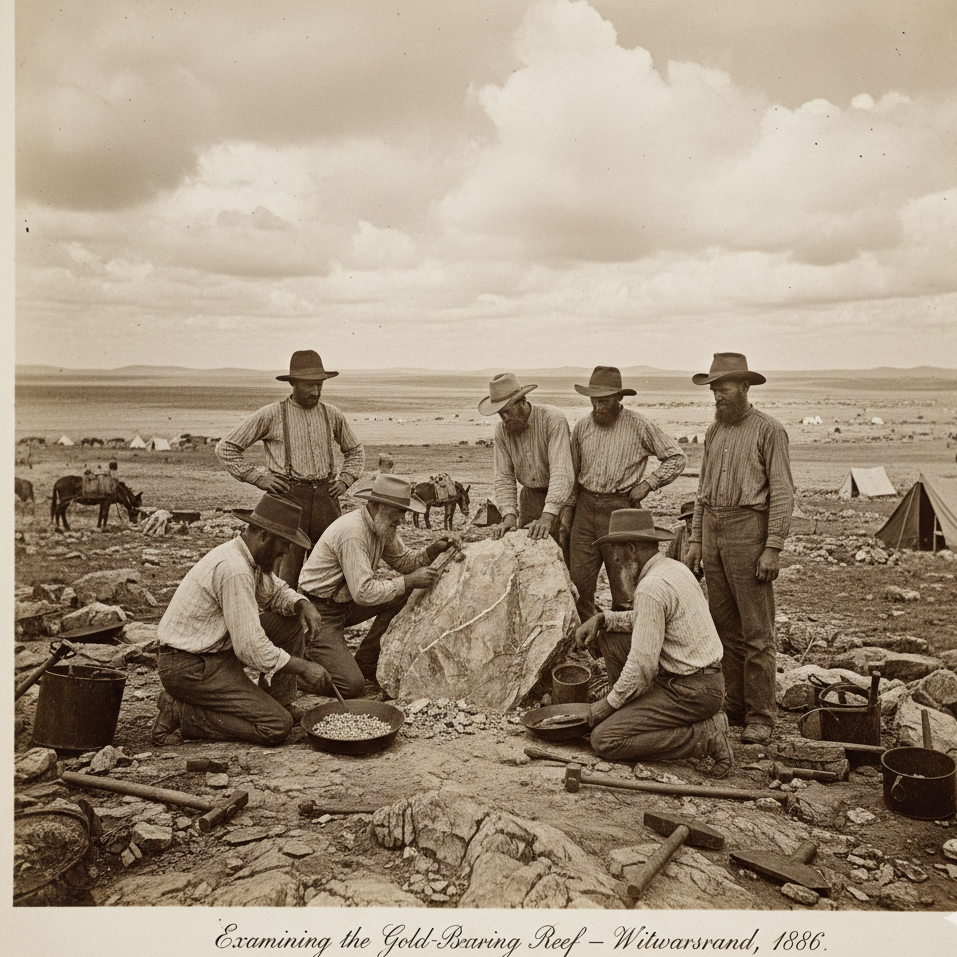
Historical photograph of early prospectors examining gold-bearing rock on the Witwatersrand ridge, 1886
Industrialization and Deep-Level Development
Initial mining targeted surface exposures and shallow diggings, but operators quickly encountered the reefs’ downward plunge—requiring shaft sinking beyond 500 meters by the 1890s. This transition demanded unprecedented engineering: steam-powered hoists, compressed air drilling equipment, and timbering systems to support deep excavations. By 1900, mines reached 1,000 meters depth; by 1930, operations extended beyond 2,000 meters. This deep-level character distinguished South African gold mining from global contemporaries and established technical expertise that would define the industry for generations. Production peaked in 1970 at over 1,000 metric tons annually—nearly 80 percent of global output at the time—validating the Witwatersrand’s status as Earth’s most significant gold field. Cumulatively, the basin has yielded more than 40,000 metric tons since discovery, approximately 30 percent of all gold ever mined globally.
Africa Gold Reserve’s Modern Procurement Approach
Africa Gold Reserve, founded in 2015 and headquartered in South Africa, operates within this historical legacy through legitimate procurement channels rather than exploration activities. The company maintains direct relationships with licensed producers extracting gold from established Witwatersrand operations under valid mining rights granted by the Department of Mineral Resources and Energy. Field representatives verify operational legitimacy and mining licenses before material acquisition, then oversee supervised transport to LBMA-certified assay facilities for official purity and weight certification. This methodology ensures chain-of-custody integrity while generating documentation packages satisfying OECD Due Diligence Guidance requirements. Operations extend through the company’s United Kingdom office to facilitate European settlement infrastructure and global logistics coordination, positioning Africa Gold Reserve among trusted South Africa gold exporters serving international markets across the UAE, United States, China, Europe, Asia, and Middle East.
From Historical Discovery to Contemporary Export
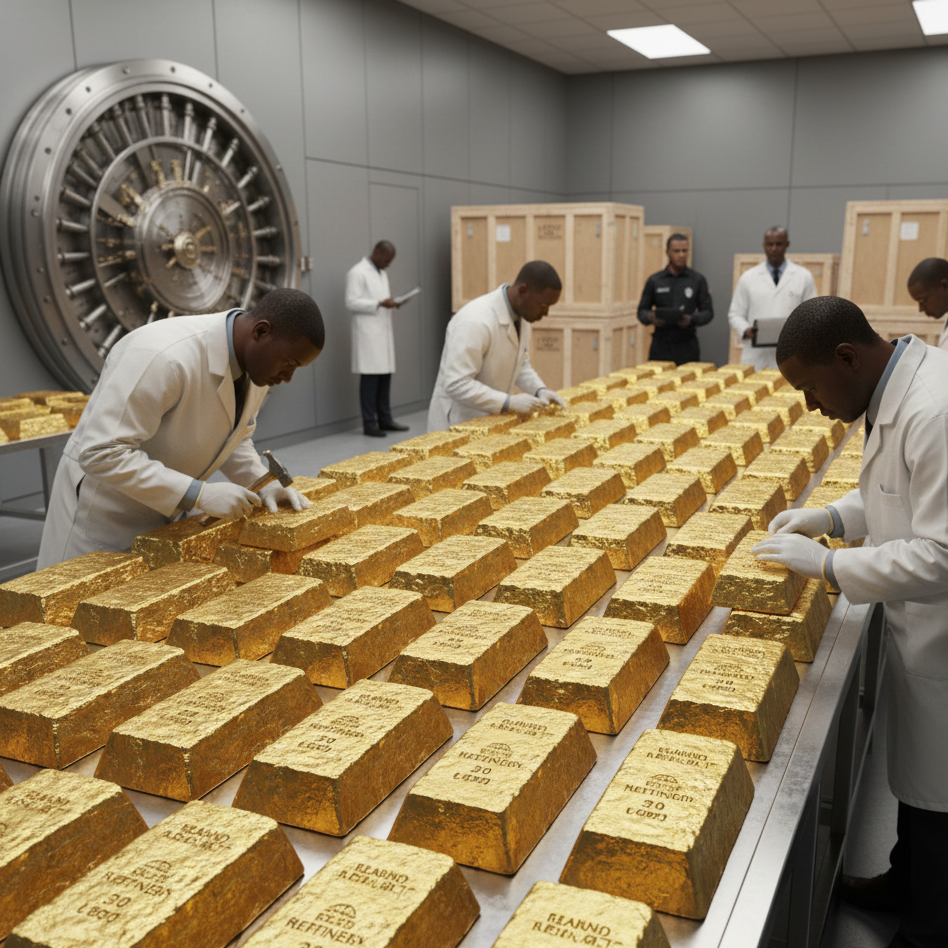
Today’s export sequence follows protocols mandated by the Precious Metals Act and South African Revenue Service regulations—frameworks developed precisely because of South Africa’s historical experience with gold governance. After acquisition and assay verification at LBMA-accredited laboratories, export permit applications are submitted to the South African Diamond and Precious Metals Regulator accompanied by SARS tax clearance documentation. Upon approval, customs declarations are processed before insured transit to OR Tambo International Airport or Durban Port. Documentation packages include assay certificates, export permits, tax clearance verification, and certificates of origin—essential elements for satisfying destination market requirements in international gold trading. This structured approach reflects lessons learned from over a century of gold industry evolution since the 1886 discovery.
Global Demand for South African Supply
South African gold flows along established international routes shaped by the country’s production legacy. China receives substantial volumes for jewelry manufacturing and strategic reserves via the South Africa to China trade route. European refineries prioritize material meeting LBMA standards, creating steady demand for properly documented exports from South Africa gold exporters. The United Arab Emirates serves as a transshipment hub for material destined for broader Asian markets. United States buyers seek investment-grade material meeting COMEX delivery criteria. These trade patterns reflect South Africa’s reputation for regulatory compliance and documentation reliability—attributes developed through decades of industry maturation since the Witwatersrand discovery.

Value Proposition for Institutional Buyers
International buyers engage established South Africa gold exporters to address operational priorities rooted in the country’s mining heritage: documentation integrity reflecting century-old regulatory evolution, supply consistency from geologically proven deposits, and logistical reliability built upon infrastructure developed since the gold rush era. Africa Gold Reserve mitigates these requirements through permanent operational presence in mining regions, direct relationships with licensed producers across its operations in South Africa, Ghana, South Sudan, and the United Kingdom, and integrated export management. The company maintains visibility across the procurement chain from acquisition through final export, providing buyers with complete documentation packages that reduce settlement risk—leveraging South Africa’s mature trading environment developed over 135 years since Harrison’s discovery.
South Africa’s gold discovery history represents more than historical curiosity—it explains the country’s uniquely structured, documentation-intensive procurement environment. For international buyers, success depends not on romanticized notions of prospecting but on engaging established channels that honor this legacy through procedural discipline. Africa Gold Reserve’s multi-year operational presence, documented export history across global markets, and adherence to South African regulatory requirements provide the foundation for reliable partnerships connecting the Witwatersrand’s extraordinary geological endowment with contemporary global demand through compliant, professional channels in international gold trading.
africagoldreserve.com
sales@africagoldreserve.com