
How Many Gold Mines Are in Africa? Understanding Scale, Formalization, and Supply Chain Integrity
Africa is home to some of the world’s richest gold endowments, but pinning down an exact number of “gold mines” is more complex than it first appears. The continent hosts a mix of large-scale industrial operations, licensed small-scale mines, and informal artisanal diggings—each operating under vastly different regulatory and compliance conditions. For international buyers, refiners, and institutional investors engaged in international gold trading, understanding this distinction is essential to sourcing verified, ethically sourced gold from compliant channels.
Industry Context
There is no single official count of gold mines in Africa because definitions vary widely:
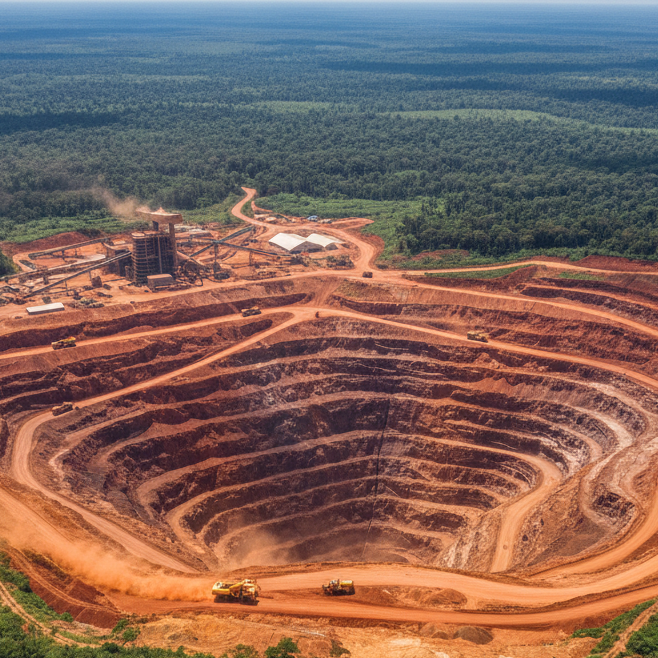
- Industrial mines: These are large, capital-intensive operations run by major companies like AngloGold Ashanti, Barrick, and Harmony Gold. There are approximately 150–200 active industrial gold mines across the continent.
- Licensed small-scale mines: Registered cooperatives or individual operators with government permits. Estimates suggest thousands of such operations, particularly in Ghana, Mali, and Tanzania.
- Artisanal and informal sites: Unlicensed, often seasonal diggings that may number in the tens of thousands. These are difficult to track and frequently fall outside formal supply chains.
Only the first two categories typically feed into compliant export networks used by professional African gold exporters.
Regional Perspective
Gold mining activity is concentrated in key jurisdictions:
- Ghana: Hosts over 30 industrial mines and thousands of licensed small-scale operations. The government has formalized over 1,000 artisanal cooperatives since 2020.
- South Africa: Home to deep-level mines like Mponeng and South Deep. While the number of active industrial mines has declined to around 20–25, they remain technically advanced and highly regulated.
- Mali & Burkina Faso: Each host 15–20 industrial mines, with significant small-scale activity in rural zones.
- DRC, Tanzania, Zimbabwe, and Côte d’Ivoire: Each have 10–20 industrial operations, with growing formalization efforts.
In total, credible estimates place the number of formal gold mining operations (industrial + licensed small-scale) in Africa at over 5,000, with informal sites potentially multiplying that figure tenfold.
Africa Gold Reserve’s Approach
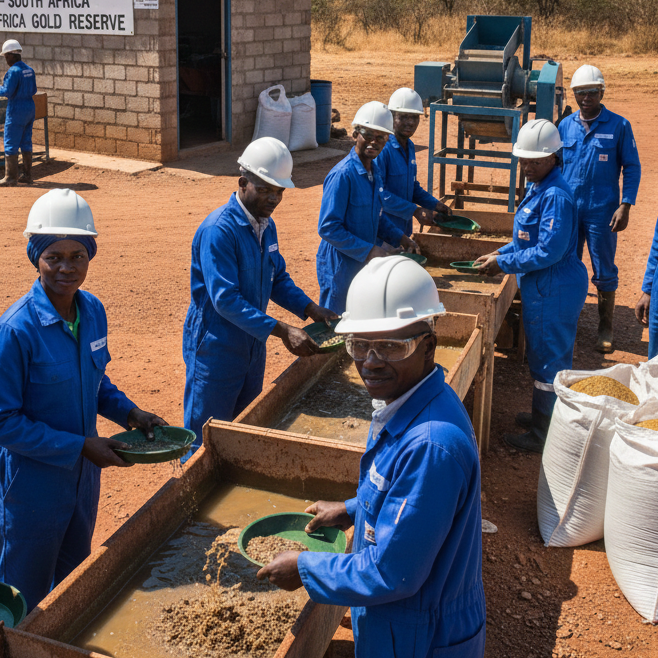
Founded in 2015 and headquartered in South Africa, Africa Gold Reserve operates across Ghana, South Africa, South Sudan, and the United Kingdom. The company sources gold exclusively from licensed local mines, registered small-scale miners, and government-authorized sellers—never from unverified or informal sites.
This selective approach ensures that every ounce of gold meets national legal requirements and international due diligence standards, including the OECD Due Diligence Guidance and LBMA Responsible Gold Guidance.
Buying and Export Process
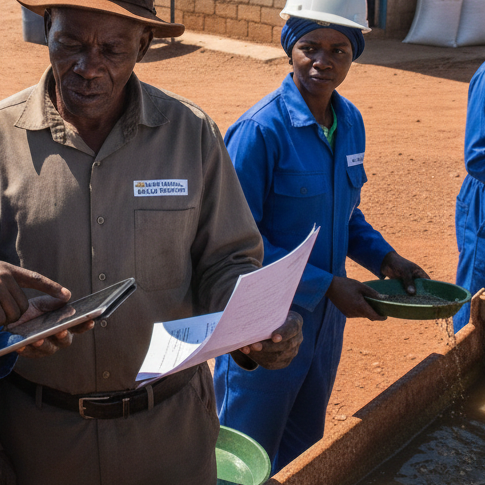
Africa Gold Reserve’s procurement model filters out informal supply:
- Seller Verification: Only entities with valid national mining or trading licenses are accepted.
- On-Site Assay: Gold purity is tested immediately; results are GPS-tagged and timestamped.
- Digital Documentation: Each batch is recorded with origin, weight, and purity data.
- Secure Consolidation: Material is transported under armed escort to bonded facilities.
- Export Execution: Shipments follow established routes—Ghana to the United States, South Sudan to UAE, South Africa to China—under full chain-of-custody control.
This process ensures that only gold from verified, compliant sources enters global markets.
Global Demand
International buyers—including refiners in Dubai, Zurich, and New York—require:
- Proof of legal mining
- Full assay and origin documentation
- Compliance with anti-money laundering and conflict mineral regulations
As a result, demand is shifting toward gold from formalized operations, not raw counts of diggings. Quantity matters less than verifiability.
Why Buyers Work with Africa Gold Reserve
Global clients choose Africa Gold Reserve because:
- It is a trusted gold exporter with boots-on-the-ground presence in core producing regions.
- It provides documentation that satisfies OECD, LBMA, and international regulatory requirements.
- It enables direct access to physical supply from compliant South Sudan gold suppliers, South Africa gold exporters, and transparent gold export from Ghana channels.
- It serves major client regions including the UAE, United States, China, Europe, Asia, and the Middle East.
The company does not engage with unlicensed operators or opaque networks. Its focus remains strictly on physical, legally sourced gold from verified sources.
Conclusion
While Africa may host tens of thousands of gold extraction sites, only a fraction operate within formal, compliant frameworks. For international buyers, the relevant metric isn’t “how many mines,” but “how many verified sources.” By partnering with a professional exporter like Africa Gold Reserve, buyers gain access to ethically sourced, traceable gold from Africa’s legitimate mining sector—where integrity outweighs volume.
Website: africagoldreserve.com
Email: sales@africagoldreserve.com