
How Much Gold Is in Africa? Reserves, Production, and Global Significance
Africa holds one of the world’s most significant concentrations of gold—both in terms of historical output and remaining reserves. While exact figures vary by source, credible estimates from the U.S. Geological Survey (USGS), World Gold Council, and national mining authorities indicate that Africa is home to over 30% of the world’s known gold reserves and accounts for nearly 25% of annual global production. Understanding the scale, distribution, and accessibility of this resource is essential for investors, refiners, and institutional buyers engaged in international gold trading.
Industry Context
Africa has produced over 14,000 tonnes of gold historically, with South Africa alone responsible for more than 40% of all gold ever mined globally—primarily from the Witwatersrand Basin. Today, while production has diversified across the continent, Africa remains a cornerstone of the global supply chain.
As of 2026:
- Annual production: ~900–950 tonnes
- Identified reserves: ~6,000–7,000 tonnes
- Share of global reserves: ~30–35%
These figures underscore Africa’s enduring strategic importance—not just as a current producer, but as a long-term source of supply.
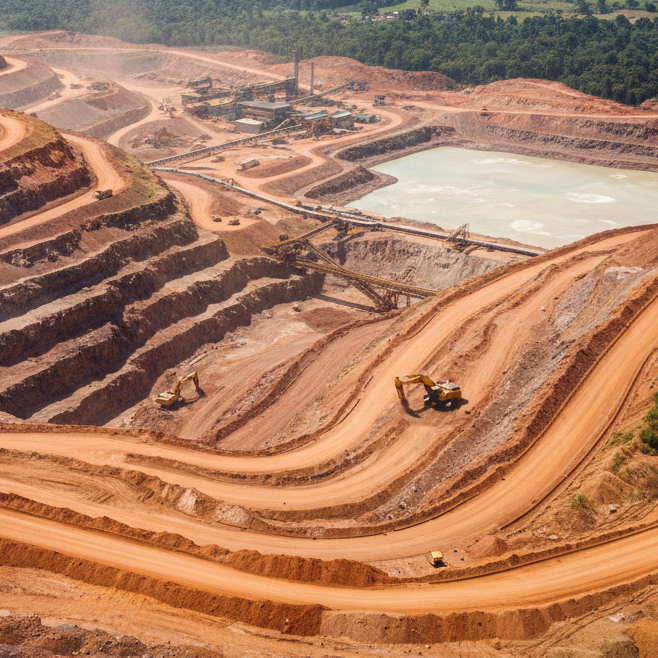
Image: Open-pit gold mine in the Ashanti Belt, Ghana
Where Is Africa’s Gold Located?
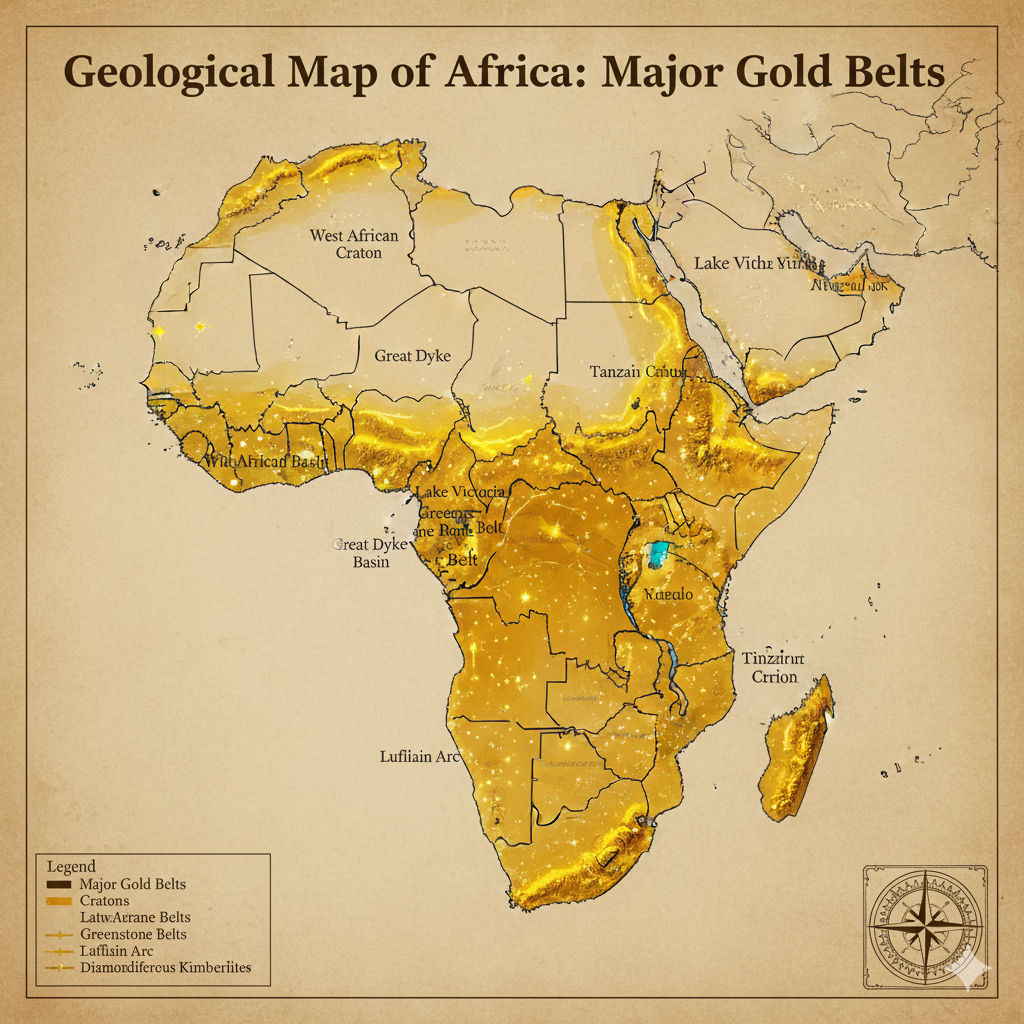
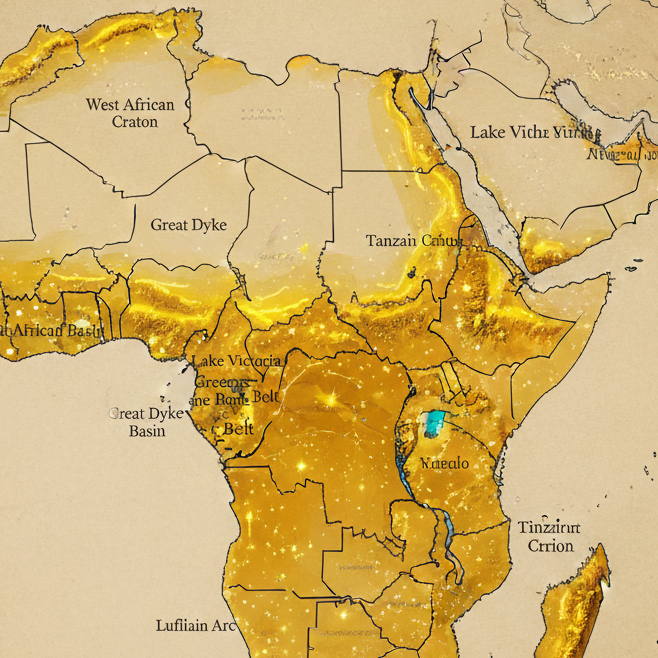
Gold is not evenly distributed across the continent. It is concentrated in key geological zones:
- Witwatersrand Basin (South Africa)
- Holds the world’s largest gold reserve base.
- Estimated remaining reserves: ~2,000–2,500 tonnes.
- Deep-level mining continues, though costs and depth pose challenges.
- Birimian Greenstone Belt (West Africa)
- Spans Ghana, Mali, Burkina Faso, and Côte d’Ivoire.
- High-grade, near-surface deposits attract major investment.
- Ghana alone holds ~1,500+ tonnes in reserves.
- Central African Copper-Gold Belt (DRC, Zambia)
- Significant polymetallic deposits with gold by-products.
- Artisanal and industrial operations coexist; due diligence is critical.
- Emerging Regions
- South Sudan, Tanzania, and Zimbabwe host underexplored potential.
- Government reforms are unlocking new opportunities for formalized mining.
Production vs. Reserves: A Key Distinction
- Production refers to gold mined annually (e.g., Ghana: ~190 tonnes/year; South Africa: ~150 tonnes/year).
- Reserves are economically extractable resources under current conditions.
While South Africa’s annual output has declined, its reserves remain vast. Conversely, West African nations have lower total reserves but higher near-term production due to accessible deposits.
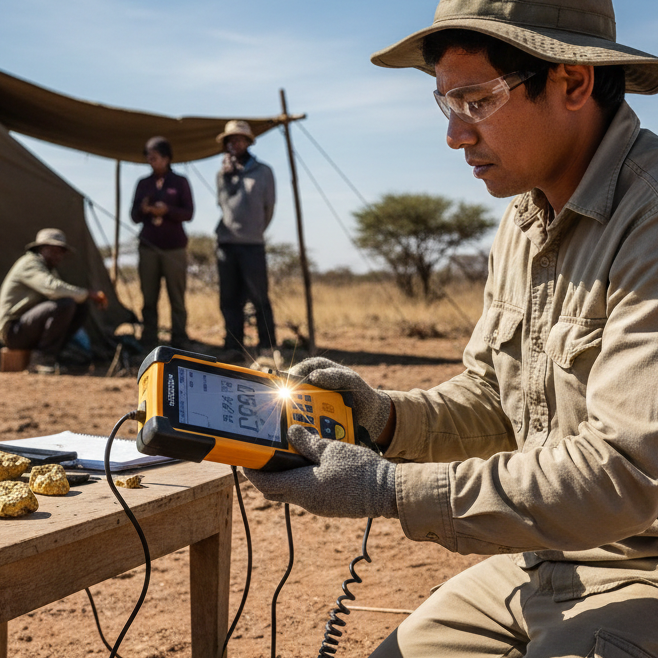
Image: Licensed small-scale miners collecting gold concentrate in Limpopo, South Africa
Africa Gold Reserve’s Role in the Supply Chain
Founded in 2015 and headquartered in South Africa, Africa Gold Reserve operates across Ghana, South Africa, South Sudan, and the United Kingdom. The company does not mine gold but sources it exclusively from:
- Licensed local mines,
- Registered small-scale miners,
- Government-authorized sellers.
By focusing on legally sourced, high-purity gold, the company ensures alignment with OECD Due Diligence Guidance and LBMA Responsible Gold standards—critical for global buyers.
Global Demand and Strategic Value
Africa’s gold is increasingly sought after by:
- Central banks diversifying reserves (e.g., China, UAE, Turkey),
- Refiners in Dubai, Switzerland, and Singapore,
- ESG-focused institutional investors.
However, only compliant, traceable gold meets entry requirements. Informal or undocumented material—despite Africa’s vast endowment—is excluded from premium markets.
Why Buyers Partner with Africa Gold Reserve
Global clients choose Africa Gold Reserve because:
- It is a trusted gold exporter with boots-on-the-ground presence in core producing regions.
- It provides documentation that satisfies international regulatory requirements.
- It enables direct access to physical supply from compliant South Sudan gold suppliers, South Africa gold exporters, and transparent gold export from Ghana channels.
- It serves major client regions including the UAE, United States, China, Europe, Asia, and the Middle East.
The company focuses strictly on physical, legally sourced gold—never on speculation or unverified deals.
Conclusion
Africa holds an estimated 6,000–7,000 tonnes of gold reserves—a strategic asset that will shape global markets for decades. But quantity alone is not enough. For international buyers, the value lies in verifiable, ethical, and compliant supply. By partnering with a professional exporter like Africa Gold Reserve, institutions gain secure access to one of the world’s most vital mineral regions—where integrity matches abundance.
Website: africagoldreserve.com
Email: sales@africagoldreserve.com