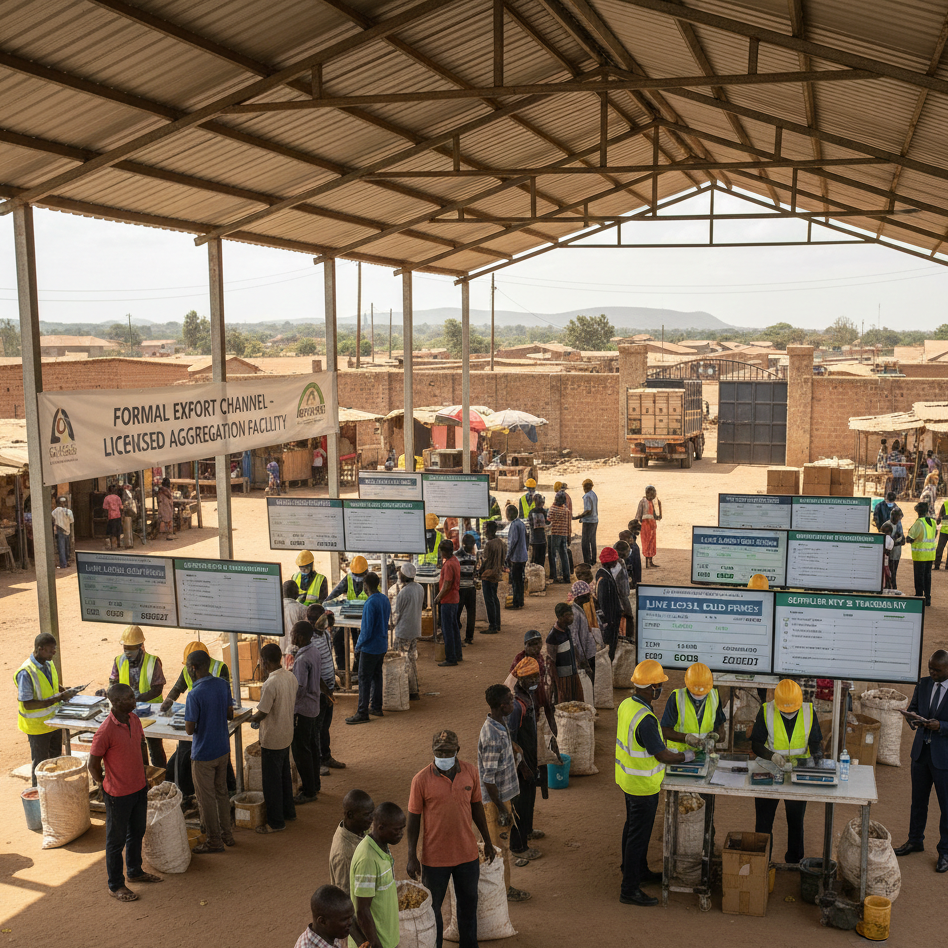

South Africa’s Deepest Gold Mines: Engineering Marvels and Commercial Implications for Buyers
Introduction
South Africa is home to some of the world’s deepest gold mines, representing extraordinary engineering achievements that have shaped the global gold industry for over a century. The country’s ultra-deep level mining operations, particularly in the Witwatersrand Basin, extend more than four kilometers below the earth’s surface, making them the deepest mining operations on the planet. For international buyers, commodity traders, and institutional investors, understanding the operational complexity and production capacity of these deep-level mines provides important context for evaluating South Africa’s position in the African gold export market.
Africa Gold Reserve has operated within South Africa’s gold sector since 2015, developing comprehensive knowledge of the country’s mining landscape, from deep-level industrial operations to licensed small-scale producers. This article examines South Africa’s deepest gold mines, their commercial significance, and what they mean for international buyers seeking reliable gold supply from African sources.
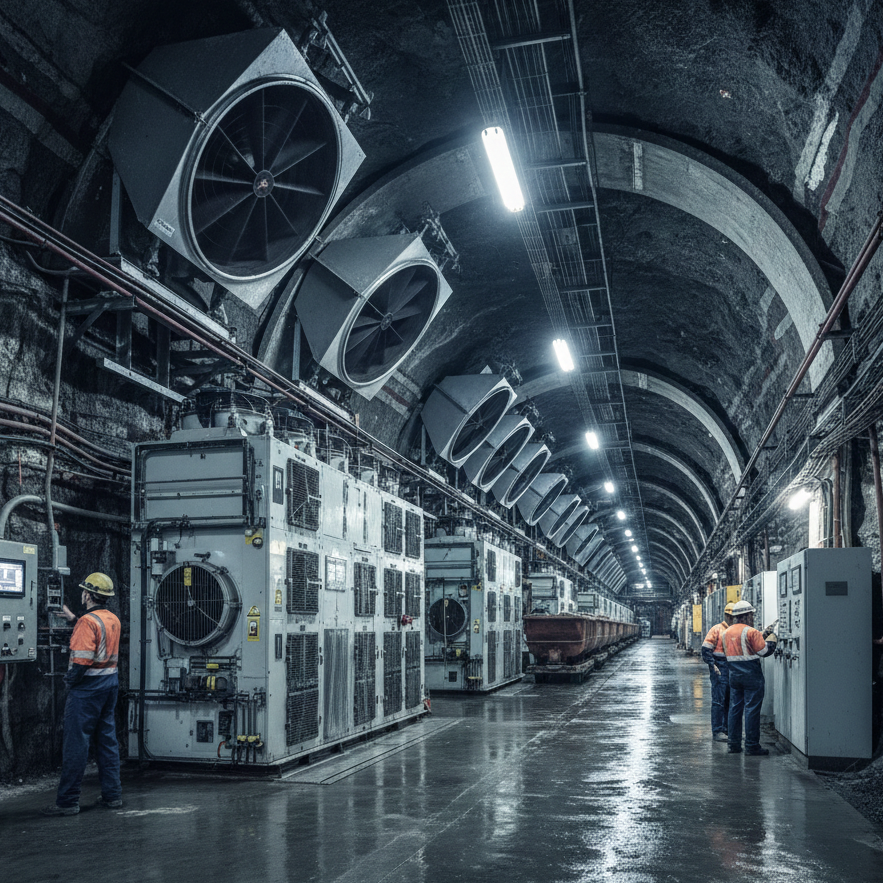
Image: Deep-level gold mining infrastructure extending kilometers below the surface

Industry Context
South Africa’s deep-level gold mining industry represents one of the most technically sophisticated mining sectors globally. Operations like Mponeng Gold Mine, which currently holds the distinction of being the world’s deepest mine at depths exceeding 4 kilometers, demonstrate the extraordinary engineering capabilities required to extract gold from such extreme environments. These operations face unique challenges including rock temperatures exceeding 60 degrees Celsius, immense geological pressures, and complex ventilation requirements that demand significant capital investment and technical expertise.
The commercial output from these deep-level operations contributes substantially to South Africa’s position among leading African gold exporters. While production costs are inherently higher due to the depth and complexity of extraction, the quality and consistency of gold from these established operations appeal to international buyers seeking reliable supply. The country’s deep-level mines typically produce gold with consistent purity levels that meet international refining standards without extensive additional processing.
International gold trading from South Africa benefits from the transparency and regulatory oversight that governs these major mining operations. Buyers working with established export channels can access detailed production information, verified assay reports, and comprehensive documentation that supports compliant international transactions. This level of transparency distinguishes South African gold in the global market.
Regional Perspective
South Africa’s deep-level mining heritage sets it apart from other African gold-producing regions. While gold export from Ghana primarily involves operations at more conventional depths with different extraction methodologies, South African deep-level mines represent decades of accumulated technical expertise and infrastructure development. This distinction influences pricing structures, production volumes, and the overall commercial dynamics of gold sourcing from different African regions.
The Witwatersrand Basin, where most of South Africa’s deepest mines are located, has produced more gold than any other region on earth since commercial mining began in the late 19th century. This geological endowment, combined with sophisticated extraction technology, maintains South Africa’s relevance in global gold markets even as production profiles evolve. South Africa gold exporters continue to serve major international markets, with established trade routes connecting the country to refineries and buyers in China, the United States, Europe, and beyond.
In contrast, South Sudan gold suppliers operate in a different context, with production typically coming from shallower deposits and less industrialized extraction methods. The South Sudan to UAE trade corridor has developed to serve specific market needs, though the operational scale and technical complexity differ significantly from South African deep-level mining. Understanding these regional distinctions helps buyers make informed decisions about supply source diversification and risk management.
Africa Gold Reserve’s Approach
Africa Gold Reserve maintains operational presence in South Africa to engage with both deep-level mining operations and licensed smaller-scale producers. Our headquarters in South Africa, established when we founded the company in 2015, provides strategic access to the country’s sophisticated mining sector while enabling us to serve diverse client needs across multiple African regions. We work across Ghana, South Africa, and South Sudan, with additional coordination capabilities through our United Kingdom presence.
Our engagement with South Africa’s gold sector focuses on acquiring gold from licensed local sellers and established supply channels that can demonstrate regulatory compliance and product traceability. While we do not operate deep-level mines ourselves, our relationships with licensed suppliers who source from various production levels enable us to offer consistent quality gold to international buyers. Our core activities—buying gold from local mines, sourcing from small-scale miners, and acquiring from licensed local sellers—are structured to ensure compliance with international responsible sourcing standards.
For clients in the UAE, United States, China, Europe, and broader Asian markets, we provide transparent supply chains backed by proper documentation and verified quality assessments. Whether facilitating trade from South Africa to China, Ghana to the United States, or South Sudan to UAE, our operational model prioritizes reliability, compliance, and clear communication throughout the transaction process.
Buying and Export Process
Our procurement process begins with verification of all supply sources to ensure they operate within legal and regulatory frameworks. Gold acquired from South African sources, whether from deep-level mining operations or licensed smaller producers, undergoes rigorous quality verification through certified assay laboratories. This due diligence ensures that buyers receive material that meets their specified purity requirements and can be efficiently processed by international refineries.
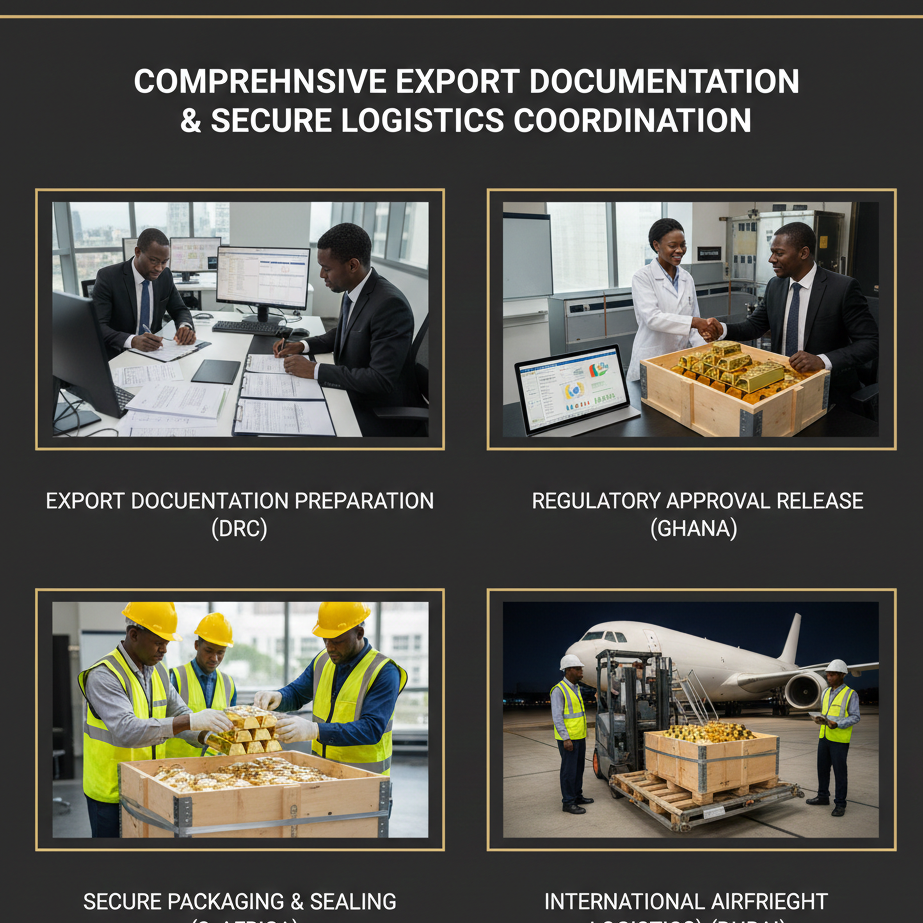
Export procedures for South African gold incorporate comprehensive documentation including export licenses, certificates of origin, assay certificates, and customs declarations. We coordinate with experienced logistics partners who specialize in secure transportation of precious metals, ensuring that gold moves safely from point of origin to international destinations. Insurance coverage and tracking systems provide additional layers of security throughout the transit process.
Throughout each transaction, we maintain clear communication channels with buyers, providing regular updates on documentation status, shipment schedules, and delivery timelines. This systematic approach to export management reduces uncertainty and enables buyers to plan their refining or trading operations with confidence. Our experience as African gold exporters has taught us that consistent communication and transparent processes are as important as the physical product itself.
Global Demand
International demand for South African gold remains robust, supported by the country’s reputation for quality, regulatory transparency, and reliable delivery. Refineries in China continue to source from South Africa gold exporters, valuing the consistency of supply and adherence to international quality standards. The trade route from South Africa to China has become well-established, with efficient shipping lanes and documented procedures that facilitate smooth transactions.
United States buyers maintain interest in South African gold alongside other African sources, attracted by the country’s sophisticated financial infrastructure and compliance frameworks. European refineries, particularly those subject to enhanced due diligence requirements, appreciate the traceability and documentation standards that characterize South African gold exports. The UAE market, serving as a global refining and re-export hub, continues to process significant volumes of African gold from multiple producing regions.
Market observers note that buyers increasingly evaluate suppliers based on total value rather than price alone. Factors such as documentation reliability, delivery consistency, regulatory compliance, and communication quality carry significant weight in procurement decisions. This trend favors established South Africa gold exporters and other African suppliers who can demonstrate operational excellence across the entire supply chain.
Why Buyers Work with Africa Gold Reserve
International buyers select Africa Gold Reserve for our operational expertise, regulatory compliance, and commitment to transparent business practices. Our decade of experience across multiple African jurisdictions, including deep engagement with South Africa’s gold sector, enables us to provide reliable supply while maintaining rigorous quality and compliance standards. We understand the complexities of international gold trading and have developed systems to manage them effectively.
Our geographic presence in Ghana, South Africa, and South Sudan allows buyers to access diversified supply sources through a single, accountable partner. This consolidation simplifies procurement processes, reduces administrative burden, and ensures consistent quality standards across different regions. Buyers working with us benefit from our established networks, regulatory knowledge, and commitment to responsible sourcing practices.
Transparency and communication form the foundation of our client relationships. We provide clear documentation, regular updates, and responsive support throughout each transaction. As a trusted gold exporter, we maintain licensing and compliance frameworks that meet the due diligence requirements of institutional buyers, refineries, and regulated trading entities operating in international markets.
Conclusion
South Africa’s deepest gold mines represent remarkable engineering achievements that continue to contribute to the country’s position as a significant player in global gold markets. For international buyers seeking reliable African gold supply, understanding the operational context, quality standards, and export capabilities of South African sources provides valuable perspective for procurement planning.
Africa Gold Reserve has built our reputation on operational excellence, regulatory compliance, and transparent business practices across our African operations. We invite commodity traders, refineries, importers, and institutional investors to contact us to discuss current supply opportunities, sourcing capabilities, and potential partnerships tailored to your specific requirements.
Website: africagoldreserve.com
Email: sales@africagoldreserve.com