
Who Discovered Gold in Africa: Correcting Historical Narratives and Understanding Ancient Knowledge
Gold was not “discovered” in Africa by European explorers or colonists—indigenous African civilizations recognized, mined, and traded gold for millennia before external contact. The premise of a singular “discovery” reflects colonial narratives that obscure Africa’s sophisticated pre-existing metallurgical knowledge and trade networks. Understanding this history requires acknowledging ancient African expertise while contextualizing later European identification of specific deposits within the continent’s long-established gold traditions.
Ancient African Knowledge and Use
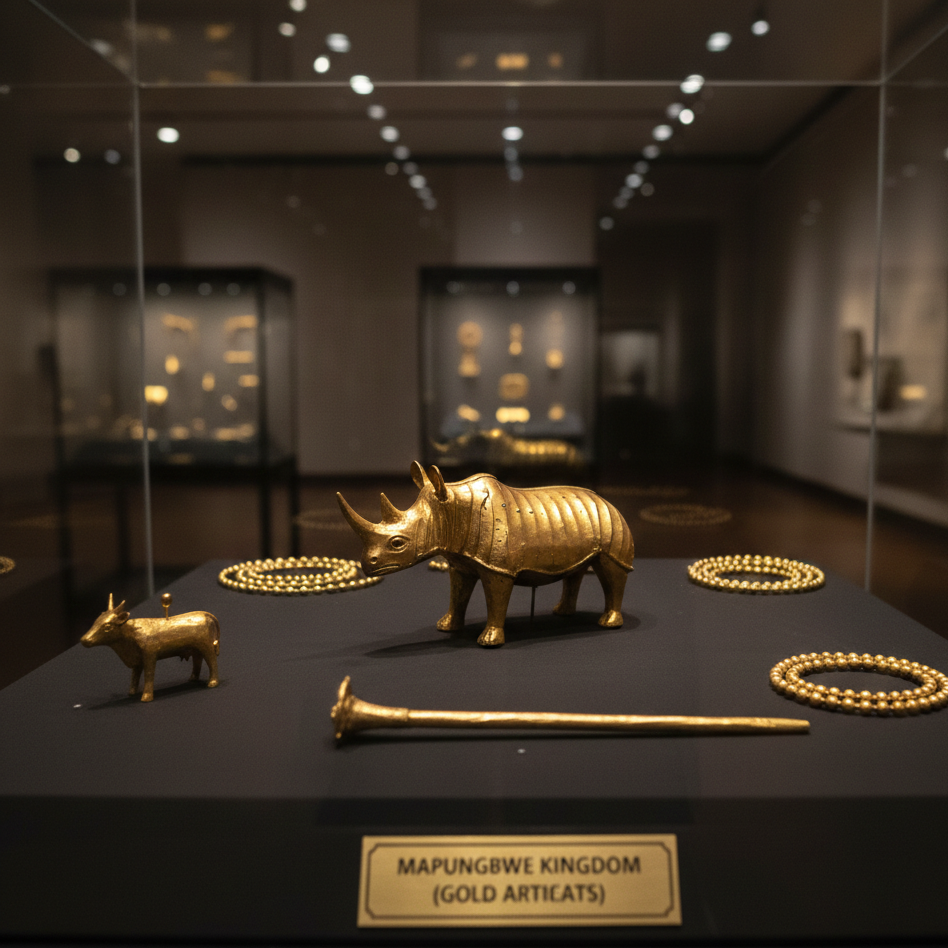
Archaeological evidence confirms gold working across Africa dating back thousands of years. The Kingdom of Mapungubwe (1075–1220 CE) along the Limpopo River produced intricate gold artifacts demonstrating advanced metallurgical techniques and trade connections extending to the Indian Ocean coast. Ancient Egyptian and Nubian civilizations mined gold from the Eastern Desert and Nubian Desert as early as 2000 BCE, with hieroglyphic records describing expeditions to “the land of gold” (Nubia). The Akan people of present-day Ghana developed extensive gold mining networks centuries before Portuguese arrival in the 15th century, using gold dust as currency and crafting gold objects signifying political authority. These civilizations extracted gold from surface deposits and shallow workings using techniques refined over generations—knowledge passed down through oral tradition and practical apprenticeship.
European Encounters with Existing Systems
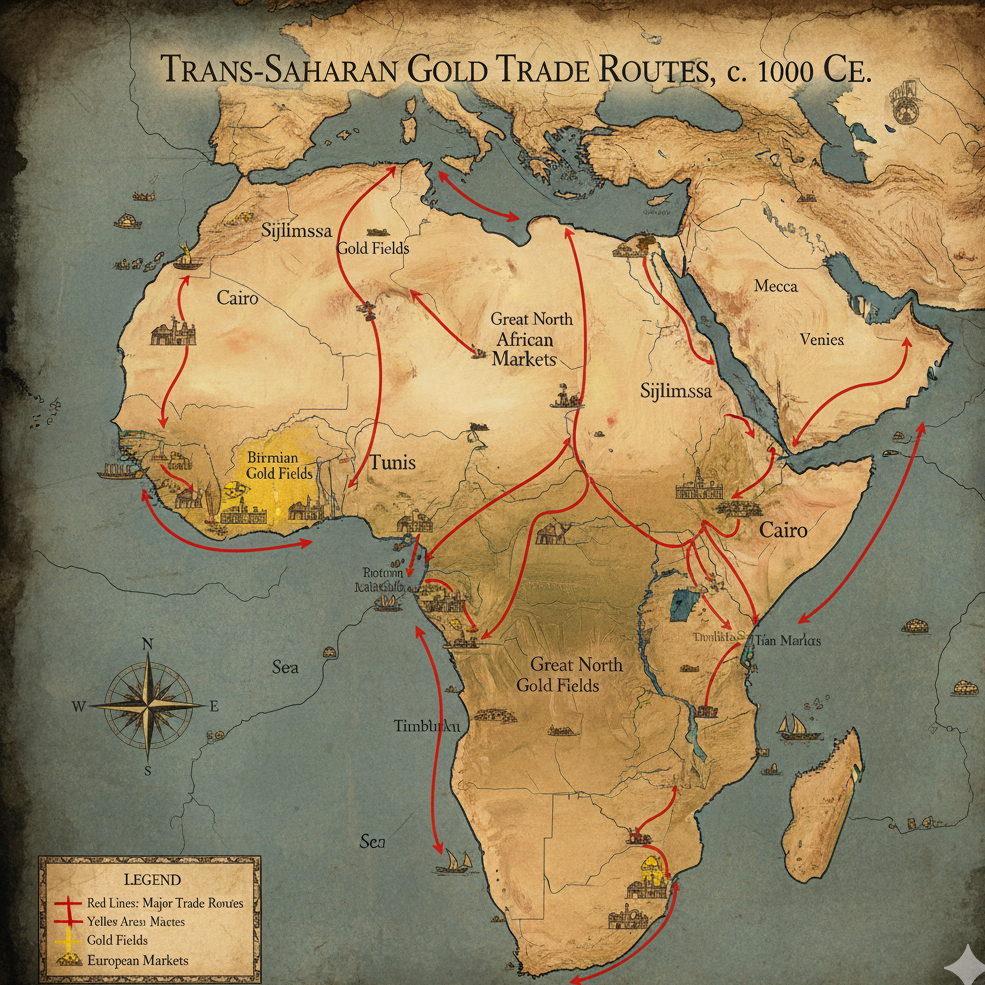
When Portuguese explorers reached the West African coast in the 15th century, they encountered sophisticated gold trading networks—not untouched resources. The region became known as the “Gold Coast” precisely because Europeans observed established Akan mining operations and vibrant gold markets. Similarly, Arab traders had exchanged African gold across the Sahara for centuries before European arrival, with gold from West Africa appearing in Mediterranean markets since Roman times. European “discovery” narratives typically describe encounters with existing systems rather than identification of unknown resources—though colonial powers subsequently exploited these resources through extraction frameworks that disrupted indigenous ownership and benefit structures.
Identification of Major Industrial Deposits
While indigenous knowledge predated European arrival by millennia, specific geological formations enabling industrial-scale extraction were formally identified during the colonial period:
- South Africa’s Witwatersrand Basin: Australian prospector George Harrison identified reef outcrops on 4 March 1886 near present-day Johannesburg. Critically, local communities possessed knowledge of surface gold occurrences in the region; Harrison’s contribution was recognizing the reef’s continuity and commercial potential—triggering industrial development rather than initial discovery.
- Ghana’s Ashanti goldfields: European prospectors documented extensive gold occurrences in the 1870s-1880s, building upon centuries of Akan mining traditions in the same regions.
These identifications catalyzed industrial mining operations but represented transitions in extraction scale—not revelations of previously unknown resources.
Africa Gold Reserve’s Respect for Historical Context
Africa Gold Reserve, founded in 2015 and headquartered in South Africa, operates with awareness that Africa’s gold endowment has sustained civilizations for millennia. The company maintains field operations across Ghana, South Africa, and South Sudan to access supply from licensed operations working deposits long recognized within local contexts. Field representatives verify mining licenses and land rights before material acquisition, ensuring chain-of-custody integrity while respecting the historical continuity of gold extraction across these regions. This approach generates documentation packages satisfying OECD Due Diligence Guidance requirements while acknowledging that contemporary procurement occurs within landscapes where gold knowledge predates industrial mining by thousands of years.
Image: Licensed gold buying center in Obuasi, Ghana—operating in a region with continuous gold mining history spanning centuries

Procurement and Verification Workflow
The modern export sequence honors both regulatory requirements and historical continuity. Material undergoes supervised transport to government-approved assay facilities: Ghana’s Precious Minerals Marketing Company laboratories for Birimian belt production, South Africa’s LBMA-certified centers for Witwatersrand output, or South Sudan’s ministry-approved testing points. Upon certification of purity and weight, export permits are secured from relevant mineral authorities accompanied by tax clearance documentation. Customs declarations are processed before insured transit to international departure points—Kotoka International Airport in Accra, OR Tambo International Airport in Johannesburg, or Juba International Airport. Documentation packages include assay certificates, export permits, tax compliance verification, and bills of lading—essential elements for satisfying destination market requirements in international gold trading.
Global Demand Channels
African gold flows along established international routes shaped by refining capacity and market access. The United Arab Emirates receives substantial volumes from East and West Africa via trade routes such as South Sudan to UAE. United States buyers seek material meeting COMEX delivery standards through channels like gold export from Ghana to the United States. Chinese refineries maintain consistent demand for feedstock supporting jewelry manufacturing and strategic reserves, served by routes including South Africa to China. European markets prioritize LBMA Good Delivery compliance. These patterns reflect recognition that Africa’s gold supply originates from geologically defined formations with millennia of human engagement—not recently discovered resources.
Value Proposition: Historical Continuity and Modern Compliance
International buyers engage established African gold exporters to secure supply with transparent provenance and regulatory compliance. Africa Gold Reserve addresses these requirements through permanent regional offices across its operations in Ghana, South Africa, South Sudan, and the United Kingdom, direct relationships with licensed producers, and integrated export management. The company maintains visibility across the procurement chain—from acquisition through final export—providing buyers with complete documentation packages that reduce settlement risk while acknowledging the historical depth of African gold knowledge. This operational transparency proves particularly valuable for refineries and institutional investors requiring verifiable supply chain records when seeking to buy gold from Africa through trusted gold exporters.
Sustainable Engagement with Africa’s Gold Heritage
Africa’s gold sector continues evolving toward greater formalization as governments recognize that structured channels maximize fiscal revenue while honoring historical extraction rights. Countries increasingly mandate government verification of exports with documentation requirements that responsible exporters support through transparent practices. Companies investing in local compliance infrastructure while respecting historical continuity position themselves as preferred partners for both regulatory authorities and international buyers. Africa Gold Reserve’s multi-year footprint across multiple jurisdictions—coupled with documented export history to global markets—provides the foundation for reliable partnerships bridging Africa’s ancient gold heritage with contemporary global demand.
Image: Gold doré bars arranged for inspection prior to international shipment
For international buyers seeking African gold supply, understanding that gold was never “discovered” by outsiders—but rather recognized, mined, and traded by African civilizations for millennia—provides essential context for respectful engagement with contemporary supply chains. Africa’s gold originates from geologically defined formations accessed today through licensed operations within landscapes bearing thousands of years of metallurgical knowledge. Africa Gold Reserve’s field presence across key producing regions, commitment to regulatory compliance, and track record serving international buyers provides the foundation for reliable partnerships connecting Africa’s extraordinary gold heritage with global market demand through compliant, professionally managed channels in international gold trading.
africagoldreserve.com
sales@africagoldreserve.com