

Who Owns Gold Mines in Africa: Understanding Mineral Rights and Operational Control
Gold mine ownership in Africa operates within a distinct legal framework that separates surface land rights from subsurface mineral rights—a critical distinction for international buyers evaluating supply sources. Across virtually all African jurisdictions, mineral rights belong to the state under national mining codes, with private entities granted time-limited mining rights or licenses to extract resources rather than owning the mineral deposits themselves. Understanding this structure—alongside the multinational corporations, state-owned enterprises, and junior companies holding operational control—is essential for navigating legitimate procurement channels in Africa’s gold sector.
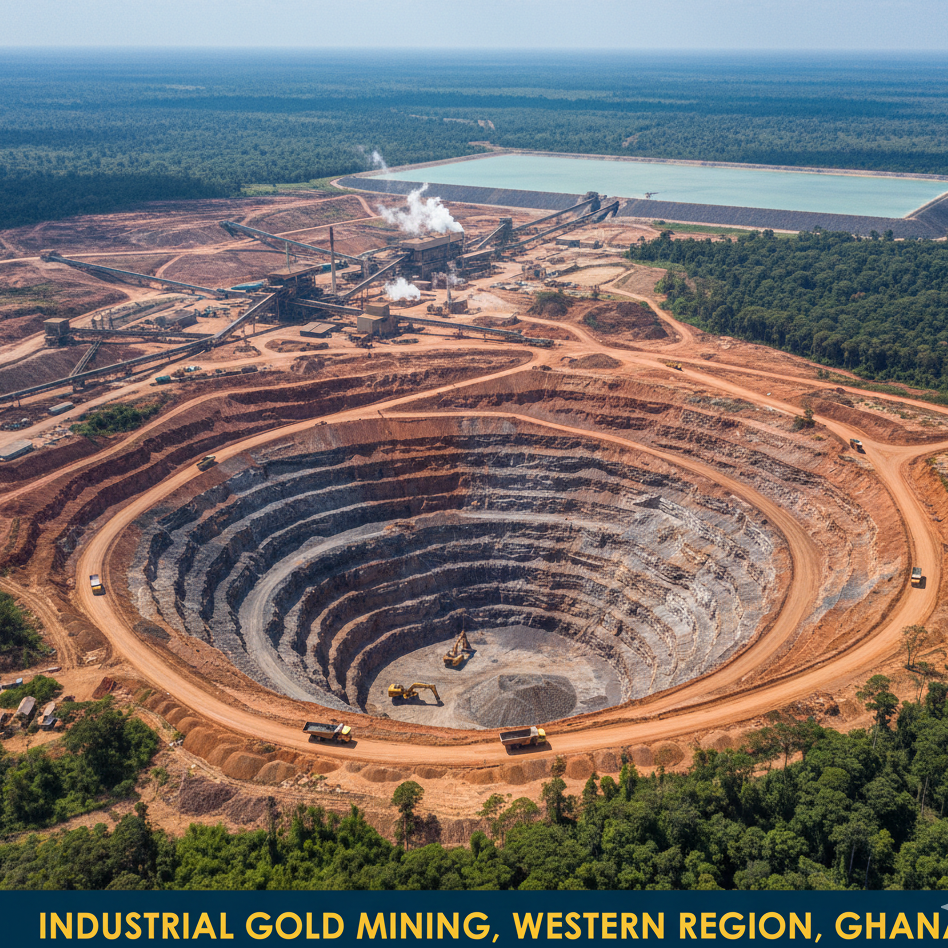
Legal Framework: State Ownership of Mineral Rights
Africa’s mining legislation follows a consistent principle established during post-colonial legal reforms: all mineral rights vest in the state. South Africa’s Minerals and Petroleum Resources Development Act (2002), Ghana’s Minerals and Mining Act (2006), and similar statutes across the continent explicitly state that mineral resources are the “common heritage of the people” administered by the state on their behalf. Private entities—including multinational corporations—do not “own” gold deposits but hold mining rights granted by national authorities for defined periods (typically 20-30 years with renewal options). These rights confer exclusive extraction privileges within defined boundaries but remain subject to state oversight, royalty obligations, and community development requirements. This framework ensures governments retain ultimate control over resource extraction while enabling private capital and expertise to develop deposits.
Major Corporate Operators
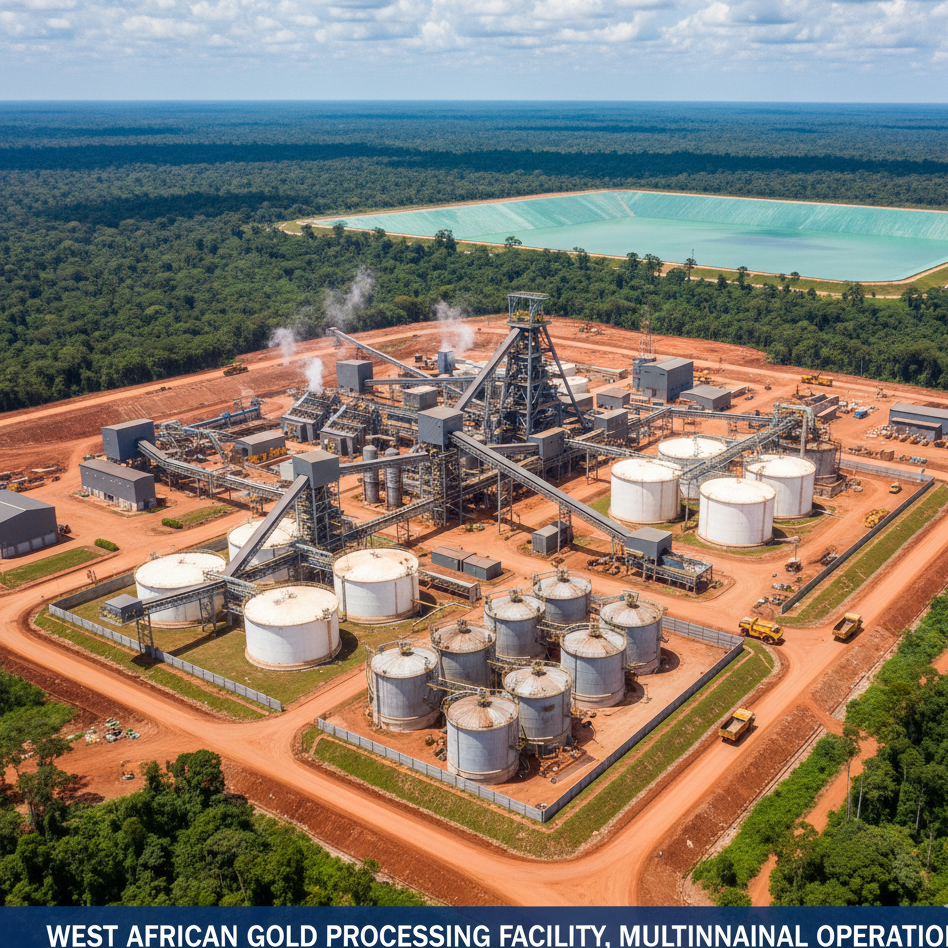
Multinational mining houses hold operational control over Africa’s largest gold-producing assets through subsidiaries holding valid mining rights. AngloGold Ashanti (South Africa-headquartered, NYSE-listed) operates significant assets including Obuasi in Ghana and historically Mponeng in South Africa. Gold Fields (South Africa-headquartered, JSE/NYSE-listed) maintains major holdings at South Deep in South Africa and Tarkwa in Ghana—containing Africa’s largest single gold reserve base. Sibanye-Stillwater (South Africa-headquartered, JSE/NYSE-listed) has consolidated numerous Witwatersrand operations into integrated complexes including Kloof-Driefontein. Barrick Gold (Canada-headquartered, NYSE-listed) operates Bulyanhulu and North Mara in Tanzania alongside significant assets in Mali. Endeavour Mining (Canada-headquartered, TSX-listed) holds substantial West African portfolio across Burkina Faso, Côte d’Ivoire, and Senegal. These corporations invest billions in infrastructure while operating under strict regulatory oversight and fiscal obligations to host governments.
State Participation Models
African governments increasingly secure direct participation in mining operations through equity ownership rather than relying solely on royalties and taxes. Ghana mandates 10 percent free carried interest in all mining operations plus additional equity purchase rights. South Africa’s Mining Charter requires minimum 30 percent historically disadvantaged South African ownership in mining rights holders. Tanzania renegotiated contracts to secure 16 percent free carried interest plus additional equity in major operations following 2017 legislative reforms. These participation models create hybrid ownership structures where multinational operators maintain day-to-day control while governments hold significant equity stakes—ensuring fiscal benefits extend beyond taxation into direct profit sharing.
Junior Miners and Licensed Small-Scale Operators
Junior exploration and development companies hold mining rights to smaller deposits requiring less capital intensity. These firms often operate independently or serve as acquisition targets for majors seeking portfolio expansion. In Ghana, approximately 2,000 licensed small-scale operators hold individual concessions restricted to Ghanaian citizens under the Minerals and Mining Act—contributing roughly 30 percent of national output through mechanized operations within defined boundaries. South Africa’s deep-level geology limits small-scale participation compared to West Africa, while South Sudan’s emerging sector features thousands of artisanal miners gradually transitioning into formalized structures under ministry-licensed aggregators rather than holding individual mining rights.
Africa Gold Reserve’s Position in the Value Chain
Africa Gold Reserve, founded in 2015 and headquartered in South Africa, does not own or operate gold mines but functions within Africa’s state-controlled mineral rights framework as a licensed procurement and export entity. The company maintains field operations across Ghana, South Africa, and South Sudan to source material from entities holding valid mining rights—industrial producers, licensed small-scale operators, and ministry-approved aggregators—while respecting the state’s ultimate ownership of mineral resources. Field representatives verify mining licenses and operational legitimacy before material acquisition, ensuring chain-of-custody integrity from legally authorized sources through government assay verification. This approach generates documentation packages satisfying OECD Due Diligence Guidance requirements while acknowledging the state-centric ownership model governing African mineral resources. Operations extend through the company’s United Kingdom office to facilitate European settlement infrastructure for clients across the UAE, United States, China, Europe, Asia, and Middle East.

Procurement and Export Workflow
The procurement sequence begins with source verification confirming valid mining rights before acquisition. Material undergoes supervised transport to government-approved assay facilities: Ghana’s Precious Minerals Marketing Company laboratories, South Africa’s LBMA-certified centers, or South Sudan’s ministry-approved testing points. Upon certification of purity and weight, export permits are secured from relevant mineral authorities accompanied by tax clearance documentation. Customs declarations are processed before insured transit to international departure points—Kotoka International Airport in Accra, OR Tambo International Airport in Johannesburg, or Juba International Airport. Documentation packages include assay certificates specifying source operation, export permits, tax compliance verification, and bills of lading—essential elements for satisfying destination market requirements in international gold trading.
Global Demand Channels
African gold flows along established international routes regardless of mine ownership structure. The United Arab Emirates receives substantial volumes via trade routes such as South Sudan to UAE. United States buyers seek material meeting COMEX delivery standards through channels like gold export from Ghana to the United States. Chinese refineries maintain consistent demand for feedstock supporting jewelry manufacturing and strategic reserves, served by routes including South Africa to China. European markets prioritize LBMA Good Delivery compliance. These markets evaluate gold against purity and documentation benchmarks—not mine ownership structure—making exporter expertise in certification protocols more decisive than the corporate identity of the mining rights holder.
Value Proposition: Navigating the Ownership Framework
International buyers engage established African gold exporters to navigate the state-centric mineral rights framework while securing supply with transparent provenance. Africa Gold Reserve addresses these requirements through permanent regional offices across its operations in Ghana, South Africa, South Sudan, and the United Kingdom, direct relationships with entities holding valid mining rights across industrial, small-scale, and formalized artisanal tiers, and integrated export management. The company maintains visibility across the procurement chain—providing buyers with complete documentation packages that reduce settlement risk while respecting the legal reality that mineral resources remain state property throughout the extraction and export process.
For international buyers seeking African gold supply, success depends on understanding that mines are not “owned” in the traditional property sense but operated under state-granted rights within a framework prioritizing national resource sovereignty. Africa’s gold originates from geologically defined formations accessed through legally authorized entities holding mining rights—not private mineral ownership. Africa Gold Reserve’s field presence across key producing regions, commitment to regulatory compliance respecting state mineral rights frameworks, and track record serving international buyers provides the foundation for reliable partnerships connecting Africa’s gold endowment with global market demand through compliant, professionally managed channels in international gold trading.
africagoldreserve.com
sales@africagoldreserve.com