
Why Were Gold and Salt Important in Africa? The Twin Pillars of Trans-Saharan Trade
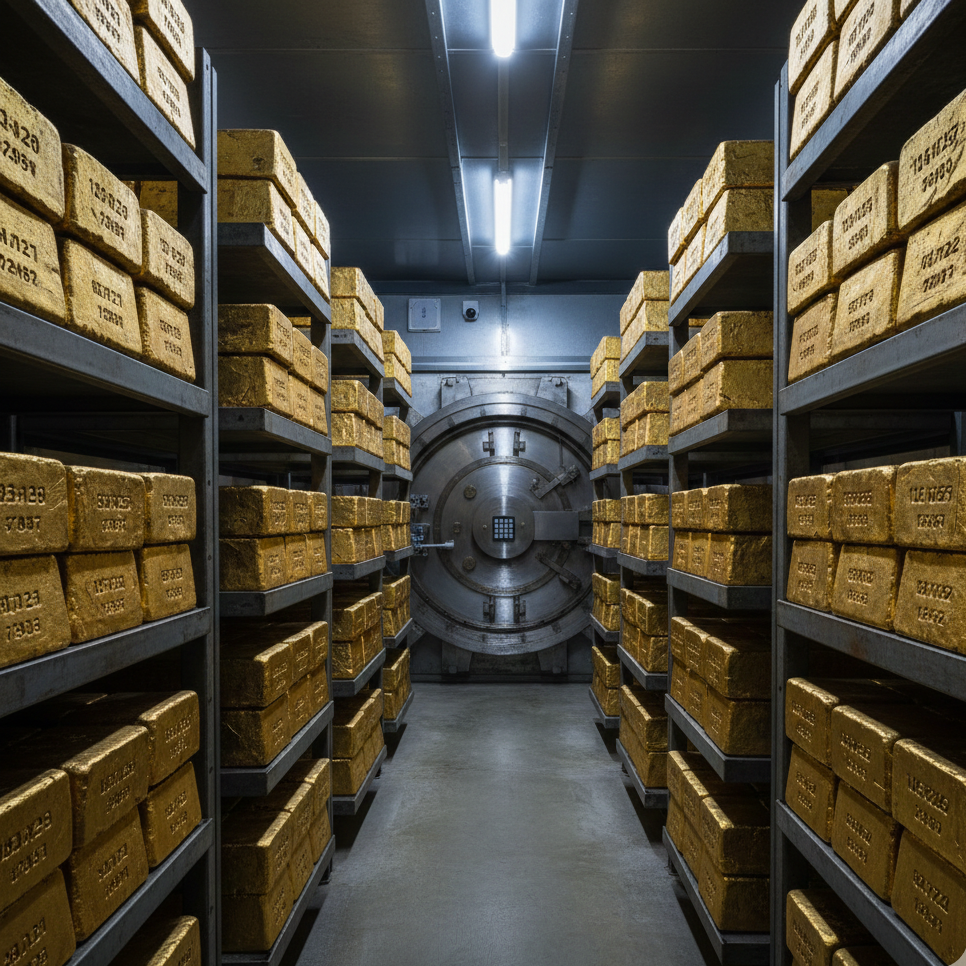
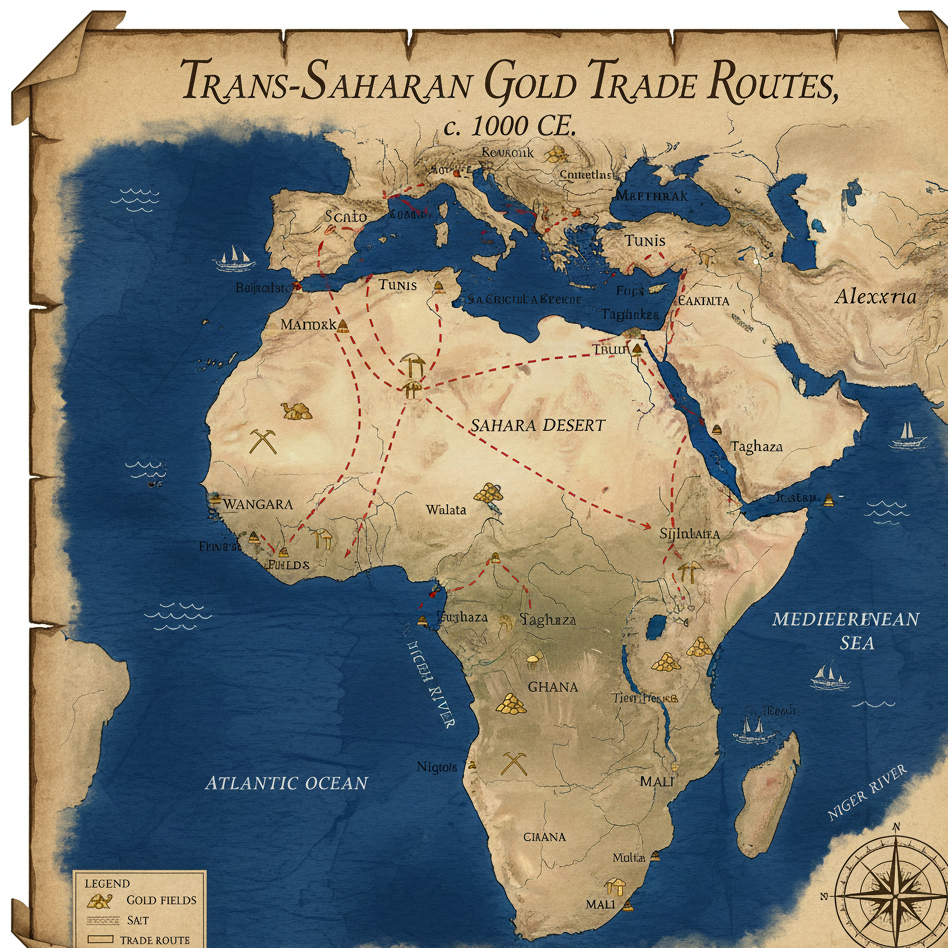
Gold and salt were the two most valuable commodities in pre-colonial Africa—not because of mere scarcity, but because they fulfilled essential economic, social, and political roles across diverse regions. Their exchange formed the backbone of the trans-Saharan trade network (8th–16th centuries), linking sub-Saharan West Africa with North Africa, the Middle East, and Europe. This dual-commodity system fueled the rise of powerful empires, shaped urban centers, and integrated Africa into the medieval global economy.
1. Gold: The Currency of Power and Prestige
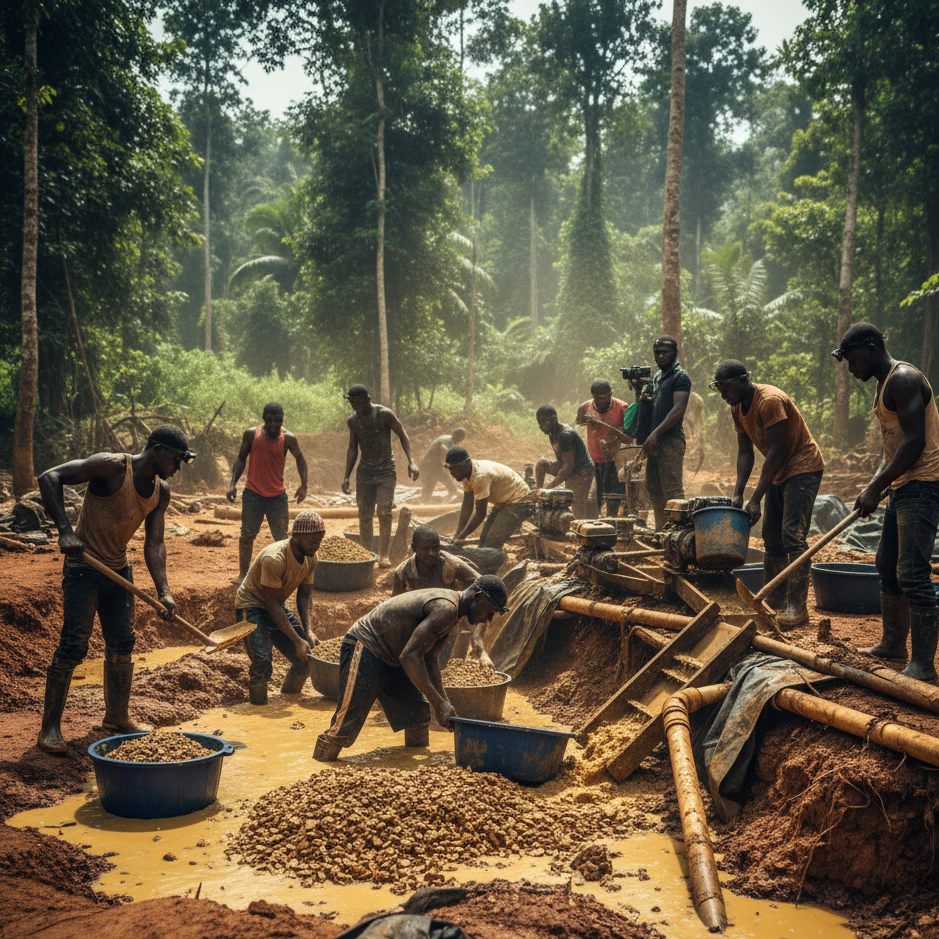
Gold was abundant in the forests and riverbeds of West Africa—particularly in modern-day Ghana, Mali, and Burkina Faso. Its importance stemmed from:
- Wealth and Statecraft: Empires like Ghana, Mali, and Songhai taxed gold trade to fund armies, administration, and monumental architecture.
- International Demand: Gold was highly sought after in North Africa, Europe, and the Islamic world for coinage, jewelry, and religious artifacts.
- Symbol of Royal Authority: Kings often controlled access to gold nuggets, using them as symbols of divine power while allowing only gold dust for public trade.
The legendary wealth of Mansa Musa of Mali, who flooded Cairo with gold during his 1324 pilgrimage, cemented West Africa’s reputation as a land of immense riches.
2. Salt: The Essential Mineral of Life
While gold came from the south, salt came from the Sahara Desert—mined in places like Taghaza and Taoudenni. Salt was equally vital because:
- Food Preservation: In hot climates without refrigeration, salt was essential for preserving meat and fish.
- Human and Animal Health: Diets in the forest and savanna zones were naturally low in sodium; salt replenished critical electrolytes.
- Economic Value: In some regions, salt was traded ounce for ounce with gold—a testament to its worth.
Without salt, large populations and long-distance trade caravans could not survive.
3. The Gold-Salt Exchange: A Balanced System
The trade was symbiotic:
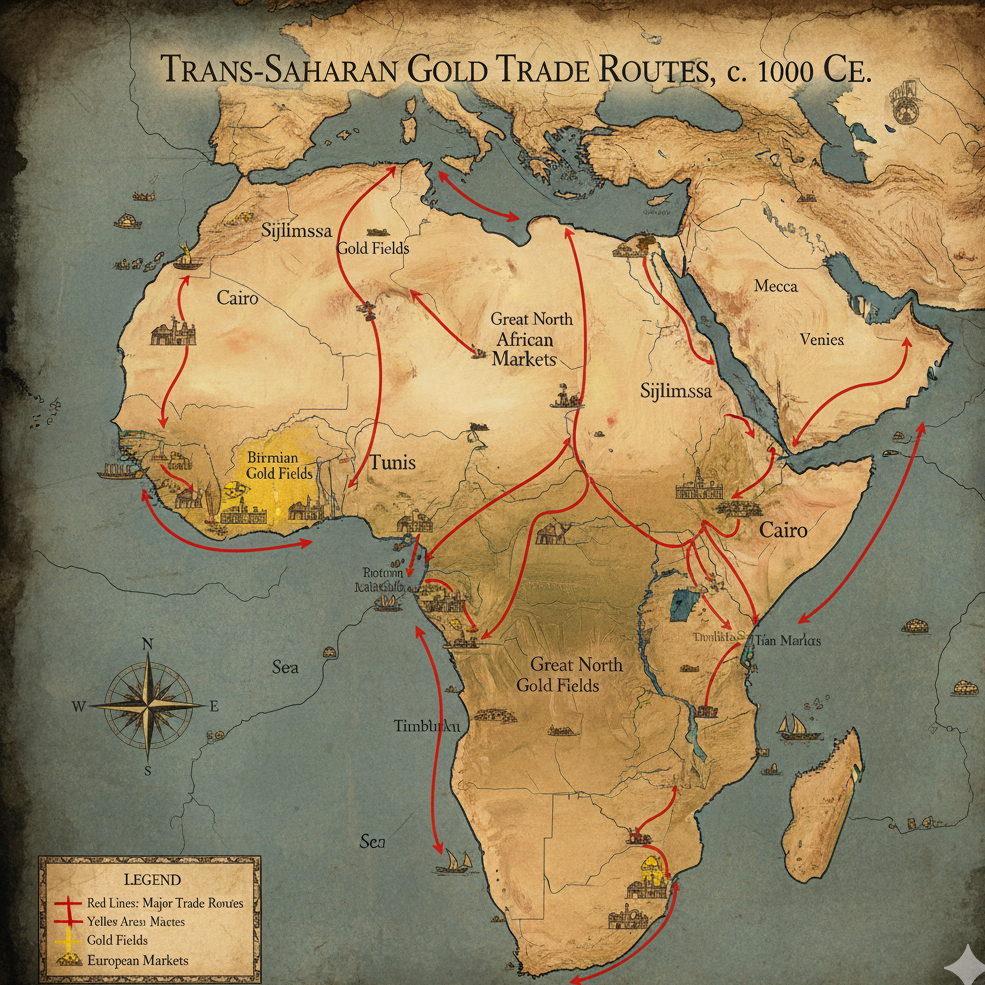
- West African kingdoms supplied gold from the south.
- Berber and Arab traders brought salt from the north via camel caravans.
- Goods met in trading cities like Timbuktu, Gao, and Djenné, which became hubs of commerce, scholarship, and Islamic culture.
This exchange did more than move goods—it transferred ideas, technology, and religion, helping to spread Islam and literacy across West Africa.
4. Legacy in Modern Africa
Today, the regions once central to the gold-salt trade remain economically significant:
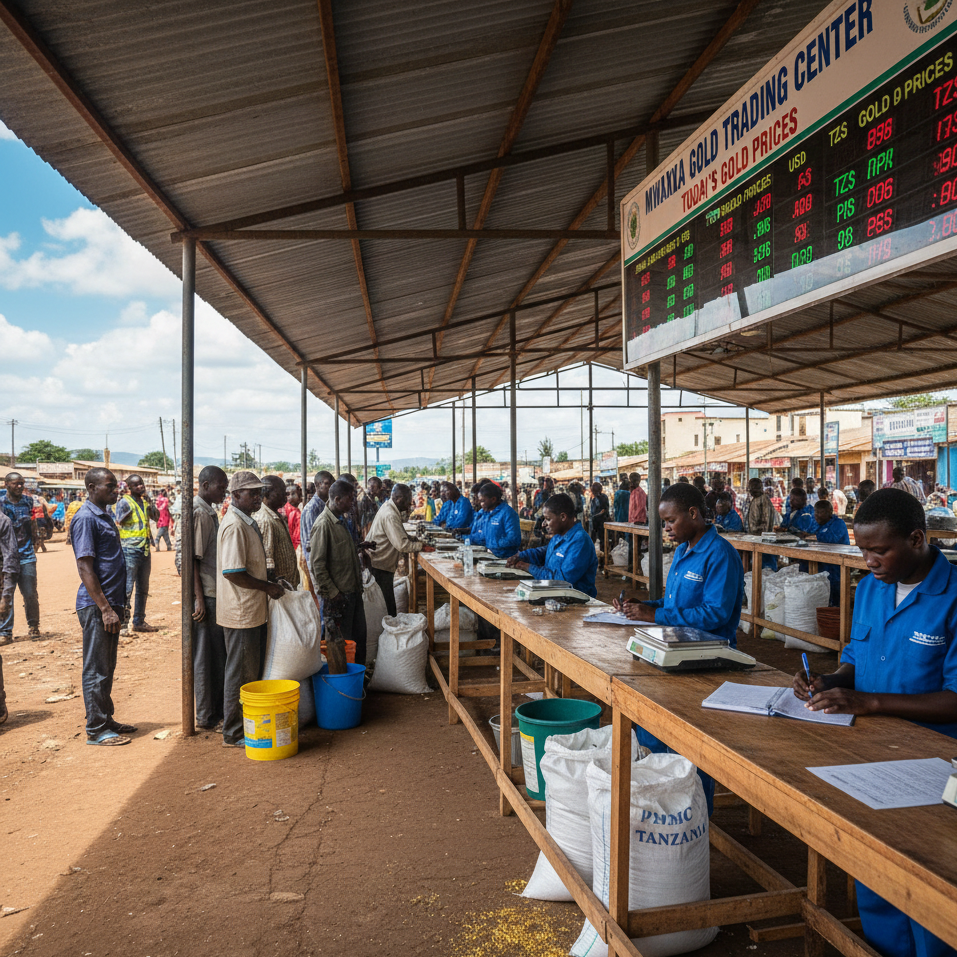
- Ghana is Africa’s top gold producer.
- The Birimian Greenstone Belt hosts world-class deposits.
- While salt is now commoditized, gold continues to drive formal mining, export revenue, and ethical sourcing initiatives.
Companies like Africa Gold Reserve operate in these historic zones, ensuring that modern gold trade upholds transparency, compliance, and community benefit—echoing the mutual dependence that once defined the gold-salt economy.
Conclusion
Gold and salt were important in Africa because together they formed a balanced system of interdependence: one represented wealth and global connection, the other sustenance and survival. Their trade built empires, sustained cities, and linked Africa to the wider world. Today, that legacy endures—not in caravans, but in responsible, traceable supply chains that honor both history and ethical standards.
Website: africagoldreserve.com
Email: sales@africagoldreserve.com